


Rock crevice planting
Tuck plants into narrow rock crevices or between stacked stones with a gritty, humus-rich mix to mimic their natural alpine habitat and improve drainage while keeping roots cool and shaded.

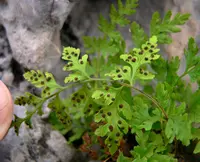
Brittle bladderfern, Cystopteris fragilis, is a small, deciduous fern known for its delicate, finely divided fronds and slender, fragile stems. It forms loose clumps that give a soft, airy look.
This species occurs naturally in cool, rocky habitats, often in crevices, scree, and moist cliff faces across temperate regions of the Northern Hemisphere. Its preference for cool, shaded, and consistently moist conditions guides how to care for brittle bladderfern.
The fern is relatively undemanding if kept in a sheltered, humid spot with free-draining but moisture-retentive soil. Its delicate fronds can scorch or dry out quickly in hot sun or very dry air, so site choice is important.

Care Difficulty
Moderate Care

Light Preference
Partial Shade

Water Requirements
Keep Soil Moist

Temperature Preference
Cold Hardy

Hardiness Zone
3–8

Soil Texture
Loamy, Rocky, Organic-rich

Soil pH
Acidic (5.5–6.5), Slightly acidic (6.5–7.0)

Soil Drainage
Moist but well-drained

Fertilization
Minimal (feed rarely)
Scan your plant to receive care tips personalized for your specific plant
Available on iOS and Android
This small woodland fern prefers cool, shaded locations with soft, indirect light rather than direct sun.
This fern favors consistently moist, cool soil but is sensitive to both drying out and waterlogging.
This hardy fern is adapted to cool to mild climates and tolerates significant cold when established outdoors.
This delicate fern needs consistent, moist air to stay healthy and resist frond damage.
This species prefers cool, moist, humus-rich soil that drains freely yet never dries out completely.
This fern can grow in containers if the pot supports its shallow, fibrous root system and steady moisture.
Cystopteris fragilis grows well in moderately fertile, humus-rich soil and needs only light feeding in cultivation.
Pruning Cystopteris fragilis is minimal and mainly focuses on hygiene and neat appearance.
This fern is more often grown in the ground or rock gardens than in containers, so focus on careful transplanting.
Propagation of Cystopteris fragilis is usually done by division rather than from spores in home settings.
This fern is generally cold hardy in temperate climates and usually needs little specific winter care outdoors.

Plant Health Check
Not sure what's wrong with your plant? Check your plant's health inside the app.
This fern often grows in narrow cracks of limestone and other calcareous rocks, using its slender rhizomes and delicate fronds to exploit tiny pockets of moisture and organic matter that many other plants cannot use.
It is native to many cool and montane regions of the Northern Hemisphere and can tolerate freezing temperatures, with fronds that die back and buds at the rhizome that resume growth when conditions warm.
Populations across its wide range show marked variation in frond size, shape, and division, which has led botanists to describe numerous forms and contributed to taxonomic debate within the Cystopteris group.

Genetic and cytological studies have shown that this species has contributed to the origin of several Cystopteris hybrids and allopolyploid species, making it an important model for understanding fern evolution and hybridization dynamics.
Brown leaf tips or fronds usually result from low humidity, missed waterings, or excess fertilizer salts. Improve ambient humidity, keep soil lightly moist but not soggy, flush the pot occasionally, and trim only fully dead tissue.
Keep your plants happy and healthy with plant identification, disease detection, and easy care guidance.

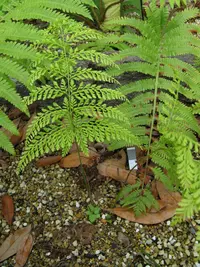
Upside-down Fern
Arachniodes standishii
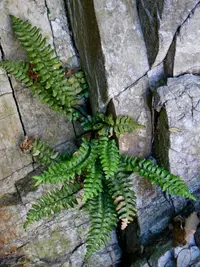
sea spleenwort
Asplenium marinum
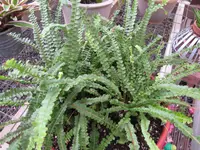
Lemon Button Fern
Nephrolepis cordifolia 'Duffii'
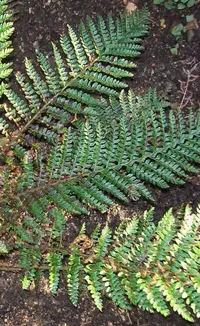
mother shield-fern
Polystichum proliferum
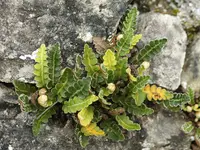
Rustyback
Asplenium ceterach
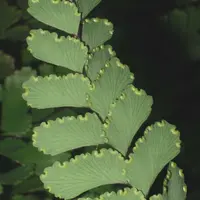
Cunningham’s maidenhair
Adiantum cunninghamii

Angiopteris lygodiifolia
Angiopteris lygodiifolia
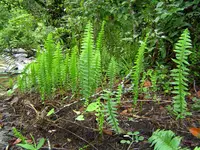
annual swordfern
Nephrolepis undulata