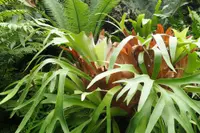
annual swordfern Care (Nephrolepis undulata)

About annual swordfern

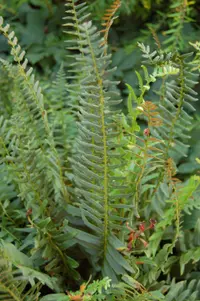
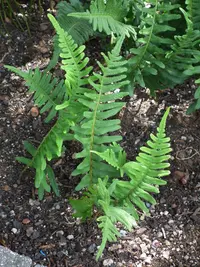
The annual swordfern, Nephrolepis undulata, is a compact terrestrial fern valued for its finely divided, wavy fronds and dense, fountain-like clumps. It is often grown as a temporary accent plant in beds, containers, or mixed planters.

In nature it occurs in warm, humid regions, usually in shaded or semi-shaded habitats with consistently moist, well-drained soil rich in organic matter. Its fast growth and relatively shallow roots make it easy to start but it can dry out quickly if neglected.

Understanding how to care for annual swordfern mainly involves providing steady moisture, moderate indirect light, and protection from harsh sun and cold drafts.

Main Plant Requirements

Care Difficulty

Moderate Care

Light Preference

Partial Shade

Water Requirements

Keep Soil Moist

Temperature Preference

Tropical / Frost Sensitive

Hardiness Zone

10–11

Soil Texture

Loamy, Peaty, Organic-rich

Soil pH

Acidic (5.5–6.5), Slightly acidic (6.5–7.0)

Soil Drainage

Moist but well-drained

Fertilization

Light (every 4–6 weeks)

Get Personalized Care Plan

Scan your plant to receive care tips personalized for your specific plant

Available on iOS and Android

How to Care for the annual swordfern

This fern prefers bright, gentle light that mimics dappled woodland shade.

  • Provide 3–6 hours of bright, filtered light daily, such as light under high tree canopies or through sheer curtains indoors, to support dense frond growth.
  • Tolerates partial to full shade, but in deep shade fronds may grow sparse, elongated, and pale, indicating the need for slightly brighter exposure.
  • Avoid strong midday and afternoon sun, which can scorch fronds; gentle morning sun is acceptable, especially in cooler seasons or in mild climates.

Moist but not waterlogged soil is essential for healthy growth.

  • Water when the top 2–3 cm of soil feel slightly dry, aiming to keep the root zone evenly moist without allowing the soil to stay soggy.
  • Use loose, well-draining soil so excess water can exit quickly; standing water or compacted soil often leads to root rot and yellowing fronds.
  • Reduce watering slightly in cooler months and watch for crisp, browning tips as a sign of underwatering, or limp, yellowing fronds as a sign of excess moisture in Nephrolepis undulata.

Stable, warm conditions support steady fern growth and prevent stress damage.

  • Aim for 65–80°F (18–27°C) for active growth; plants kept in this range usually show strong, upright fronds and steady new leaf production.
  • Avoid temperatures below 50°F (10°C); light chills can slow growth, while frost will damage or kill fronds, especially in exposed garden plantings.
  • In hot periods above 85°F (29°C), provide shade and higher humidity, since prolonged heat combined with dry air can cause frond scorching and rapid moisture loss.

This fern prefers consistently moist air and reacts quickly to low humidity.

  • Aim for 50–70% humidity for healthy fronds and steady growth.
  • It tolerates short dry spells but prolonged air below 40% often leads to browning tips and crisp leaflet edges on annual swordfern.
  • Increase humidity with a pebble tray under the pot, grouping plants, or using a room humidifier near the fern.

This fern grows best in a light, porous, organic-rich substrate that holds moisture yet drains freely.

  • Use a mix of roughly 2 parts peat or coco coir, 1 part fine bark, and 1 part perlite to create a fibrous, airy structure.
  • Ensure water drains within a few seconds from the pot base; soggy, heavy, or compacted media quickly lead to root decline in Nephrolepis undulata.
  • Keep pH slightly acidic, around 5.5–6.5, which supports nutrient uptake and healthy root activity.
  • Improve drainage and aeration by adding extra perlite or bark chips if the mix stays wet longer than 2–3 days after watering.

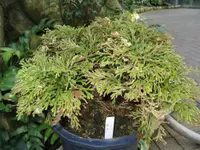
This species is well suited to container cultivation, including hanging baskets.

  • Choose a broad, shallow container to accommodate its fibrous, surface-leaning root system and spreading fronds without crowding.
  • Select a stable pot or hanging basket with a weighted base so the arching foliage does not tip the container as it matures.
  • Use a pot material that slightly slows drying, such as glazed ceramic or plastic, to keep the moisture-retentive fern mix evenly damp without frequent watering.

Nephrolepis undulata benefits from light, consistent feeding during active growth but reacts poorly to heavy or salty fertilizers.

  • Use a balanced liquid fertilizer (for example 10-10-10) diluted to 1/4–1/2 strength every 4–6 weeks in spring and summer.
  • Alternatively, apply a thin layer of mature compost on the soil surface at the start of the growing season.
  • Slow-release fertilizer pellets can be mixed into the top 2–3 cm of potting mix once each spring for annual swordfern.
  • Stop feeding in fall and winter, when growth slows, to avoid fertilizer burn and weak, stretched fronds.

Pruning Nephrolepis undulata keeps the fern tidy, encourages fresh fronds, and limits disease.

  • Carry out main pruning in late winter or early spring, before strong new growth starts.
  • Cut dead, yellowing, or damaged fronds at the base with clean, sharp scissors or snips.
  • Thin very crowded or inward-growing fronds to improve airflow and maintain an even, arching shape.
  • Disinfect tools before and after use to reduce spread of fungal spores and pests.

This fern prefers slightly snug pots but benefits from repotting when roots outgrow the container.

  • Check for roots circling the pot, emerging from drainage holes, or slower growth as signs it needs more space, usually every 2–3 years.
  • Plan repotting for spring, when Nephrolepis undulata resumes active growth and recovers faster from root disturbance.
  • Move the plant only 1 pot size up, gently loosen circling roots, and place it in a loose, peat-free, well-drained fern mix.
  • Water thoroughly after repotting, keep in bright, indirect light, and maintain higher humidity for 1–2 weeks to limit transplant stress.

Nephrolepis undulata is most reliably propagated by division rather than from spores in home conditions.

  • Divide mature, crowded clumps in spring when new fronds start to appear.
  • Lift the root ball and gently separate it into sections, ensuring each division has several healthy fronds and a good root mass.
  • Plant divisions into small pots with moist, airy fern mix, firm lightly, and water to settle the roots.
  • Maintain high humidity, steady warmth around 65–75°F, and indirect light until new fronds show active growth.

This fern is frost-tender and needs protection in regions with cold winters, especially in containers.

  • Move potted plants indoors before temperatures drop below 50°F, placing them in bright, indirect light.
  • Keep indoor temperatures around 60–75°F and avoid cold drafts or heater blasts on the foliage.
  • For plants in mild climates outdoors, add 3–5 cm of organic mulch around the root zone, keeping it away from the crown.

Care Tips

Divide Crowded Clumps

Split overgrown root masses every 1–2 years in early spring, replanting the healthiest outer sections into fresh mix to keep fronds finer, more upright, and less prone to yellowing from self‑shading.

Refresh Tired Fronds

Once or twice a year, cut back the oldest, browning fronds close to the crown and lightly top-dress with fresh mix instead of repotting, which stimulates clean new growth without stressing the root system.

Use Hanging Airflow

Grow plants in hanging baskets or on a stand where air can move freely around the fronds, which helps reduce fungal spotting and keeps the arching foliage from matting or rotting where it touches wet surfaces.

Rinse Fronds Regularly

Every 4–6 weeks gently shower the foliage with lukewarm water to wash off dust and early-stage pests, then let the plant drain thoroughly so the crown does not stay waterlogged.

Quarantine and Inspect

When bringing in new ferns or other houseplants, keep them isolated for 10–14 days and inspect undersides of fronds and the crown area with a hand lens to catch scale or mites early, which is especially useful when caring for annual swordfern in dense indoor groupings.

Common Pests and Diseases

Spider mites

This pest thrives in warm, dry indoor air and feeds on the undersides of fronds, causing fine yellow speckling and a dull, dusty appearance. Symptoms include very fine webbing between pinnae and along the midrib of the frond.

Solution

Rinse fronds thoroughly with a strong but gentle stream of lukewarm water, focusing on the undersides, and repeat every few days for 1–2 weeks. Increase humidity to 50–60%, improve air circulation, and, if needed, apply a light horticultural soap or neem oil spray, testing first on a small section of the fern.

Scale insects

These insects attach tightly to frond stems and midribs, appearing as small brown, tan, or off-white bumps that exude sticky honeydew. Symptoms include yellowing fronds, slow growth, and a tacky residue on nearby surfaces.

Solution

Manually remove visible scales by gently scraping with a cotton swab dipped in isopropyl alcohol, then rinse the plant to remove honeydew. Repeat inspections weekly and use an insecticidal soap or light horticultural oil to target newly hatched crawlers while maintaining good light and steady, moderate humidity as part of Nephrolepis undulata care.

Mealybugs

These insects hide in the dense frond bases and along the rachis, forming cottony white clusters that weaken the plant. Symptoms include distorted new fronds, sticky honeydew, and sometimes sooty mold growing on the residue.

Solution

Inspect the crown and bases of fronds closely, then dab individual mealybugs with a cotton swab dipped in isopropyl alcohol and rinse the foliage. For larger populations, use repeated applications of insecticidal soap or neem oil, ensuring good coverage in crevices, and isolate heavily infested plants until populations are controlled.

Rhizoctonia blight

This disease is favored by overly wet potting mix and poor air movement, leading to brown, sunken lesions at the frond bases and sudden collapse of affected fronds. Symptoms include thinning foliage, blackened crowns, and rotted tissue at soil level.

Solution

Remove and discard all affected fronds and any soft, discolored crown tissue, then allow the potting mix to dry slightly between waterings while improving airflow around the plant. In severe cases, repot into fresh, sterile, well-draining mix, trimming out all diseased roots, and consider using a fungicide labeled for Rhizoctonia on ferns if cultural changes are not sufficient.

Bacterial leaf spot

This disease causes small, water-soaked spots on pinnae that enlarge into irregular brown lesions often bordered by a yellow halo. Symptoms include scattered spotting across fronds, especially where water sits on foliage for long periods.

Solution

Prune and discard affected fronds, avoid overhead watering, and water at the soil level so foliage dries quickly. Increase air circulation, keep humidity moderate rather than excessively high, and space plants so fronds are not crowded or constantly touching when wet.

Interesting Facts

Naturally short-lived fronds

This species produces relatively short, narrow fronds that are shed and replaced frequently, giving it a more open, airy look than the denser Boston fern type relatives.

Preference for disturbed habitats

In the wild, it often colonizes disturbed, seasonally moist sites such as roadsides, clearings, and field margins in the tropics, rather than deep, shaded forest interiors.

Spore pattern and margins

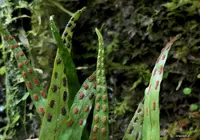
Its sori (spore clusters) form in distinct rows along the underside of the pinnae, and the pinna margins are slightly wavy, which explains the species name undulata, meaning undulating.

FAQs about annual swordfern

Growth is moderately fast in warm, humid conditions, often producing several new fronds per month during the active season. Crowded roots, low nutrients, or dry air slow growth, while regular repotting and balanced feeding support steady development.

Grow Healthy Plants with Botan Care

Keep your plants happy and healthy with plant identification, disease detection, and easy care guidance.

Botan plant care app — identify plants on mobile

Explore More Plants