Rocky crevice planting
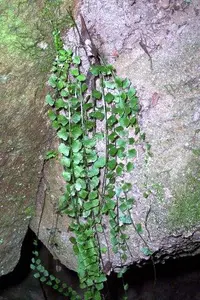
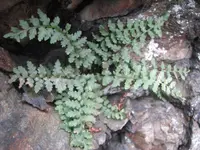
Tuck the roots into narrow rock crevices or between stacked stones to mimic its natural cliff habitat and keep the shallow root system cool and consistently moist without waterlogging.

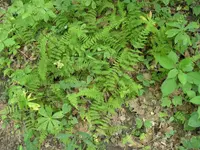
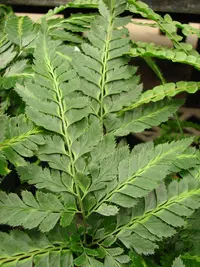
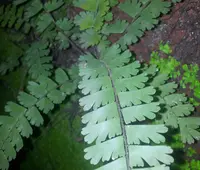
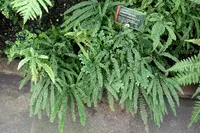
Bulblet bladderfern, Cystopteris bulbifera, is a delicate deciduous fern that forms arching, finely divided fronds from slender creeping rhizomes. It often looks soft and lacy, with small bulblets along the fronds that can drop and form new plants.
This species is native to cool, moist rocky habitats in eastern North America, especially limestone cliffs and shaded streamsides. It tends to stay relatively small and light in texture, making it suitable for shaded rock gardens or naturalistic woodland plantings.
Because it resents heat, drought, and harsh sun, it is moderately challenging in warm or dry climates. Those who care for bulblet bladderfern should provide cool shade, consistent moisture, and loose, humus-rich soil for best long-term performance.

Care Difficulty
Moderate Care

Light Preference
Partial Shade

Water Requirements
Keep Soil Moist

Temperature Preference
Cold Hardy

Hardiness Zone
3–8

Soil Texture
Loamy, Silty, Organic-rich

Soil pH
Acidic (5.5–6.5), Slightly acidic (6.5–7.0)

Soil Drainage
Moist but well-drained

Fertilization
Minimal (feed rarely)
Scan your plant to receive care tips personalized for your specific plant
Available on iOS and Android
This woodland fern prefers cool, shaded conditions that mimic moist limestone cliffs and ravines.
This fern needs consistently moist conditions and does not tolerate drying out for long.
This hardy species tolerates cool climates but grows best in moderate temperatures.
This fern prefers consistently moist air similar to a shaded stream bank.
This species prefers loose, humus-rich soil that mimics moist limestone outcrops.
This fern can be grown in containers if moisture and root space are managed carefully.
This native fern usually needs little feeding when grown in humus-rich, moist soil.
Cystopteris bulbifera benefits from light cleaning rather than structural pruning.
This fern is most often transplanted in the ground and only occasionally grown in containers.
This species is commonly propagated by its natural bulblets and by division of established clumps.
This cold-hardy fern usually needs minimal winter attention in the ground across much of its range.

Plant Health Check
Not sure what's wrong with your plant? Check your plant's health inside the app.
This fern produces small, pea-sized bulblets along the upper side of its fronds that can drop off, root, and grow into genetically identical new plants, allowing rapid local spread on suitable rock faces and banks.
In nature it grows almost exclusively on calcareous, usually limestone, cliffs and ledges, where it anchors its slender rhizomes into crevices with constantly seeping moisture and high calcium levels.
Despite its fragile, lacy foliage, this species is native to cool-temperate parts of eastern North America and tolerates cold winters, remaining hardy in many regions where winter temperatures regularly fall below freezing.

Genetic and biogeographic studies suggest that this fern played a role in the origin of several hybrid and polyploid Cystopteris species in North America, acting as a frequent parent in natural hybridization events on limestone habitats.
This species spreads by both creeping rhizomes and small bulblets on the fronds, but it is usually moderate rather than invasive. It can form loose colonies over time, especially in consistently moist, shaded rock or woodland gardens.
Keep your plants happy and healthy with plant identification, disease detection, and easy care guidance.