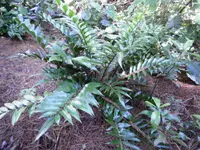
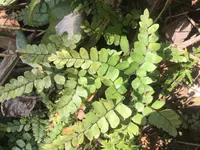
Mauritius spleenwort Care (Asplenium daucifolium)

Mauritius spleenwort

About Mauritius spleenwort

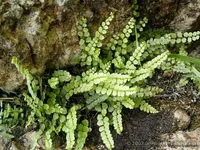
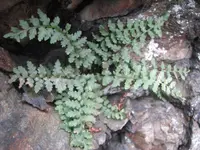
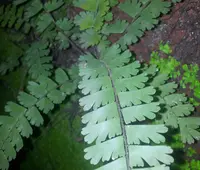
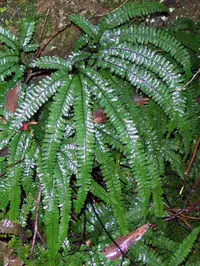
Mauritius spleenwort (Asplenium daucifolium) is an evergreen fern known for its arching, finely divided fronds that create a soft, feathery clump. It typically grows as an epiphyte, anchoring to tree trunks or rocks rather than rooting deeply in soil.

This species is native to islands in the Indian Ocean, including Mauritius, where it thrives in humid, shaded forests. It prefers consistent moisture, gentle air movement, and free-draining, organic-rich growing media.

Its need for steady humidity and avoidance of dry air or strong sun makes care for Mauritius spleenwort moderately challenging for beginners, but manageable with stable indoor conditions.

Main Plant Requirements

Care Difficulty

Moderate Care

Light Preference

Partial Shade

Water Requirements

Keep Soil Moist

Temperature Preference

Tropical / Frost Sensitive

Hardiness Zone

11–12

Soil Texture

Loamy, Peaty, Organic-rich

Soil pH

Acidic (5.5–6.5)

Soil Drainage

Moist but well-drained

Fertilization

Light (every 4–6 weeks)

Get Personalized Care Plan

Scan your plant to receive care tips personalized for your specific plant

Available on iOS and Android

How to Care for the Mauritius spleenwort

This fern prefers bright, gentle light similar to a forest understory.

  • Place Mauritius spleenwort in bright, filtered light, such as dappled shade under taller plants, with 2–4 hours of soft morning sun and no harsh midday or afternoon sun.
  • Allow partial shade; 6–8 hours of bright indirect light promotes compact, healthy fronds, while too little light causes elongated, pale growth and sparse frond production.
  • In summer, protect from strong sun to prevent scorch; in winter, move slightly closer to a bright window or brighter outdoor spot to compensate for shorter days.

This species prefers evenly moist, never sodden, root conditions.

  • Water when the top 1–2 cm of soil feels slightly dry, aiming to keep the lower soil consistently moist but not waterlogged around Asplenium daucifolium roots.
  • Use a free-draining mix and containers or beds with good drainage; yellowing, limp fronds and a sour smell suggest overwatering and possible root rot.
  • In spring and summer, you may need to water more often as growth and evaporation increase; in cooler seasons, reduce watering as growth slows but do not allow the soil to dry out completely.

This fern thrives in stable, mild to warm conditions without temperature extremes.

  • Aim for 65–80°F (18–27°C) for active growth, as this range supports steady frond production and root function.
  • Protect from cold below 55°F (13°C); short dips to 45–50°F (7–10°C) may be tolerated but repeated exposure or frost will damage fronds and can kill the plant.
  • In hot weather above 85°F (29°C), increase shade and humidity and avoid hot, drying winds or heat sources to reduce stress and frond tip browning.

This fern prefers consistently moist air and reacts quickly to dry indoor conditions.

  • Aim for 60–80% humidity; below 50% the fronds may brown at the tips and edges.
  • Watch for crisping pinnae and slowed frond unfurling as signs humidity is too low for Mauritius spleenwort.
  • Increase humidity with a nearby humidifier, grouped plants, or a pebble tray, avoiding direct misting of fronds.

Asplenium daucifolium grows best in a loose, moisture-retentive yet airy substrate that mimics decomposing forest litter.

  • Use a mix of roughly 50% peat or coco coir, 25% fine bark, and 25% perlite or pumice for structure and air pockets.
  • Aim for slightly acidic to neutral pH (6.0–7.0), which supports nutrient uptake and root health.
  • Ensure water drains freely through the mix within a few seconds, leaving it evenly moist but never waterlogged or soupy.
  • Avoid heavy garden soil, unamended clay, or compacted mixes that suffocate roots and encourage rhizome rot.

This species adapts well to containers when moisture and stability are managed carefully.

  • Choose a relatively shallow but wide pot to accommodate its spreading rhizomes and keep the center from staying saturated.
  • Select a heavier ceramic or clay container if the fronds become tall, to prevent tipping when the substrate is moist.
  • Leave 1–2 cm between soil surface and rim so overhead watering does not overflow and disturb the fibrous root zone.

This fern responds to light, consistent feeding but is sensitive to excess salts.

  • Use a balanced liquid fertilizer (around 10-10-10) at 1/4–1/2 strength for Mauritius spleenwort during active growth.
  • Apply every 4–6 weeks in spring and summer on already moist soil to avoid root burn.
  • Switch to a mild organic option like diluted compost tea if salt buildup is suspected.
  • Stop feeding in late fall and winter when growth slows, then resume lightly in spring.

Pruning needs for Asplenium daucifolium are minimal and mainly hygienic.

  • Best time to tidy is late winter or early spring before new fronds unfurl.
  • Remove dead, yellowing, or badly damaged fronds at the base with clean, sharp scissors.
  • Thin only severely crowded fronds to improve air flow without exposing the crown.
  • Avoid cutting healthy green tissue, since this fern stores energy in its fronds.

This fern prefers stable conditions and only occasional repotting or transplanting.

  • Check for roots circling the pot, pressing through drainage holes, or slowed growth as signs to move it.
  • Repot every 2–3 years in spring, stepping up only 1 pot size with a loose, moisture-retentive mix.
  • Keep the crown slightly above soil level and handle roots gently to limit stress.
  • Water thoroughly, then keep evenly moist and shaded for 1–2 weeks until the plant re-establishes.

Asplenium daucifolium is usually propagated by spore or careful division, both requiring patience and stable humidity.

  • For division, split only mature, multi-crown clumps in spring, keeping each piece with healthy roots and fronds.
  • Plant divisions in a fine, moist, free-draining mix and maintain 70–80% humidity until established.
  • Spore propagation needs sterile, consistently moist medium, bright indirect light, and warmth around 70–75°F.
  • Cover spore containers to maintain humidity, then ventilate gradually once small fern gametophytes appear.

This fern dislikes freezing conditions and benefits from mild winter protection in colder climates.

  • In regions below about 40°F, grow in containers and move indoors before hard frosts.
  • Indoors, keep temperatures around 60–75°F with bright, indirect light and stable humidity.
  • In mild frost-free zones, add a light mulch around the root zone to buffer temperature swings.
  • Avoid cold drafts, direct heat sources, and overly wet soil, which increases winter rot risk.

Care Tips

Mounting on substrate

Attach plants to a stable slab of hardwood, tree fern fiber, or lava rock using soft ties and a thin layer of sphagnum moss, which keeps the fine roots aerated and mimics the fern’s natural epiphytic habit.

Dividing clumped plants

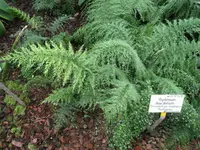
Every 3–4 years, lift and divide overly congested plants into 2–3 sections with sterilized tools, keeping each division with several healthy fronds and a good root mass to maintain vigor and prevent center dieback.

Refreshing organic layer

Once or twice a year, gently scrape away the top 1–2 cm of exhausted mix and replace with fresh, fine, bark-based medium to improve aeration around the shallow root system without disturbing the whole plant.

Controlled frond grooming

Remove only completely brown or collapsed fronds by cutting them at the base, leaving any partly green fronds intact so the plant can continue to photosynthesize and store energy.

Preventing crown rot

When misting or watering from above, aim for the media around the plant and keep the central crown as dry as possible, since excess moisture trapped at the base of young fronds is a common cause of rot when caring for Mauritius spleenwort.

Common Pests and Diseases

Scale insects

These insects feed on frond sap, causing yellowing, weakened growth, and sticky honeydew deposits that can lead to sooty mold on the fine, upright fronds.

Solution

Remove heavily infested fronds and gently scrape or wipe scales off with a cotton pad dipped in 50% isopropyl alcohol, then rinse the plant with lukewarm water; improve air circulation and, if needed, use a light horticultural oil spray labeled for ferns, applied in the evening and tested on a small area first.

Fern aphids

These insects cluster on young frond bases and undersides, causing distortion, curling, and general decline in new growth, especially in warm, humid indoor conditions.

Solution

Shower the plant with a gentle stream of lukewarm water to dislodge aphids, then apply insecticidal soap thoroughly to both sides of the fronds, repeating every 5–7 days until new growth appears clean and monitoring closely as part of general Asplenium daucifolium plant care.

Rhizoctonia leaf spot

This disease causes irregular brown to dark lesions along frond segments, often starting near the base where moisture remains trapped among the narrow, tufted fronds.

Solution

Remove and discard affected fronds, reduce overhead watering, increase airflow around the plant, and keep the foliage dry; in persistent cases, use a fungicide labeled for ornamental ferns and avoid overcrowding to limit reinfection.

Pythium crown rot

This disease starts at the dense crown where fronds emerge, leading to soft, dark, collapsing tissue and rapid wilting, especially in plants kept in constantly wet, poorly drained substrates.

Solution

Discard severely affected plants, as the pathogen spreads quickly; for mild early cases, trim out all soft tissue, repot into a free-draining, sterile mix, reduce watering, and sterilize pots and tools, then maintain evenly moist, not saturated, conditions as part of careful Mauritius spleenwort indoor care.

Interesting Facts

Mauritius cliff specialist

This fern is naturally restricted to rocky and cliff habitats on Mauritius and nearby islands, where it anchors in crevices with very little soil and high exposure to wind and salt-laden air.

Narrow, tufted fronds

It forms dense tufts of narrow, often arching fronds that are more grass-like than many other bird’s nest ferns, an adaptation that reduces wind resistance on exposed coastal and montane sites.

Island radiation lineage

It is part of an Indian Ocean island radiation of Asplenium ferns that have diversified across Madagascar, the Mascarenes, and nearby archipelagos, making it of particular interest in studies of island evolution and speciation.

Botan icon

Did you know?

In its native range, this fern often grows side by side with closely related Asplenium species on the same rocky outcrops, providing a natural living laboratory for botanists studying how closely related plants share and partition extreme microhabitats.

FAQs about Mauritius spleenwort

This fern adapts to both, but performs best in humid, sheltered outdoor spots or in shaded, consistently warm interiors. The key to Mauritius spleenwort indoor care is stable moisture, humidity, and protection from harsh sun and cold drafts.

Grow Healthy Plants with Botan Care

Keep your plants happy and healthy with plant identification, disease detection, and easy care guidance.

Botan plant care app — identify plants on mobile

Explore More Plants