


Support trailing fronds
Provide a low, wide pot or a shallow hanging basket so the wiry rhizomes and fronds can trail naturally over the edge, which reduces breakage and lets you monitor new growth points along the rim.

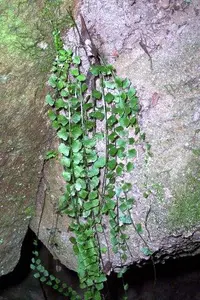
Necklace fern, Asplenium flabellifolium, is a small creeping fern with slender, beaded fronds that trail attractively over pot edges or along the ground. It forms low, delicate mats rather than upright clumps.
In nature it occurs in sheltered forests and rocky outcrops in Australia and nearby regions, often rooting into mossy crevices and leaf litter. This background explains its preference for consistent moisture, good drainage, and protection from harsh sun.
The plant is moderately easy for patient growers, but it dislikes drying out completely or sitting in soggy soil. Understanding how to care for Necklace Fern mainly means keeping its roots evenly moist and its foliage in gentle, indirect light.

Care Difficulty
Moderate Care

Light Preference
Partial Shade

Water Requirements
Keep Soil Moist

Temperature Preference
Warm Climate

Hardiness Zone
9–11

Soil Texture
Loamy, Peaty, Organic-rich

Soil pH
Acidic (5.5–6.5), Slightly acidic (6.5–7.0)

Soil Drainage
Moist but well-drained

Fertilization
Minimal (feed rarely)
Scan your plant to receive care tips personalized for your specific plant
Available on iOS and Android
This fern prefers soft, filtered light that mimics a shaded forest floor.
This species needs consistently moist but not saturated soil around its shallow roots.
This fern prefers mild, frost-free conditions with stable, cool to warm temperatures.
This species prefers moderately humid air and reacts quickly to very dry conditions.
This fern needs loose, organic-rich, fast-draining media that still holds consistent moisture.
This fern adapts well to container culture, including shallow hanging pots or wall planters.
Asplenium flabellifolium is a light feeder that benefits from modest nutrition during active growth.
Asplenium flabellifolium needs minimal pruning, mainly for hygiene and to keep the clumping habit tidy.
This fern prefers stable conditions, so repot or transplant Asplenium flabellifolium only when clearly needed.
Asplenium flabellifolium is usually propagated by division, as spore raising is slow and more technical.
This fern is moderately cold tolerant but benefits from simple winter care in cooler climates.

Plant Health Check
Not sure what's wrong with your plant? Check your plant's health inside the app.
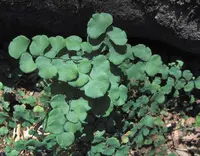
This fern produces thin, wiry rhizomes that creep across the soil or rock surface, with small fan-shaped fronds arising at intervals, giving the appearance of a delicate green necklace along the ground or in crevices.
In the wild, it commonly grows on shaded rock faces, cliff ledges, and rotting logs, anchoring itself with fine roots in small pockets of organic matter rather than deep soil.
Unlike many ferns that require constantly moist conditions, this species can tolerate periodic drying by temporarily desiccating its fronds and then recovering when moisture returns.

Asplenium flabellifolium often forms natural hybrids with closely related Asplenium species in parts of its range, which has made its taxonomy and identification more complex for botanists studying these fern communities.
Growth is generally slow to moderate. New fronds appear mainly in the warmer months, with noticeable spread over several seasons rather than weeks. In good conditions, it forms longer trailing fronds each year rather than rapidly filling space.
Keep your plants happy and healthy with plant identification, disease detection, and easy care guidance.

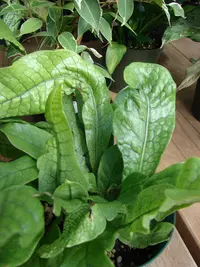
Microsorum musifolium
Microsorum musifolium
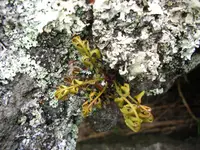
Egyptian spleenwort
Asplenium aethiopicum
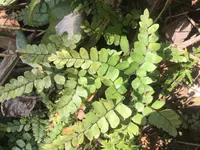
Fan-leaved Maidenhair
Adiantum flabellulatum
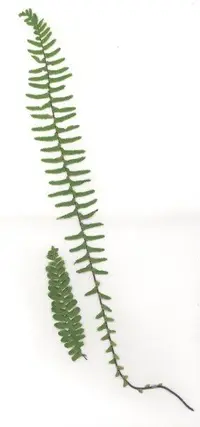
ebony spleenwort
Asplenium platyneuron
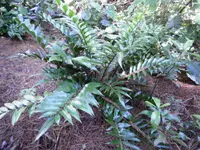
Shining Spleenwort
Asplenium oblongifolium
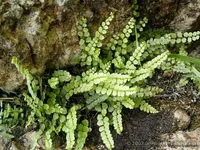
ladder spleenwort
Asplenium adulterinum
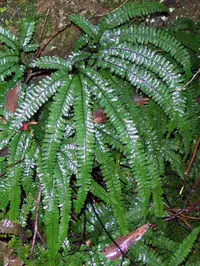
rough maidenhair
Adiantum hispidulum
California maidenhair
Adiantum jordanii