Filmy Maidenhair Care (Adiantum diaphanum)

Filmy Maidenhair

About Filmy Maidenhair

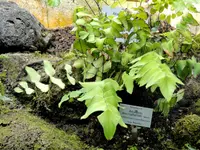
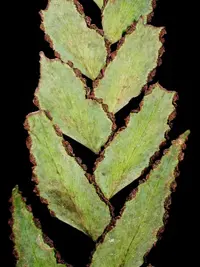
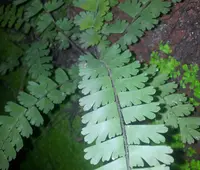
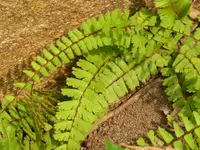
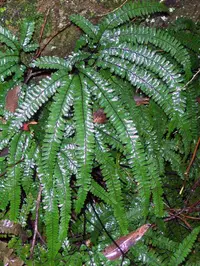
Filmy maidenhair (Adiantum diaphanum) is a small, finely textured fern known for its thin, almost translucent leaf segments and wiry black stems. It forms soft, airy clumps that give a delicate, lace-like look.

This species occurs naturally in humid, shaded habitats such as forest edges and moist rock faces, mainly in parts of East Asia and the Pacific region. It prefers consistently moist conditions, high humidity, and sheltered, indirect light.

Because it is sensitive to drying out and low humidity, it can be more challenging than many common houseplants. Owners who learn how to care for Filmy Maidenhair are rewarded with a graceful, refined foliage display.

Main Plant Requirements

Care Difficulty

Hard Care

Light Preference

Partial Shade

Water Requirements

Keep Soil Moist

Temperature Preference

Tropical / Frost Sensitive

Hardiness Zone

10–11

Soil Texture

Loamy, Peaty, Organic-rich

Soil pH

Acidic (5.5–6.5)

Soil Drainage

Moist but well-drained

Fertilization

Minimal (feed rarely)

Get Personalized Care Plan

Scan your plant to receive care tips personalized for your specific plant

Available on iOS and Android

How to Care for the Filmy Maidenhair

This delicate fern prefers soft, indirect light that mimics a shaded forest floor.

  • Provide bright, filtered light or dappled shade, such as under taller plants or a sheer curtain, with no more than 1–2 hours of weak morning sun per day.
  • Avoid direct midday or afternoon sun, which can scorch Filmy Maidenhair fronds, cause crisp brown edges, and dry the soil too quickly.
  • In summer, shift the plant deeper into shade; in winter, move it where it receives brighter but still indirect light to maintain steady growth.

This fern needs consistently moist but not waterlogged conditions to thrive.

  • Water when the top 1–2 cm of soil feels just barely dry, aiming to keep the root zone evenly damp without standing water.
  • Use a rich, humus-based, free-draining soil so excess water can drain away while still holding moisture around fine Adiantum diaphanum roots.
  • In warmer months, check moisture daily and increase watering as evaporation rises; in cooler seasons, let the surface dry slightly longer while avoiding complete soil drying or limp, curling fronds.

This species prefers mild, consistently cool-to-warm conditions without sharp temperature swings.

  • Aim for 60–75°F (16–24°C) for best growth, avoiding sudden drops or drafts that can stress the fronds.
  • Protect from cold below about 45°F (7°C); light frost can damage or kill tender foliage, especially in exposed garden sites.
  • In hot spells above 80°F (27°C), increase shade and humidity, and ensure soil does not dry out, as heat stress makes fronds prone to scorching and collapse.

This fern needs consistently high humidity to keep its ultra-thin fronds from drying out.

  • Aim for 70–90% humidity; growth declines and fronds crisp at prolonged levels below 50%.
  • In dry air, tips brown, fronds curl, and new growth stalls while older fronds drop prematurely.
  • Increase humidity with a closed terrarium, cool-mist humidifier nearby, or by grouping plants in a shallow pebble tray with water below pot level.

Adiantum diaphanum prefers a loose, organic-rich, evenly moist yet well-drained substrate that mimics leaf-litter forest floors.

  • Use a fine-textured mix of 50–60% peat or coco coir with leaf mold or compost, plus 20–30% perlite for drainage and air pockets.
  • Keep the mix consistently moist but never waterlogged; water should drain freely within a few seconds of reaching the surface.
  • Target slightly acidic soil, around pH 5.5–6.5, which supports nutrient uptake and healthy root and rhizome development.
  • Avoid heavy clay, compacted, or bark-dominant mixes that stay soggy at depth or dry rock-hard on top, as both damage delicate roots.

This species is well suited to container growing when moisture and root space are controlled carefully.

  • Choose a shallow but wide pot to match its spreading rhizomes, which favors even root moisture and stable foliage spread.
  • Select plastic or glazed ceramic over porous terracotta if maintaining constant moisture is difficult, as these retain water longer.
  • Place a thick drainage layer above the pot holes only if the mix is very fine, preventing particle clogging while still allowing rapid water escape.

This delicate fern benefits from light, consistent feeding but is sensitive to excess salts and strong fertilizers.

  • Use a balanced liquid fertilizer (around 10-10-10) at 1/4–1/2 strength for caring for Filmy Maidenhair in active growth.
  • Feed every 4–6 weeks in spring and summer only if growth is steady and foliage remains pale green.
  • Avoid slow-release pellets that can burn fine roots; a dilute liquid or very thin compost tea is safer.
  • Stop feeding in fall and winter, or when growth slows, to prevent weak, lush fronds.

Pruning Adiantum diaphanum focuses on hygiene and maintaining a fresh, airy clump rather than shaping.

  • Best timing is late winter to early spring, or whenever individual fronds age, brown, or break.
  • Remove dead, yellow, or diseased fronds at the base using clean, sharp scissors to limit infection risk.
  • Thin out crowded or tangled fronds to improve air flow and light penetration into the center of the plant.
  • Avoid cutting healthy green fronds back hard, as this reduces photosynthesis and slows recovery.

This fern prefers stable conditions, so repotting or transplanting should be infrequent and gentle.

  • Plan work in spring when new growth starts and the plant can recover faster from root disturbance.
  • Look for roots circling the pot, pushing through drainage holes, or very slow growth as signals to move up 1 pot size.
  • Lift carefully, keep the root ball as intact as possible, and set at the same depth in a moisture-retentive, well-drained mix.
  • Water thoroughly after moving and maintain high humidity and shade for 1–2 weeks to reduce transplant shock.

Adiantum diaphanum is usually propagated by careful division, as spore raising is slow and demanding.

  • Divide mature, dense clumps in early spring when new fronds are just emerging.
  • Gently tease the root mass apart into small sections, each with several healthy fronds and a good rhizome portion.
  • Plant divisions into a fine, evenly moist, free-draining mix and keep in bright shade with high humidity.
  • Avoid letting new divisions dry out; use a humidity dome or plastic cover with vents for consistent moisture.

This fern is frost sensitive and needs mild, sheltered conditions in winter, especially in colder regions.

  • In climates below 32°F, grow in containers and move plants indoors or into a frost-free greenhouse before freezes.
  • Indoors, provide cool to mild temperatures (50–65°F), bright indirect light, and evenly moist soil without waterlogging.
  • Outdoors in mild zones, use a light mulch around the root zone, keeping it off the crowns to prevent rot.

Care Tips

Frond Edge Hydration

When humidity is low, briefly mist only the air around the frond edges, not the crown or soil surface, to reduce desiccation of the thin leaf tissue without increasing the risk of crown rot.


Cool Root Zone

Place the pot inside a slightly larger cachepot with a layer of damp sphagnum moss between them to keep the root zone cooler and more evenly moist during warm spells.

Gentle Air Management

Position the plant where air movement is very light and constant, such as near but not in front of a vent or fan, to reduce fungal issues while preventing the delicate fronds from being battered.

Soft Water Strategy

Use rainwater, distilled, or reverse-osmosis water, and once every few months flush the pot thoroughly to remove accumulated salts that can burn the extremely fine roots.

Lightweight Potting Setup

Choose a tall, narrow, lightweight plastic or glazed pot with many drainage holes so the thin roots can explore depth without compaction, and rotate the pot a quarter turn monthly to keep growth even when growing Filmy Maidenhair indoors.

Common Pests and Diseases

Scale insects

This pest feeds on fronds and stems, causing yellowing, speckling, and gradual frond decline, especially in humid indoor or greenhouse settings.

Solution

Remove visible scale by gently wiping fronds and stipes with a cotton swab dipped in isopropyl alcohol, then rinse with lukewarm water; for larger populations, use repeated applications of a light horticultural oil or insecticidal soap, making sure the delicate leaf tissue does not stay coated or wet for long periods.

Aphids

These insects cluster on soft new fronds and rachises, sucking sap and leading to distorted growth and sticky honeydew that can encourage sooty mold.

Solution

Shower the plant with a gentle stream of lukewarm water to dislodge colonies, then treat remaining aphids with a dilute insecticidal soap spray, applied in the early morning and rinsed off after a short contact time to avoid damaging the thin, filmy fronds typical of Adiantum diaphanum care instructions.

Fern mites

This pest, often a type of spider mite adapted to ferns, thrives in dry air and causes very fine stippling, dull frond color, and premature browning of the leaflets.

Solution

Increase humidity to 60–80%, rinse fronds thoroughly under tepid water, and repeat every few days; in persistent cases, use a labeled miticide or insecticidal soap, ensuring good coverage of both sides of the fronds while avoiding strong sun or heat during treatment.

Rhizoctonia leaf spot

This disease causes irregular dark brown to black spots or patches that can spread along the frond, leading to dieback of affected pinnae in overly wet, stagnant conditions.

Solution

Remove and discard infected fronds, reduce overhead watering, improve air circulation, and water at the base so fronds dry quickly; in severe or recurring cases, apply a fungicide labeled for ornamental ferns, following directions closely and avoiding overuse on this thin-leaved species.

Bacterial blight

This disease produces water-soaked lesions that turn brown and may follow the veins of the frond, often starting in crowded, poorly ventilated propagation trays or indoor group plantings.

Solution

Isolate affected plants, cut off and discard diseased frond sections with sterilized tools, avoid splashing water on foliage, and space plants to improve airflow; if outbreaks persist, discard heavily affected specimens and re-establish from clean stock under stricter sanitation and moisture control.

Interesting Facts

Extremely delicate fronds

This fern forms very thin, almost translucent pinnae that can be only a few cells thick, an adaptation to consistently moist, shaded habitats where protection from strong light is less critical.

Wide Pacific distribution

It occurs naturally from eastern Asia through Malesia to Australia, New Zealand, and many Pacific islands, typically in lowland to montane forest edges, damp rock faces, and soil banks with constant humidity.

Short-lived and colonizing

Compared with some longer-lived maidenhair ferns, this species often behaves as a relatively short-lived colonizer of disturbed, damp sites, appearing quickly where moisture and shade become available and disappearing when conditions dry.

FAQs about Filmy Maidenhair

Brown fronds usually result from low humidity, drying out between waterings, or exposure to drafts and hot or cold air. Old fronds also brown naturally. Trim crisp fronds, then improve humidity and keep the root zone evenly moist.

Grow Healthy Plants with Botan Care

Keep your plants happy and healthy with plant identification, disease detection, and easy care guidance.


Botan plant care app — identify plants on mobile

Explore More Plants