stalked maidenhair Care (Adiantum petiolatum)

stalked maidenhair

About stalked maidenhair

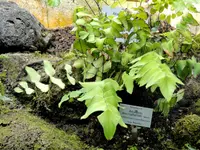
Stalked maidenhair, Adiantum petiolatum, is a delicate fern known for its fine, fan-shaped leaf segments carried on thin, dark stalks. It forms soft, arching clumps that give a light, airy texture.

In nature it is typically found in warm, humid regions, often in shaded, sheltered sites with constantly moist substrates. Its thin leaves and fine roots make it sensitive to drying out and to harsh, direct sun.

Because of this, it is considered moderately challenging, especially for beginners who tend to underwater or place ferns in bright, exposed spots. Those who learn how to care for stalked maidenhair usually focus on steady moisture, soft light, and well-drained, humus-rich soil.

Main Plant Requirements

Care Difficulty

Hard Care

Light Preference

Partial Shade

Water Requirements

Keep Soil Moist

Temperature Preference

Tropical / Frost Sensitive

Hardiness Zone

10–11

Soil Texture

Loamy, Peaty, Organic-rich

Soil pH

Acidic (5.5–6.5)

Soil Drainage

Moist but well-drained

Fertilization

Light (every 4–6 weeks)

Get Personalized Care Plan

Scan your plant to receive care tips personalized for your specific plant

Available on iOS and Android

How to Care for the stalked maidenhair

This fern prefers soft, indirect light that mimics a shaded forest floor.

  • Provide 4–6 hours of bright, filtered light per day, such as light through sheer curtains or dappled shade under taller plants, which suits stalked maidenhair growth.
  • Allow gentle early morning sun in cool climates, but shield from strong midday and afternoon sun that can scorch fronds and cause pale or crispy leaf edges.
  • In summer, move plants slightly farther from harsh light; in winter, shift closer to bright windows or brighter shade to prevent weak, stretched fronds.

This fern needs evenly moist conditions without prolonged dryness or waterlogged soil.

  • Aim to keep the root zone consistently damp; let only the top 1–2 cm of soil surface start to feel slightly dry before watering again.
  • Use a loose, humus-rich, well-draining mix so water moves through easily but still holds moisture, which supports healthy Adiantum petiolatum roots.
  • Reduce watering slightly in cooler months when growth slows, and watch for drooping, crisp fronds from underwatering or blackened, mushy bases from overwatering.

This species prefers mild, stable temperatures with no sudden extremes.

  • Ideal growth occurs around 65–75°F (18–24°C), which supports steady frond production and reduces stress on the fine leaf tissue.
  • Protect plants from cold below 45°F (7°C); light, brief dips may be tolerated, but frost will usually damage or kill fronds and can injure crowns.
  • In hot spells above 85°F (29°C), give extra shade, higher humidity, and good air movement to prevent leaf scorch and rapid moisture loss from the soil.

This fern needs consistently high humidity for stable frond growth.

  • Aim for 60–80% humidity; growth weakens and fronds crisp in dry rooms, especially with heating or air conditioning.
  • Dry air stress shows as browning tips, curled leaf edges, and rapid frond drop, starting on the youngest foliage.
  • Increase humidity with a room humidifier, grouping plants together, or placing the stalked maidenhair above but not in a pebble tray of water.

This species prefers a loose, organic, evenly moist substrate that drains freely but never dries out completely.

  • Use a fine-textured mix of 2 parts peat or coco coir, 1 part compost, and 1 part perlite to balance moisture retention and aeration.
  • Aim for slightly acidic soil, roughly pH 5.5–6.5, which supports nutrient availability and healthy root function in Adiantum petiolatum.
  • Ensure excess water drains quickly; water should pass through the mix within seconds rather than pooling on the surface or in the saucer.
  • Avoid heavy clay, compacted, or bark-dominant mixes that stay waterlogged at the base yet dry at the top, as this encourages root rot and weak fronds.

This fern is well suited to container growing for both indoor and shaded outdoor settings.

  • Choose a wide, shallow pot that matches the fern’s spreading root system, preventing deep, wet lower zones that suffocate roots.
  • Select glazed ceramic or plastic containers where slower evaporation helps keep the root zone evenly moist between waterings.
  • Stabilize lightweight pots in windy or high-traffic spots, since arching fronds can make the plant top-heavy and prone to tipping over.

This fern benefits from light, consistent nutrition during active growth but is sensitive to excess salts.

  • Use a balanced liquid fertilizer (around 10-10-10 or 20-20-20) diluted to 1/4–1/2 strength for caring for stalked maidenhair.
  • Feed every 4–6 weeks in spring and summer, applying only to moist soil, not dry roots.
  • Avoid slow-release pellets pressing directly against rhizomes; they can burn delicate roots.
  • Withhold fertilizer in fall and winter, or reduce to 1 application for the whole cool season if growth continues indoors.

Pruning Adiantum petiolatum focuses on hygiene and maintaining a fresh, airy clump.

  • Best time is late winter or early spring, before strong new growth, with light touch-ups year-round as needed.
  • Remove dead, yellowing, or mechanicaly damaged fronds at the base using clean, sharp scissors or snips.
  • Thin out very crowded, tangled fronds to improve air movement and reduce fungal issues.
  • Avoid cutting healthy fronds halfway; full frond removal at the base maintains a natural, graceful outline.

This fern prefers gentle handling and slightly snug containers rather than frequent repotting.

  • Check for roots circling the pot, pushing out drainage holes, or stalled growth as signs it needs attention.
  • Plan to repot every 2–3 years in spring, stepping up only 1 pot size to avoid waterlogged soil.
  • Use a loose, moisture-retentive mix (fine bark, peat or coco coir, and perlite), keeping the crown at the same depth.
  • Water thoroughly after repotting, keep humidity high, and shade from strong sun for 1–2 weeks to limit root stress.

Adiantum petiolatum is usually propagated by division rather than by spores in home settings.

  • Divide mature clumps in spring when new fronds just start to emerge and conditions are mild.
  • Lift the plant carefully, then separate the rhizome into sections, each with several healthy fronds and active roots.
  • Plant divisions into small pots with fine, moist, well-drained mix, firming soil gently around roots.
  • Maintain high humidity, consistent moisture, and bright, indirect light until new fronds establish and growth resumes.

This fern is frost-sensitive and needs mild, protected conditions in winter, especially in containers.

  • Keep indoor plants at 60–75°F in bright, indirect light, away from drafts and heating vents.
  • In mild climates, overwinter outdoor containers in a sheltered porch or unheated bright room above freezing.
  • Reduce watering slightly but do not allow root ball to dry completely; maintain moderate humidity.
  • In ground, use a light mulch to buffer temperature swings around the root zone in borderline climates.

Care Tips

Tray microclimate

Place the pot inside a larger cachepot or plastic nursery pot lined with damp sphagnum moss to create a humid, buffered microclimate around the fronds without waterlogging the root zone.

Frond edge inspection

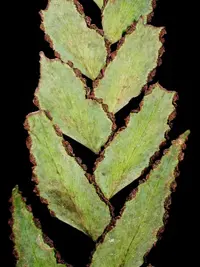
Inspect the outermost fronds weekly with a hand lens or phone macro to catch early signs of spider mites or scale on the undersides, and rinse or spot-treat immediately before damage spreads inward.

Staggered division timing

If dividing a crowded clump, split it into only 2–3 sections and repot them over 2–3 weeks instead of all at once to reduce shock and let you adjust watering based on how each division responds.

Gentle frond grooming

Use small scissors to remove only fully browned pinnae or fronds at the base while leaving any green tissue, which maintains photosynthesis and reduces stress during caring for stalked maidenhair.

Travel hydration setup

Before a short trip, group the plant with other moisture-loving species on a wide pebble tray and move slightly farther from drying air vents so the shared humidity and reduced air movement slow potting mix drying.

Common Pests and Diseases

Scale insects

This pest feeds along the thin stalks and leaf midribs, causing frond yellowing, slow growth, and sticky honeydew that can lead to sooty mold. Infestations are often first noticed as tiny brown or tan bumps on the wiry stems.

Solution

Isolate the plant, then gently wipe or dab visible scale with cotton swabs dipped in 70% isopropyl alcohol, taking care not to bend or snap the delicate fronds. Repeat weekly until no new insects appear and improve air movement and light to support recovery while avoiding harsh sprays that may burn the foliage.

Fern aphids

These insects cluster on tender new fronds and undersides of pinnae, sucking sap and causing distortion, curling, and a general decline in vigor. Sticky honeydew and fine shedding frond tissue may be visible on the pot surface.

Solution

Rinse the foliage under a gentle, lukewarm shower or sink spray, supporting the fronds with a hand to avoid breakage. Follow up with applications of diluted insecticidal soap targeted to the undersides of fronds every 5–7 days as needed, and avoid overfertilizing, which encourages soft, aphid-prone growth when caring for stalked maidenhair.

Rhizoctonia leaf blight

This disease produces irregular brown or black lesions starting along leaf edges or points where water sits, which can quickly spread through overlapping fronds in humid, crowded conditions. Symptoms include fronds that brown from the tips inward while the stems may remain green for a time.

Solution

Remove and discard affected fronds, sterilizing scissors between cuts, and allow the plant to dry slightly between waterings while keeping the root ball evenly moist, not wet. Improve air circulation, avoid overhead watering, and, in severe cases, apply a labeled fungicide drench while spacing plants so the fronds can dry quickly after misting or watering.

Botrytis gray mold

This disease appears as soft, water-soaked patches on fronds that develop a gray, fuzzy mold, especially in cool, stagnant, very humid indoor corners. Symptoms include rapid collapse of fine leaf segments and spotting that spreads where fronds touch each other or the pot rim.

Solution

Promptly remove all affected tissue and dead fronds, disposing of them in the trash, then increase airflow and reduce humidity spikes by limiting misting directly onto the foliage. Water earlier in the day, avoid splashing the fronds, and keep the plant in bright but indirect light to help surfaces dry faster and suppress further Botrytis development.

Soft scale–associated sooty mold

This disease complex results when sugary honeydew from sap-feeding insects coats the delicate leaflets, allowing black sooty fungi to grow on the surface. Symptoms include a dull gray or black film over the fine foliage that interferes with photosynthesis and spoils the plant’s appearance.

Solution

Address the underlying soft scale or other honeydew-producing insects first, then gently wash the fronds with lukewarm water and a very mild, diluted soap solution, supporting them with your hand to prevent snapping. Rinse thoroughly, repeat cleaning as needed, and keep the plant in a bright, well-ventilated position to discourage reinfestation and mold buildup.

Interesting Facts

Climbing rock-face fern

This species naturally grows on damp limestone or shaded rock faces in parts of Mexico and Central America, often forming delicate curtains of foliage over mossy walls and cliffs.

Threadlike but tough stipes

Its black, wiry stipes (leaf stalks) look fragile but are mechanically strong and resist bending, helping the fronds stay intact in dripping, rocky habitats.

Reblooming frond habit

In cultivation, this fern can repeatedly push new fronds from the same creeping rhizome throughout the year when moisture and shade are stable, giving it a more continuously fresh look than many seasonal ferns.

FAQs about stalked maidenhair

Brown leaf tips or fronds usually result from low humidity, missed waterings, or exposure to hot or cold drafts. Check that the root zone never fully dries, raise humidity, and trim only completely dead fronds.

Grow Healthy Plants with Botan Care

Keep your plants happy and healthy with plant identification, disease detection, and easy care guidance.

Botan plant care app — identify plants on mobile

Explore More Plants