Oriental vessel fern Care (Angiopteris evecta)

Also known as: king fern, giant fern, mule's foot fern
Oriental vessel fern

About Oriental vessel fern

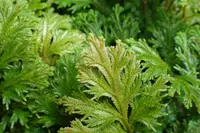
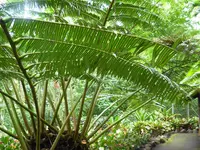
The Oriental vessel fern, Angiopteris evecta, is a large, ancient fern known for its massive, arching fronds that rise from a thick, tuber-like base. It has a bold, tropical look and can form an impressive clump in suitable conditions.

This species is native to warm, humid forests in parts of Southeast Asia and the Pacific, where it grows on shaded forest floors. In cultivation it can be demanding, as it dislikes drying out and reacts poorly to low humidity or strong sun.

Gardeners who care for Oriental vessel fern need to provide steady moisture, rich organic soil, and sheltered, low-light locations to keep it stable and healthy over time.

Main Plant Requirements

Care Difficulty

Hard Care

Light Preference

Partial Shade

Water Requirements

Keep Soil Moist

Temperature Preference

Tropical / Frost Sensitive

Hardiness Zone

10–12

Soil Texture

Loamy, Peaty, Organic-rich

Soil pH

Acidic (5.5–6.5), Slightly acidic (6.5–7.0)

Soil Drainage

Moist but well-drained

Fertilization

Moderate (every 2–4 weeks)

Get Personalized Care Plan

Scan your plant to receive care tips personalized for your specific plant

Available on iOS and Android

How to Care for the Oriental vessel fern

This large tropical fern prefers low-light, forest-like conditions with no direct sun on its fronds.

  • Provide bright, filtered light or full shade with dappled sun, such as under taller trees or 50–70% shade cloth, avoiding direct midday sun entirely.
  • Allow gentle early morning or late afternoon sun for no more than 1–2 hours if humidity is high and soil stays evenly moist.
  • Watch for pale, scorched, or crisping fronds as a sign of excessive sun; weak, stretched fronds suggest too little light for Oriental vessel fern.

This species demands consistently moist, never dry, soil that mimics a humid rainforest floor.

  • Maintain evenly moist soil, allowing only the top 1–2 cm to begin to dry before watering again, especially during active growth in warm months.
  • Ensure deep, thorough watering so moisture penetrates the full root zone, but avoid standing water or waterlogged, airless soil that encourages rot.
  • In Angiopteris evecta, limp, curling, or browning frond edges usually indicate underwatering, while yellowing bases and a sour smell point to overwatering or poor drainage.

This fern thrives in warm, humid, frost-free climates with only narrow temperature fluctuations.

  • Aim for 70–85°F (21–29°C) for strong growth, with high humidity and protection from drying winds or large day–night swings.
  • Protect from cold: growth slows below 60°F (16°C), and sustained exposure under 50°F (10°C) stresses the plant; frost can rapidly kill fronds.
  • In hot spells above 90°F (32°C), increase shade and humidity, keep soil consistently moist, and avoid reflected heat from walls or paving that can overheat the crown.

This fern needs very high, stable humidity to maintain healthy fronds.

  • Aim for 70–90% humidity; prolonged exposure below 60% quickly leads to stress.
  • Leaves curling, browning edges, or crisp frond tips indicate air is too dry for Oriental vessel fern.
  • Use large pebble trays under pots, group plants closely, and run a room humidifier near the plant to raise humidity.

This species requires deep, moisture-retentive but aerated soil to support its massive root system.

  • Use a rich, loamy mix with high organic matter, such as 50–60% composted bark or leaf mold blended with peat or coco coir.
  • Ensure slow but steady drainage; add coarse sand and perlite to prevent waterlogging while keeping the mix consistently damp.
  • Target a slightly acidic to neutral pH around 6.0–7.0, which supports nutrient availability for Angiopteris evecta.
  • Avoid compacted, heavy clay or thin, fast-drying mixes that cause root suffocation or uneven moisture.

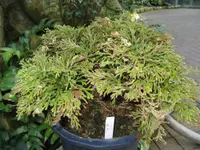
This species is challenging but can be grown in very large containers in sheltered outdoor or conservatory settings.

  • Choose an extra-deep, wide, and heavy pot to accommodate the massive rhizome and prevent the plant from toppling as fronds expand.
  • Select a thick-walled clay or concrete container when possible, as added weight and less flex improve stability for the spreading crown.
  • Elevate the pot slightly on blocks so that drainage holes remain free and excess water can escape without pooling under the base.

This nutrient-hungry fern benefits from consistent, light feeding during active growth.

  • Use a balanced liquid fertilizer (around 10-10-10) at 1/4–1/2 strength every 4–6 weeks in spring and summer.
  • Alternatively, apply a thin layer of fine compost or a gentle slow-release organic fertilizer at the start of the growing season.
  • Ensure soil is evenly moist before feeding to avoid root burn and salt buildup around the crown.
  • Stop fertilizing Angiopteris evecta in fall and winter, when growth slows or pauses.

Pruning focuses on hygiene and safety rather than shaping this large fern.

  • In late winter or early spring, remove dead, diseased, or severely damaged fronds at the base with clean, sharp pruners.
  • Cut back yellowing or torn fronds during the growing season to improve airflow and reduce fungal problems.
  • Avoid heavy cutting into the crown, as this can stunt new frond emergence and weaken overall vigor.
  • Use disinfected tools and dispose of diseased material to limit spread of fungal spores around Angiopteris evecta.

This fern is usually grown in the ground, but large containers or young plants sometimes need transplanting.

  • Consider moving or up-potting when roots circle the container, growth slows, or the plant becomes unstable from top weight.
  • Plan transplanting for warm, humid weather in late spring, minimizing disturbance to the fleshy, brittle root system.
  • Handle the massive rhizome carefully, keeping as much original soil around the roots as possible to reduce shock.
  • Water thoroughly after planting, maintain high humidity, and shade the plant for 1–2 weeks while it re-establishes.

Sexual reproduction via spores is possible but slow, so propagation is rarely attempted by home growers.

  • Collect mature spores from the underside of brown, ripe fronds and sow on sterile, moist peat-based mix.
  • Maintain very high humidity, gentle bottom warmth (70–77°F), and low to medium light for germination.
  • Allow green prothalli (gametophyte stage) to develop, then keep consistently moist until tiny sporophyte ferns appear.
  • Because Angiopteris evecta propagation demands strict hygiene and patience, it is usually left to specialist growers.

This tropical fern is highly frost-sensitive and needs strong winter protection outside true frost-free climates.

  • In USDA zones cooler than 10, grow Oriental vessel fern in large containers and move indoors before temperatures drop below 50°F.
  • Provide a bright, draft-free indoor spot with 60–75°F air and consistently moist, not waterlogged, soil.
  • For in-ground plants in marginal climates, apply a deep mulch (10–15 cm) around the root zone to buffer brief cool spells.

Care Tips

Massive pot stability

Use a very heavy, low, and wide container or place bricks inside the pot base to counterbalance the huge fronds and prevent the plant from tipping as the crown enlarges.

Rhizome crown protection

Position the rhizome so its crown sits just at or slightly above the soil surface and mulch lightly around, not over, the crown to reduce rot risk while keeping the root zone evenly moist.

Frond space planning

Allow at least 1.5–2 m of clear horizontal space around the plant so the arching fronds can expand fully without breaking against walls, furniture, or pathways.

Drainage path management

Set the container on pot feet or a slatted bench and use a large saucer or tray that can be fully emptied after watering to keep the root zone moist but not waterlogged.

Seasonal acclimation routine

If shifting between indoor and outdoor positions, move the plant gradually over 7–10 days in small light and airflow changes to avoid stress, which is especially important when caring for Oriental vessel fern in cooler or drier regions.

Common Pests and Diseases

Scale insects

These insects feed on frond and rachis sap, causing yellowing, weakened fronds, and sticky honeydew on the large leaf surfaces. Symptoms include slow growth and sooty mold developing on the honeydew in humid, sheltered plantings.

Solution

Remove heavily infested frond sections and gently scrub remaining scales off thick rachises with a soft brush and mild soapy water, then rinse well. Improve air movement around the clump and, if needed, use a light horticultural oil labeled for ferns, applied in the evening to fully hydrated plants to avoid frond burn.

Mealybugs

These insects hide in the deep frond bases and crown crevices, appearing as white cottony clusters and causing local yellowing and distortion. This pest thrives in warm, sheltered fern houses and can spread along underground rhizomes and offsets.

Solution

Inspect the crown and frond bases closely, then dab visible mealybugs with cotton swabs dipped in isopropyl alcohol and remove heavily infested tissue if localized. Follow with a thorough rinse and, if needed, repeated applications of an insecticidal soap approved for ferns, while keeping the plant unstressed with even moisture and high, but not stagnant, humidity as part of Angiopteris evecta care.

Fern aphids

These insects colonize young fronds and fiddleheads, causing puckering, soft growth, and sticky honeydew that can attract ants. This pest is most common in protected shadehouse conditions where vigorous new fronds are produced continuously.

Solution

Prune and discard badly infested young fronds, then hose down remaining foliage to dislodge aphids and remove honeydew. Enhance biological control by avoiding broad-spectrum insecticides, and if populations persist, apply a targeted insecticidal soap or neem-based spray to the undersides of young fronds at cool times of day.

Fungal leaf spots

This disease appears as dark, water-soaked or tan lesions on pinnae, often with concentric rings, and can cause premature frond decline in persistently wet shade. Symptoms include spotting that starts on lower, older fronds and moves upward when moisture stays on leaves for long periods.

Solution

Remove and discard spotted fronds at the base to reduce spore sources, and water at soil level rather than overhead so fronds dry quickly. Improve airflow around the massive crown and, in serious cases, use a fern-safe fungicide labeled for leaf spot, applied preventively during extended wet, warm periods.

Crown and rhizome rot

This disease develops in waterlogged or poorly drained sites, leading to foul-smelling, mushy crown tissue and collapse of the large fronds from the base. Symptoms include sudden wilting and browning of multiple fronds despite moist soil, with the center of the plant softening and disintegrating.

Solution

At early stages, remove all affected soft tissue with a sterile knife, dust exposed areas with a fungicidal powder, and improve drainage by raising the planting site or using a coarse, well-aerated substrate. Avoid standing water around the crown, keep soil evenly moist rather than saturated, and relocate container plants to heavier, more stable pots with good drainage holes if necessary.

Interesting Facts

Giant fleshy rhizome

This fern forms an enormous, upright, tuber-like rhizome that can reach over 1 m across in very old specimens, storing water and nutrients and supporting unusually large fronds for a fern.

Massive, arching fronds

Its individual fronds can exceed 5 m in length under ideal tropical conditions, making it one of the ferns with the largest leaves relative to body size.

Ancient lineage representative

This species belongs to the Marattiaceae, an early-diverging fern family whose basic body plan has changed relatively little since the age of the dinosaurs, offering botanists a living example of ancient fern evolution.

Botan icon

Did you know?

In parts of the Pacific, such as Samoa, this species was traditionally transplanted around villages and ceremonial sites, and very old cultivated clumps can serve as living markers of long-standing human occupation and land use.

FAQs about Oriental vessel fern

Growth is relatively slow at first, then becomes vigorous once the rhizome is established. In suitable shade and moisture, fronds may extend 30–90 cm per year, eventually forming a very large clump over several seasons.

Grow Healthy Plants with Botan Care

Keep your plants happy and healthy with plant identification, disease detection, and easy care guidance.

Botan plant care app — identify plants on mobile

Explore More Plants