Gooseberry Plant Care (Curio herreanus)

Gooseberry Plant

About Gooseberry Plant

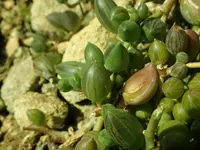
Curio herreanus, often called gooseberry plant or string of tears, is a trailing succulent from arid regions of Namibia and South Africa. It forms long, slender stems lined with bead-like, green leaves marked by faint translucent windows. This compact, cascading habit makes it popular for hanging baskets and containers. As a succulent, it stores water in its leaves and is sensitive to overwatering, which can lead to root problems. It prefers bright, indirect light, fast-draining soil, and modest watering, which makes it relatively easy indoors once its needs are understood. Learning how to care for Gooseberry Plant mainly involves balancing light with careful watering.

Main Plant Requirements

Care Difficulty

Moderate Care

Light Preference

Bright Indirect Light

Water Requirements

Low Water

Temperature Preference

Tropical / Frost Sensitive

Hardiness Zone

10–11

Soil Texture

Sandy, Loamy, Rocky

Soil pH

Slightly acidic (6.5–7.0), Neutral (7.0)

Soil Drainage

Well-drained

Fertilization

Light (every 4–6 weeks)

Get Personalized Care Plan

Scan your plant to receive care tips personalized for your specific plant

Available on iOS and Android

How to Care for the Gooseberry Plant

This trailing succulent prefers bright, indirect light with some gentle direct sun.

  • Provide 4–6 hours of bright, filtered light daily, such as morning sun with light afternoon shade, to keep beads firm and well colored on the Gooseberry Plant.
  • In hot climates, protect from harsh midday sun, which can scorch leaves and cause pale or brown patches, especially on west- or south-facing exposures.
  • If stems stretch or spacing between beads increases, increase light gradually with more morning sun or by moving to a brighter spot, especially in winter.

This species stores water in its bead-like leaves and needs infrequent, careful watering.

  • Water only when the top 3–5 cm of soil feels completely dry; in warm growing seasons this may mean roughly every 7–14 days depending on climate and soil.
  • Reduce watering in cooler months to prevent root rot, allowing soil to stay dry longer while leaves remain firm and plump.
  • Watch for signals: mushy, translucent beads and a sour smell suggest overwatering and poor drainage; wrinkled, shrunken beads indicate it is time to water Curio herreanus deeply.

This plant prefers warm, dry conditions similar to its native habitat.

  • Aim for 65–80°F (18–27°C) during active growth, with good air movement and low humidity to reduce fungal risk around stems and roots.
  • Protect from cold; growth slows below 55°F (13°C), and prolonged exposure below 40°F (4°C) can cause tissue damage and root loss.
  • Avoid frost entirely and give shade or filtered light during heat above 90°F (32°C), since extreme heat plus full sun can scorch foliage and desiccate beads.

This species handles typical indoor humidity well and rarely needs special adjustment.

  • Aim for 30–50% humidity; avoid prolonged exposure above 70% which can promote rot in the Gooseberry Plant.
  • Tolerates dry heated air better than high humidity, provided soil is not kept wet.
  • Humidity stress shows as mushy, translucent leaves from excess moisture; improve air movement around stems if this appears.

Curio herreanus prefers a lean, sharply draining mix that dries quickly between waterings.

  • Use a gritty, sandy structure such as 50–60% cactus mix blended with coarse perlite or pumice for rapid drainage.
  • Keep texture loose and airy; avoid peat-heavy or compact mixes that hold water around the roots.
  • A slightly acidic to neutral pH around 6.0–7.0 is suitable and rarely needs adjustment for home growers.
  • To improve aeration, add extra mineral components like pumice and a small amount of fine bark, and avoid any soil labeled moisture-retentive.

This species is very suitable for container growing due to its shallow, trailing root system.

  • Choose a wide, shallow pot that allows stems to cascade while keeping the root zone close to the fast-drying surface layer.
  • Opt for unglazed terracotta if extra evaporation is needed, especially in cooler or lower-light spaces.
  • Ensure drainage holes stay unobstructed by using a coarse top and bottom layer of mineral grit rather than a saucer of standing water.

Curio herreanus benefits from light, controlled feeding during the active growing season.

  • Use a balanced liquid fertilizer (around 10-10-10) diluted to 25–50% strength for caring for Gooseberry Plant type succulents.
  • Feed every 4–6 weeks in spring and summer when stems are actively elongating.
  • Skip or greatly reduce fertilization in fall and winter when growth slows.
  • Avoid rich compost or heavy slow-release pellets that retain moisture around the roots.

Curio herreanus responds well to light pruning that manages length and maintains a dense, trailing form.

  • Best time is late winter to early spring, before vigorous new growth begins.
  • Use clean, sharp scissors to remove dead, damaged, or shriveled beads and stems.
  • Shorten overly long, sparse strands to encourage branching and a fuller hanging basket.
  • Retain healthy cut segments for use as stem cuttings to refresh the pot.

Curio herreanus prefers slightly tight pots and infrequent repotting to avoid root disturbance.

  • Repot every 2–3 years in spring when roots circle the pot or growth becomes weak despite proper light.
  • Choose a shallow container with drainage and a gritty succulent mix to limit excess moisture.
  • Gently tease out circling roots, trimming only damaged sections to reduce shock.
  • Water lightly after repotting, then allow the mix to dry before resuming normal watering.

Curio herreanus is commonly propagated from stem cuttings taken during the warm growing season.

  • Take 5–8 cm healthy strands in spring or summer and remove the lowest 1–2 cm of beads.
  • Allow cut ends to callus for 1–2 days in a dry, bright place to reduce rot risk.
  • Lay or lightly insert cuttings on a barely moist, gritty succulent mix.
  • Keep in bright, indirect light with minimal watering until roots form in 2–4 weeks.

Curio herreanus is tender and needs protection from freezing conditions, especially in containers.

  • Keep plants above 40°F; prolonged exposure near or below 32°F can damage foliage and roots.
  • Move outdoor pots indoors to a bright, cool room with good airflow before first frost.
  • Water sparingly in winter, allowing soil to dry well to prevent rot in low light.

Care Tips

Staggered Repotting

Divide an overgrown plant into 2–3 sections during repotting, placing each in a shallow, wide pot to reduce rot risk and create several dense cascades instead of one congested, failure-prone clump.

Edge-Planting Technique

Position cuttings and rooted segments close to the rim of a shallow pot so they quickly trail over the edge while leaving the center open for air flow and easier inspection of stems and roots.

Proactive Stem Renewal

Every 12–18 months, selectively cut a few of the longest, bare-stemmed trails, reroot these tip cuttings back into the pot, and discard the oldest leafless sections to keep the plant compact and youthful.

Quarantine From Succulents

Keep new purchases in a separate area from existing succulent collections for 2–3 weeks so you can monitor for mealybugs or spider mites before allowing contact or shared drainage trays.

Seasonal Light Shifts

In late autumn, slowly move the plant 30–60 cm closer to the brightest window over 1–2 weeks to compensate for shorter days, then shift it slightly back in spring to prevent sudden light stress when days lengthen.

Common Pests and Diseases

Mealybugs

This pest appears as small white cottony clusters hiding in leaf axils and along the bead-like stems. Symptoms include slow growth, puckered leaves, and sticky honeydew on nearby surfaces.

Solution

Isolate the plant, then dab visible insects with cotton swabs dipped in 70% isopropyl alcohol and gently wipe stems and leaves. For heavier infestations, wash the plant under a gentle lukewarm shower, let it dry, then repeat alcohol spot-treatments weekly and use a neem oil or insecticidal soap spray on all plant surfaces until no new insects appear.

Spider mites

These insects are tiny and often invisible to the eye, but cause fine webbing between pearls and along stems, with stippled, dull, or slightly bronzed foliage. Symptoms include rapid drying and bead shriveling, especially in warm, dry indoor air.

Solution

Rinse the foliage thoroughly under a sink or shower to remove mites and webbing, then increase ambient humidity slightly and improve air movement around the plant. Follow up with 2–3 applications of insecticidal soap or neem oil at 5–7 day intervals, keeping the plant out of direct sun until leaves are dry to avoid burn.

Aphids

These insects cluster on tender new growth and flower stalks, sucking sap and causing distorted, soft, and sticky foliage. Symptoms include a shiny residue on the plant and nearby surfaces, sometimes followed by black sooty mold growing on the honeydew.

Solution

Manually wash the plant with a gentle but firm stream of water, focusing on new stems and undersides of leaves, then prune heavily infested tips. After rinsing, treat with insecticidal soap or neem oil, repeating weekly until no aphids remain and monitor any flowering stems more frequently, as they are preferred feeding sites.

Edema

This physiological disorder develops when roots absorb water faster than the plant can use, leading to water-soaked blisters or corky, raised spots on the bead surfaces. Symptoms include irregular rough patches that do not spread quickly like rot but may leave cosmetic scarring.

Solution

Allow the soil to dry more thoroughly between waterings, especially in cool or low-light periods, and always use a sharply draining succulent mix in a pot with drainage holes. Improve light levels to support faster transpiration and avoid sudden shifts from very dry to very wet soil by watering in smaller, more controlled amounts.

Stem and bead rot

This disease typically follows chronic overwatering or poor drainage and causes soft, translucent, or brown beads and stems that collapse easily. Symptoms include a sour smell from the soil and rapid dieback of whole strands starting from the crown or from the soil line upward.

Solution

Immediately reduce watering, unpot the plant, and trim off all soft or discolored tissues, keeping only firm, green segments. Repot into fresh, dry, gritty succulent soil in a smaller, well-draining pot, then water very lightly only after the mix has completely dried and maintain brighter light and good air circulation to prevent recurrence of this common issue in Curio herreanus plant care instructions.

Interesting Facts

Pearl string morphology

This species forms bead-like leaves along trailing stems, each leaf with translucent epidermal windows that allow light deeper into the tissue for more efficient photosynthesis in bright but arid habitats.

Namaqualand origin

It is native to arid regions of Namibia and South Africa (especially Namaqualand), where it grows among rocks and gravel, using its prostrate habit and rounded leaves to minimize water loss and heat stress.

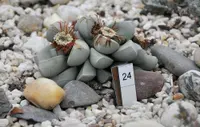
Camouflage among stones

The plant’s spherical, mottled green to purple leaves visually blend with pebbles and small stones, which likely helps reduce herbivory and sun exposure in its natural rocky environment.

Botan icon

Did you know?

Curio herreanus was previously classified in the genus Senecio and moved after molecular and morphological studies showed that many succulent so-called Senecio species formed a distinct evolutionary group now treated as the genus Curio.

FAQs about Gooseberry Plant

Leggy growth usually comes from insufficient light or from stems stretching toward one direction. Provide brighter indirect light, rotate the pot regularly, and lightly prune long trailing strands to encourage branching and denser foliage over time.

Grow Healthy Plants with Botan Care

Keep your plants happy and healthy with plant identification, disease detection, and easy care guidance.

Botan plant care app — identify plants on mobile

Explore More Plants