Latex-safe handling
Wear gloves and avoid touching your face when pruning or cleaning, since the milky sap can irritate skin and eyes, and rinse tools immediately after use to prevent dried sap from gumming up blades.

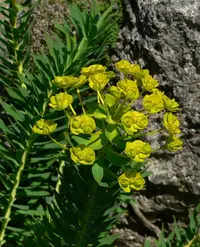
Nice spurge, Euphorbia nicaeensis, is a compact, shrubby perennial from dry, rocky slopes around the Mediterranean. It is grown mainly for its narrow blue-green leaves and lime-toned, long-lasting bracts that create a soft, architectural look.
The plant forms low, bushy clumps and keeps a neat outline, which suits borders, gravel gardens, and naturalistic plantings. Its milky sap and tough foliage help it cope with heat and drought, so it is generally undemanding once established.
Nice spurge prefers sunny, open sites with well-drained, even poor soil, and does not tolerate waterlogging. These traits make it relatively straightforward to care for Nice Spurge in dry, bright gardens.

Care Difficulty
Easy Care

Light Preference
Full Sun

Water Requirements
Low Water

Temperature Preference
Warm Climate

Hardiness Zone
7–10

Soil Texture
Sandy, Loamy, Rocky

Soil pH
Slightly acidic (6.5–7.0), Neutral (7.0)

Soil Drainage
Well-drained

Fertilization
Minimal (feed rarely)
Scan your plant to receive care tips personalized for your specific plant
Available on iOS and Android
This Mediterranean spurge prefers bright, open conditions with strong but not extreme sun.
This drought-tolerant perennial prefers infrequent, deep watering in sharply drained soil.
This species thrives in warm, dry climates and does not tolerate prolonged freezing.
This Mediterranean spurge handles typical indoor humidity well and rarely needs special adjustment.
This species needs sharply drained, mineral-rich soil that dries quickly after watering.
This species is well suited to container growing outdoors in sunny, dry conditions.
This drought-tolerant perennial needs only light feeding for healthy growth, so Nice Spurge indoor care should stay modest.
Pruning is mainly used to keep Euphorbia nicaeensis compact and remove damaged growth.
This species is usually grown in the ground, with transplanting done only when necessary.
Euphorbia nicaeensis is commonly propagated by seed and semi-ripe stem cuttings.
This hardy perennial usually needs only minimal winter care in mild to moderate climates.

Plant Health Check
Not sure what's wrong with your plant? Check your plant's health inside the app.
This species naturally occurs on dry, rocky limestone slopes along the Mediterranean, especially in coastal regions of southern Europe, where it tolerates thin, alkaline soils with very low organic matter.
Its inflorescences are made of cyathia, a specialized flower structure typical of spurges, surrounded by bright yellow-green bracts that give the plant its ornamental spring display in the wild.
Like many Euphorbia species, it produces a white, milky latex that is irritating and potentially toxic if it contacts skin or eyes, providing an effective chemical defense against many herbivores.
The milky sap is toxic and irritating. It can cause skin redness, eye injury, and stomach upset if eaten. Pets and children should not chew stems or leaves. Wear gloves and avoid contact with eyes when pruning.
Keep your plants happy and healthy with plant identification, disease detection, and easy care guidance.