


Deep container choice
Use a clay pot that is deeper than it is wide with a large drainage hole, as this accommodates the taproot and reduces root rot risk when growing Echinocereus parkeri.

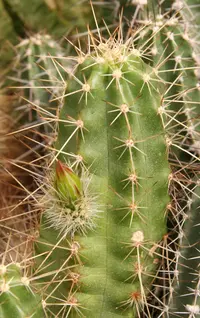
Echinocereus parkeri is a small desert cactus known for its cylindrical stems, dense spines, and showy funnel-shaped flowers that often appear in vivid pink or magenta tones. It usually grows in clumps, forming low mounds that highlight its blooms in late spring or early summer.
This species is native to arid regions of northern Mexico, where it thrives in rocky, well-drained soils and intense sun. Its natural adaptation to drought and poor soils makes it relatively straightforward to care for Echinocereus parkeri, as long as excess moisture and prolonged cold are avoided.
In cultivation it prefers bright light, fast-draining gritty soil, and infrequent but deep watering during the active growing season, with a much drier rest in cooler months.

Care Difficulty
Moderate Care

Light Preference
Full Sun

Water Requirements
Low Water

Temperature Preference
Warm Climate

Hardiness Zone
9–11

Soil Texture
Sandy, Rocky, Loamy

Soil pH
Slightly acidic (6.5–7.0), Neutral (7.0)

Soil Drainage
Well-drained

Fertilization
Minimal (feed rarely)
Scan your plant to receive care tips personalized for your specific plant
Available on iOS and Android
This desert cactus needs strong light to flower and stay compact.
This species is highly drought-tolerant and prefers infrequent, thorough watering.
This cactus prefers warm, dry conditions with a marked cool, but not freezing, winter rest.
This cactus prefers dry air and usually does not need special humidity management indoors.
This cactus needs a very fast-draining, mineral-rich substrate that dries quickly between waterings.
This species is well suited to container growing when the pot is chosen to manage drainage and root temperature.
This cactus needs only light feeding to maintain compact, healthy growth in pots.
Pruning needs for Echinocereus parkeri are minimal and mainly hygienic.
Container-grown plants benefit from infrequent but careful repotting in a very free-draining mix.
Propagation is usually done from offsets or seeds, depending on the grower’s goals and available material.
This species is relatively cold tolerant when kept dry, but container plants still benefit from simple winter precautions.

Plant Health Check
Not sure what's wrong with your plant? Check your plant's health inside the app.
This cactus is native to a very restricted area of northeastern Mexico, where it grows on limestone hillsides and rocky slopes with high mineral content in the soil.
Mature plants usually form small, tight clusters of short cylindrical stems rather than large mounds, which distinguishes it from several closely related hedgehog cacti that create big cushions.
It typically has relatively few, stout radial spines arranged in a clean, star-like pattern, giving the stems a more open appearance compared with many other hedgehog cacti with dense, tangled spination.
This cactus usually blooms in late spring to early summer, producing large, showy funnel-shaped flowers in bright pink to magenta tones. Blooms often form a ring near the stem tip, creating a striking halo effect.
Keep your plants happy and healthy with plant identification, disease detection, and easy care guidance.

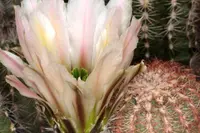
rainbow cactus
Echinocereus pectinatus
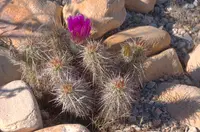
Engelmann's hedgehog cactus
Echinocereus engelmannii
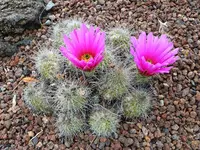
strawberry hedgehog cactus
Echinocereus stramineus
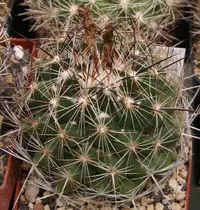
Nickels' cactus
Coryphantha nickelsiae
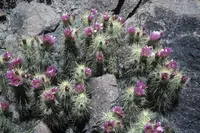
pinkflower hedgehog cactus
Echinocereus fendleri
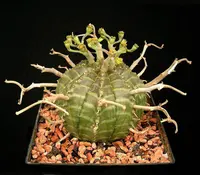
Zebra Milkball
Euphorbia meloformis
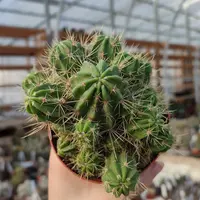
Cactus
Echinocereus maritimus
 POPULAR
Monstera
Monstera deliciosa