Night Bloom Support
Stake or cage taller stems before late spring so heavy night-blooming flowers are supported and less likely to snap in wind or storms.

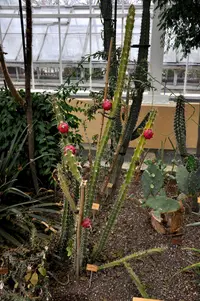
The giant red dragon apple cactus, Harrisia bonplandii, is a night-blooming, columnar cactus known for its large white flowers and bright red, elongated fruits. It typically grows with upright, many-ribbed stems armed with sharp spines.
This species is native to dry regions of South America, where it thrives in open, sunny habitats with well-drained, sandy or rocky soils. Its drought tolerance and slow to moderate growth make it relatively straightforward for growers who want to learn how to care for Giant Red Dragon Apple Cactus.
It prefers strong light, low to moderate moisture, and fast-draining soil, which suits many indoor and patio environments in warm or temperate climates.

Care Difficulty
Moderate Care

Light Preference
Full Sun

Water Requirements
Low Water

Temperature Preference
Warm Climate

Hardiness Zone
9–11

Soil Texture
Sandy, Loamy, Rocky

Soil pH
Slightly acidic (6.5–7.0), Neutral (7.0)

Soil Drainage
Well-drained

Fertilization
Minimal (feed rarely)
Scan your plant to receive care tips personalized for your specific plant
Available on iOS and Android
This cactus needs strong light to flower and maintain compact, healthy growth.
This desert cactus prefers thorough but infrequent watering in fast-draining soil.
Temperature strongly influences growth speed, water use, and flowering.
This cactus prefers dry air and handles typical indoor humidity well.
Harrisia bonplandii needs a very free-draining, mineral-rich soil mix to prevent root rot.
This species is well suited to container growing when given a stable, deep pot.
This cactus benefits from light, controlled feeding during the warm growing season to support healthy stems and flowering.
Pruning is mainly corrective and hygienic, helping maintain safe, well-shaped plants without reducing vigor.
Container-grown plants need infrequent repotting, while in-ground specimens are usually left undisturbed once established.
Harrisia bonplandii is commonly propagated from stem cuttings and seeds under warm, bright conditions.
This cactus is sensitive to prolonged frost and benefits from basic winter protection in cooler climates.

Plant Health Check
Not sure what's wrong with your plant? Check your plant's health inside the app.
This cactus opens its large white flowers at night and emits a strong sweet scent that specifically attracts nocturnal hawk moths, which act as its principal pollinators in its native South American range.
Mature plants develop long, scandent stems that can lean on shrubs or fences, forming tangled thickets of 3–5‑angled, spined shoots rather than a single upright column.
The bright red, egg‑shaped fruits contain numerous small seeds embedded in white pulp and are eaten by bats and birds, which disperse the seeds across dry forests and savannas.

In some parts of its native range, this species can form dense, nearly impenetrable cactus thickets that alter local vegetation structure and provide both shelter and barriers for wildlife and livestock.
This species usually blooms on warm nights in late spring to summer. Large, fragrant, white flowers open after dusk and close by morning. Blooming is brief but can repeat several times during the warm season.
Keep your plants happy and healthy with plant identification, disease detection, and easy care guidance.