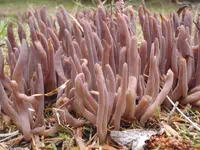
American titan Care (Macrocybe titans)

American titan

About American titan

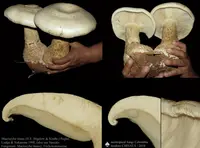
American titan (Macrocybe titans) is a giant gilled fungus, not a typical foliage plant, known for producing very large, pale tan to white caps. It usually grows in clusters on soil rich in organic matter, often near disturbed sites, paths, or landscaped areas in warm, humid regions of the Americas.

This species has a short, thick stem and broad, fleshy caps that can reach impressive sizes, giving it strong visual impact in suitable settings. It prefers consistently moist, well-drained, nutrient-rich substrates and warm conditions, which makes how to care for American titan more complex than for common houseplants.

Main Plant Requirements

Care Difficulty

Hard Care

Light Preference

Partial Shade

Water Requirements

Keep Soil Moist

Temperature Preference

Tropical / Frost Sensitive

Hardiness Zone

Unknown

Soil Texture

Loamy, Silty, Organic-rich

Soil pH

Acidic (5.5–6.5), Slightly acidic (6.5–7.0)

Soil Drainage

Moist but well-drained

Fertilization

Minimal (feed rarely)

Get Personalized Care Plan

Scan your plant to receive care tips personalized for your specific plant

Available on iOS and Android

How to Care for the American titan

This large saprophytic fungus prefers bright, indirect outdoor light with mild sun exposure.

  • Provide 2–4 hours of gentle morning sun with bright, filtered light for the rest of the day; dappled shade under open trees suits American titan well.
  • Avoid harsh midday and late-afternoon sun, which can overheat the substrate and dry it out too quickly, reducing fruiting potential.
  • In summer, increase shade as sun intensity rises; in cooler seasons, allow slightly more direct morning light to maintain energy for growth.

Macrocybe titans needs consistent surface moisture in a free-draining, organic-rich substrate.

  • Water when the top 2–3 cm of substrate feel just starting to dry, keeping it evenly moist but never waterlogged to protect the mycelium from rot.
  • In hot, dry weather, expect to water more often, guided by surface feel and appearance; in cool or rainy periods, reduce watering to avoid standing water.
  • Watch for sour smell, slimy patches, or persistent puddling as signs of overwatering, and shriveled or cracking substrate as signs of underwatering.

This tropical decomposer thrives in warm, frost-free conditions with stable temperatures.

  • Aim for 75–86°F (24–30°C) during active growth, as warmer conditions within this range promote faster mycelial colonization and fruiting.
  • Protect from cold; growth slows sharply below 60°F (16°C) and fruiting is usually lost if exposed to near-freezing temperatures around 35–40°F (2–4°C).
  • Macrocybe titans tolerates short spikes up to about 95°F (35°C) if shaded and kept moist, but prolonged extreme heat or any frost can permanently damage the culture.

This species prefers moderately humid air to support large fruiting bodies.

  • Aim for 50–70% humidity around developing clusters to reduce drying and cracking.
  • Tolerates brief dips to 30–40%, but caps may become thin, brittle, or split at the margins.
  • Increase humidity with localized misting of the substrate, damp perlite trays, or a ventilated plastic tent, while avoiding stagnant, still air.

Macrocybe titans requires a loose, organic-rich substrate rather than conventional potting soil.

  • Use a mix of well-rotted hardwood chips, straw, and composted manure that stays moist yet airy.
  • Ensure rapid drainage so water moves through within seconds, leaving the substrate evenly damp but never waterlogged.
  • Aim for slightly acidic to neutral conditions, roughly pH 6.0–7.0, to support vigorous mycelial growth.
  • Improve aeration by mixing in coarse wood chips or chopped straw and avoid dense garden soil or fine peat that compacts.

This fungus can be grown in containers, but large, stable setups are required for reliable fruiting.

  • Choose a wide, low tub or crate to allow a broad substrate surface, which supports larger fruiting clusters.
  • Raise the container on bricks or a stand so drainage holes stay clear and excess water leaves the substrate quickly.
  • Use a thick-walled plastic or wooden container that insulates the substrate and prevents overheating in direct ground contact.

Macrocybe titans grown in cultivation respond to modest, steady nutrition rather than heavy feeding.

  • Use a balanced, dilute liquid fertilizer (around 10-10-10 NPK at 1/4–1/2 strength) during active mycelial growth.
  • Apply every 3–4 weeks in the growing season, only to moist substrate, never onto dry material.
  • Reduce or stop feeding during cooler, semi-dormant periods when growth slows noticeably.
  • Rely mainly on rich, well-aged compost in the substrate; treat soluble fertilizer as a supplement, not the primary nutrient source.

Pruning for Macrocybe titans is minimal and mainly hygienic, focused on spent fruiting bodies rather than shaping.

  • Remove collapsed, discolored, or insect-damaged mushrooms promptly with clean scissors or a sharp knife at the base.
  • Collect and discard old caps before they rot to limit mold and bacterial growth around the colony.
  • Avoid disturbing the substrate or mycelium; only trim above-surface fruiting bodies.
  • Cleaning tools with alcohol before and after use reduces the risk of spreading fungal pathogens between cultures.

American titan is usually managed by relocating colonized substrate rather than traditional repotting.

  • Transplant when the substrate is fully colonized, growth slows, or mushrooms become smaller and sparse.
  • Choose mild weather, avoiding extreme heat or cold, to lower stress on the mycelium.
  • Move sections of colonized substrate into a fresh, moist, organic-rich bed or larger container without breaking them apart excessively.
  • Water gently after transplanting and keep the new site evenly moist and shaded to help the mycelium re-establish.

Propagation of Macrocybe titans relies on expanding mycelium rather than typical plant-style cuttings or seeds for home growers.

  • Use grain spawn or colonized substrate from a healthy culture as the starting material.
  • Best results come in warm conditions around 75–85°F with high humidity and shaded or indirect light.
  • Place spawn into a pasteurized, nutrient-rich medium such as composted straw, leaves, or wood-based mixes.
  • Maintain steady moisture, good air exchange, and clean tools to limit contamination while the mycelium spreads.

Macrocybe titans is warmth-loving and benefits from protection in regions with cool or freezing winters.

  • In-ground beds in mild climates can be insulated with 5–10 cm of loose mulch to buffer temperature swings.
  • In colder areas, treat outdoor colonies as seasonal and plan to restart with spawn when conditions warm.
  • Move container-based cultures to a frost-free, shaded indoor or sheltered space before temperatures drop near freezing.

Care Tips

Substrate layering

Create a 10–15 cm deep, well-draining organic layer (hardwood chips over coarse gravel or perlite) to mimic fallen-wood habitats and support stable flushes when growing American titan outdoors or in large tubs.

Shaded airflow management

Use 30–50% shade cloth combined with a small fan on low speed to keep caps dry yet the substrate evenly moist, which reduces bacterial blotch and deformed fruiting bodies.

Targeted hydration zones

Install a simple drip line or perforated hose around, not over, the fruiting zone so water enters the substrate at the sides, preventing cap rot and bruising from overhead splashes.

Clean harvest technique

Twist and lift each mushroom at the base and immediately cover the exposed substrate with a thin layer of fresh, pasteurized medium to limit contamination and encourage repeat flushes.

Environmental monitoring

Place a combined hygrometer/thermometer probe just above substrate level to track the actual microclimate around the mycelium rather than room air, and adjust ventilation or misting only when readings drift outside the target range.

Common Pests and Diseases

Fungus gnat larvae

This pest lives in very wet substrate and feeds on decomposing material and fine fungal tissue, slowing colony expansion and deforming fruiting bodies.

Solution

Reduce moisture in the casing or substrate surface, improve drainage, and use fine mesh or covers to block adult gnats from laying eggs; if needed, apply a biological control such as Bacillus thuringiensis israelensis (Bti) or beneficial nematodes targeted at larvae, following mushroom-safe product directions.

Mite infestations

These insects, often saprophytic or predatory mites, move through the substrate, feeding on mycelium and young primordia, which can cause patchy growth and aborted Macrocybe titans fruiting bodies.

Solution

Remove and discard heavily infested substrate sections, lower excess humidity while maintaining adequate moisture, and use physical barriers and strict hygiene around the growing area; in production settings, introduce predatory mites that are compatible with mushroom culture and avoid broad-spectrum chemicals that harm the mycelium.

Bacterial blotch

This disease appears as greasy, water-soaked, yellow to brown spots on caps and stems, often triggered by standing water and poor air movement on dense clusters.

Solution

Avoid overhead misting directly on caps, increase gentle air circulation to dry surfaces, and remove and discard affected fruiting bodies; disinfect tools and containers with a food-safe sanitizer between harvests to reduce bacterial carryover when trying to improve Macrocybe titans plant care.

Green mold (Trichoderma)

This disease starts as white mycelium that quickly turns green and powdery on the substrate, aggressively outcompeting Macrocybe mycelium and stopping fruiting in affected areas.

Solution

Promptly cut out and discard contaminated patches with a margin of clean substrate, isolate affected trays, and review sterilization or pasteurization steps for the growing medium; improve cleanliness of tools and work surfaces and avoid reusing visibly contaminated substrate or containers.

Interesting Facts

Largest gilled mushroom

Macrocybe titans produces some of the largest known gilled fruiting bodies, with individual caps often exceeding 50 cm across under natural conditions in the Americas.

Heat-tolerant growth

This species is adapted to warm, humid, lowland habitats and often fruits in disturbed, nutrient-rich sites such as roadsides, gardens, and pastures in tropical and subtropical regions.

Clustered fruiting habit

The fungus typically forms massive, dense clusters of many fused stems and overlapping caps, all arising from a shared underground mycelial network that exploits rich organic matter.

Botan icon

Did you know?

Macrocybe titans can produce fruiting bodies heavy enough that clusters have been reported to weigh several kilograms, making it one of the heaviest terrestrial mushrooms documented in the Western Hemisphere.

FAQs about American titan

This fungus grows very rapidly once conditions are right. Fruiting bodies can reach impressive size within a few days, then collapse and decompose just as quickly. Growth rate depends mainly on warmth, moisture, and abundant organic matter.

Grow Healthy Plants with Botan Care

Keep your plants happy and healthy with plant identification, disease detection, and easy care guidance.


Botan plant care app — identify plants on mobile

Explore More Plants