


Encourage Compact Clumps
Rotate the pot 90° every 2–3 weeks during active growth so all sides receive similar light, which keeps the plant symmetrical and reduces leaning or etiolation over time.

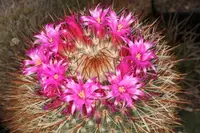
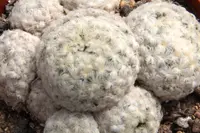
Mammillaria nunezii is a small globular cactus known for its dense white spines, tidy shape, and occasional crown of pink to magenta flowers. It usually stays compact, forming solitary heads or small clusters over time.
This species is native to arid regions of central Mexico, where it grows in rocky, well-drained habitats with intense sunlight. Its slow growth, drought tolerance, and small size make it suitable for windowsills and small indoor collections.
Good light, very free-draining mineral soil, and careful watering are the main points in how to care for Mammillaria nunezii, especially in cooler or more humid climates.

Care Difficulty
Moderate Care

Light Preference
Full Sun

Water Requirements
Low Water

Temperature Preference
Tropical / Frost Sensitive

Hardiness Zone
10–11

Soil Texture
Sandy, Rocky, Loamy

Soil pH
Slightly acidic (6.5–7.0), Neutral (7.0)

Soil Drainage
Well-drained

Fertilization
Minimal (feed rarely)
Scan your plant to receive care tips personalized for your specific plant
Available on iOS and Android
This small cactus thrives in bright, direct sun but needs gradual acclimation to avoid scorch.
This cactus prefers infrequent, deep watering and fast-drying soil.
This species prefers warm, dry conditions and does not tolerate hard frost.
This cactus tolerates a wide humidity range and usually does best in dry indoor air.
Mammillaria nunezii needs a very fast-draining, mineral-rich substrate to prevent root rot.
This species is well suited to container growing when drainage and root space are managed carefully.
This small cactus has low nutrient needs, but light feeding supports healthy growth for Mammillaria nunezii.
Pruning needs are minimal and mostly corrective for Mammillaria nunezii.
Repotting is infrequent but important to maintain root health in container-grown Mammillaria nunezii.
Propagation is commonly done from offsets and seeds for Mammillaria nunezii.
Winter care focuses on keeping Mammillaria nunezii cool, bright, and dry to avoid rot.

Plant Health Check
Not sure what's wrong with your plant? Check your plant's health inside the app.
In habitat, this cactus often produces a ring, or crown, of pink to magenta flowers near the stem apex, a trait used by botanists to help distinguish it from closely related species with more scattered blooms.
It typically bears prominent central spines that are dark-tipped and strongly hooked, a combination that helps separate it from many other Mammillaria species with straight or only slightly curved spines.
This species is native to a relatively restricted area in central Mexico, where it grows on rocky limestone slopes, making it a narrow endemic adapted to mineral-rich, fast-draining substrates.
This species typically flowers in spring to early summer, forming a ring of small pink to magenta blooms near the stem tip. In good conditions it may bloom annually and sometimes produce several small flushes.
Keep your plants happy and healthy with plant identification, disease detection, and easy care guidance.

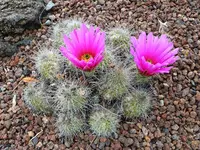
strawberry hedgehog cactus
Echinocereus stramineus
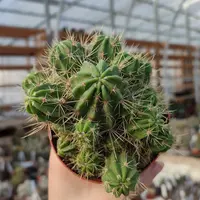
Cactus
Echinocereus maritimus
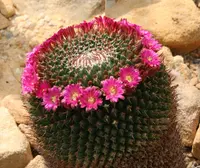
Mammillaria mystax
Mammillaria mystax
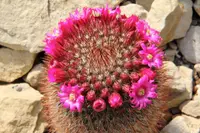 POPULAR
Spiny pincushion cactus
Mammillaria spinosissima
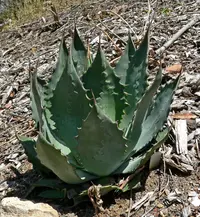
Agave wocomahi
Agave wocomahi
Crassula volkensii
Crassula volkensii
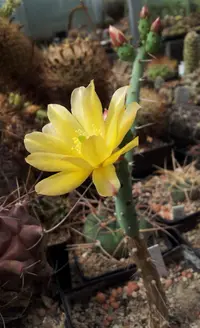
Salmonopuntia salmiana
Salmonopuntia salmiana
Feather Cactus
Mammillaria plumosa