Segment handling
Use tongs or folded newspaper to handle pads when repotting or repositioning, and allow any detached segments to callus for 5–7 days before setting on dry substrate to root.

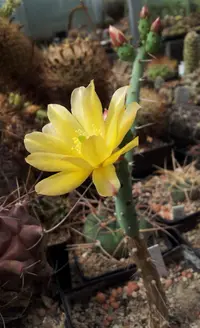
Salmonopuntia salmiana is a segmented cactus with cylindrical joints and sparse spines, forming low, branching clumps over time. It is sometimes grown as a collector’s plant rather than a common houseplant.
This species is native to arid regions of South America, where it experiences strong sun, dry air, and lean, rocky soils. Its drought tolerance and slow, compact growth habit can make it manageable in containers.
The plant prefers bright light, very well-draining soil, and careful watering with thorough drying between waterings. Understanding these desert conditions helps clarify how to care for Salmonopuntia salmiana in a home or greenhouse setting.

Care Difficulty
Easy Care

Light Preference
Full Sun

Water Requirements
Low Water

Temperature Preference
Warm Climate

Hardiness Zone
9–11

Soil Texture
Sandy, Loamy, Rocky

Soil pH
Slightly acidic (6.5–7.0), Neutral (7.0)

Soil Drainage
Well-drained

Fertilization
Minimal (feed rarely)
Scan your plant to receive care tips personalized for your specific plant
Available on iOS and Android
This cactus thrives in bright, open conditions that mimic high desert sun while avoiding extreme scorch in very hot climates.
Watering should imitate infrequent desert rains with fast drainage and thorough drying between soakings.
This species prefers warm, arid conditions and is far more sensitive to prolonged cold and wet than to dry heat.
This cactus is adapted to dry air, so humidity control is rarely important indoors.
This species needs a very fast-draining, mineral-based substrate to avoid root rot.
This species suits container growing when the pot is prepared for strong roots and heavy stems.
This drought-adapted cactus needs only light, occasional feeding to stay healthy.
Pruning is mainly used to manage size and remove damaged pads on this cactus.
Container-grown plants benefit from occasional transplanting to maintain root health.
This species is most commonly propagated from pad cuttings rather than seeds.
Cold tolerance depends on clone and site, so some winter attention is helpful, especially in containers.

Plant Health Check
Not sure what's wrong with your plant? Check your plant's health inside the app.
This species is a naturally occurring hybrid cactus, believed to involve Opuntia salmiana, and is noted for combining cylindrical, branching stems with flattened, pad-like segments in the same plant.
The plant forms distinct, detachable stem segments that can break off and root in the soil, creating new individuals and helping it spread in suitable dry habitats.
It carries both larger spines and tiny barbed hairs called glochids, which easily detach and lodge in skin, providing effective protection against herbivores in its native arid environments.
Growth is generally slow to moderate. In good light and sharply draining substrate, it may add a few new segments per year. Cool temperatures, cramped roots, low light, or frequent repotting can all slow extension growth noticeably.
Keep your plants happy and healthy with plant identification, disease detection, and easy care guidance.