star rock Care (Ariocarpus kotschoubeyanus)

Also known as: living rock
star rock

About star rock

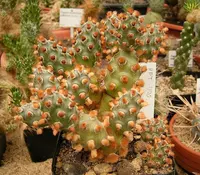
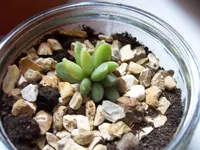
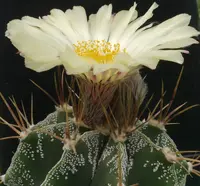
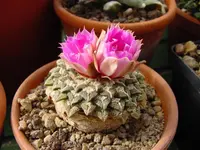
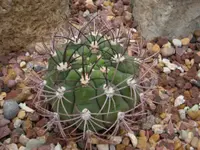
Ariocarpus kotschoubeyanus, often called star rock, is a small, slow-growing desert cactus known for its flat, star-shaped rosettes that sit almost level with the soil. Its textured, triangular tubercles resemble scattered stones, which helps it blend into its native habitat.

This species occurs in arid regions of northeastern Mexico, where it grows in rocky, limestone-rich soils under intense sun and low rainfall. Its slow growth and sensitivity to excess moisture make it more suited to patient growers.

Those who care for star rock should understand its preference for very bright light, excellent drainage, and careful, infrequent watering to avoid root problems.

Main Plant Requirements

Care Difficulty

Hard Care

Light Preference

Full Sun

Water Requirements

Low Water

Temperature Preference

Warm Climate

Hardiness Zone

9–11

Soil Texture

Sandy, Rocky, Loamy

Soil pH

Slightly acidic (6.5–7.0), Neutral (7.0)

Soil Drainage

Well-drained

Fertilization

Minimal (feed rarely)

Get Personalized Care Plan

Scan your plant to receive care tips personalized for your specific plant

Available on iOS and Android

How to Care for the star rock

This small cactus prefers strong light but needs gradual adaptation to full sun to avoid stress.

  • Provide 6–8 hours of bright light daily, ideally with direct morning sun and bright, filtered light in early afternoon.
  • In very hot, dry climates, give light shade during intense afternoon sun to prevent bleaching or corky patches on the tubercles.
  • Outdoors, place star rock in an open, unobstructed spot; in winter, maximize sun exposure to compensate for short days and low light angles.

This species demands very infrequent, careful watering to avoid root and stem rot.

  • Water only when the soil is completely dry, at least the top 5 cm, using a thorough soak that drains away within minutes.
  • During active growth in spring and early summer, this may mean watering every 3–5 weeks; in late fall and winter, keep almost completely dry.
  • Watch for overwatering signs such as yellowing, translucence, or softness, and ensure very fast-draining mineral soil around Ariocarpus kotschoubeyanus.

This cactus prefers warm, dry conditions and reacts poorly to prolonged cold or damp.

  • Aim for 70–90°F (21–32°C) during the growing season, with good air movement to prevent heat buildup around the plant body.
  • Protect from temperatures below 40°F (4°C); short dips to 32°F (0°C) are only tolerable when the plant is completely dry and cold is brief.
  • In winter rest, cool and dry conditions around 45–55°F (7–13°C) help harden tissue, but avoid frost and any combination of cold plus wet soil.

This desert cactus prefers very dry air and rarely suffers from low household humidity.

  • Aim for 20–40% humidity, similar to arid indoor conditions, and prioritize strong light and careful watering over moisture in the air.
  • Prolonged humidity above 60% increases risk of fungal spots, soft tissue, and slow rotting at the base.
  • If air is consistently above 60%, improve air movement with a small fan and avoid grouping many moisture-loving plants nearby.

Use an extremely fast-draining, mineral-based mix that dries quickly after watering.

  • Combine roughly 80–90% mineral material (pumice, coarse sand, small gravel, or crushed lava rock) with 10–20% low-organic cactus mix to mimic the rocky native habitat of Ariocarpus kotschoubeyanus.
  • Aim for slightly alkaline to neutral pH around 7.0–8.0 by including limestone chips or a small amount of crushed oyster shell, where available.
  • Ensure the structure stays loose and gritty, with particles mostly 2–6 mm, so water runs through in seconds and roots receive continuous aeration.
  • Avoid peat-heavy, compact, or moisture-retentive mixes that stay wet for more than 2–3 days, as these promote root rot and fungal problems.

This species is highly suitable for container growing due to its slow, compact root system.

  • Choose a shallow, wide pot so the taproot fits comfortably while the mineral mix can dry evenly across the surface.
  • Unglazed clay containers are preferred because they release moisture faster, helping prevent prolonged dampness around sensitive roots.
  • Raise the pot slightly on feet or grids so drainage holes stay clear and water never pools beneath the container.

This slow-growing cactus needs minimal feeding, but light, targeted fertilization supports healthy growth in containers.

  • Use a low-nitrogen balanced cactus fertilizer (for example 5-10-10) or dilute balanced liquid feed to 25–50% strength.
  • Apply once every 4–6 weeks during the warm, active growing season only, after thoroughly watering the soil.
  • Avoid organic compost or rich slow-release pellets, which hold excess moisture and can damage roots of star rock.
  • Stop feeding completely in late fall and winter when growth is dormant to prevent soft, weak tissue.

Ariocarpus kotschoubeyanus rarely needs structural pruning and is usually maintained with minimal intervention.

  • Limit work to hygiene pruning, removing only dead, diseased, or clearly rotting tissue with sterile, sharp tools.
  • Carry out any cleaning in late spring or early summer when the plant is actively growing and heals faster.
  • Avoid cutting healthy tubercles or the central crown, as this can permanently distort the plant and invite infection.
  • After any cut, keep the plant very dry and in good airflow so wound surfaces callus and fungal risk stays low.

This species grows slowly and prefers infrequent disturbance, so repotting is done only when clearly necessary.

  • Check for signs such as roots circling the container, pushing through drainage holes, or stalled growth over several seasons.
  • Plan to repot about every 4–6 years, ideally in late spring, when temperatures are warm and growth is starting.
  • Use a shallow pot with excellent drainage and a very mineral cactus mix, handling the thick taproot gently to prevent tearing.
  • Unpot carefully, trim only dead roots, let cuts dry for 1–2 days if needed, then replant and keep soil almost dry for 1–2 weeks to reduce stress.

Propagation of this cactus is commonly done from seed but is slow and demands precise conditions.

  • Sow fresh seeds in late spring or early summer in a sterile, very gritty cactus mix with fine topdressing.
  • Maintain warm temperatures around 75–85°F, bright but indirect light, and lightly moist—not wet—substrate for germination.
  • Provide high humidity using a vented cover, then gradually increase ventilation as seedlings develop to reduce damping-off.
  • Grafting seedlings onto hardy rootstocks is another method used by collectors to speed growth and improve survival.

This cactus needs a cool, very dry winter rest and has low tolerance to prolonged frost, especially in containers.

  • Maintain winter temperatures around 45–55°F if possible, avoiding extended drops below freezing, particularly when soil is damp.
  • Move container plants indoors or into an unheated but frost-free greenhouse in regions with hard freezes or wet winters.
  • Keep the potting mix almost completely dry in winter to prevent root rot, watering only enough to stop severe shriveling.
  • Provide maximum light under glass or indoors, with good air movement, to maintain plant health during dormancy.

Care Tips

Top-dressing gravel

After potting, add a 0.5–1 cm layer of coarse mineral grit around the plant body to keep the neck dry, reduce rot risk, and prevent the wool from packing with wet soil particles.

Seasonal growth check

At the end of the active season, lightly squeeze the tubercles between two fingers; firm, slightly plump tissue means the watering regime is appropriate, while very soft or shriveled tissue signals the need to adjust frequency next season when growing star rock.

Controlled root pruning

Every 3–4 years during repotting, trim only damaged or circling roots with a sterile blade, then allow the root system to air-dry for 2–3 days before replanting to minimize infection risk in this taprooted species.

Shallow pot selection

Use a pot that is just slightly wider than the plant and not excessively deep, backfilling around the taproot with mineral substrate so moisture does not linger at the crown level.

Winter rain protection

If grown outdoors in a dry climate, move the pot under a solid overhang or into a cold frame before winter storms so the plant experiences cool, bright conditions without prolonged exposure to cold, saturated media.

Common Pests and Diseases

Mealybugs

This pest hides in crevices between the tubercles and at the base of the plant, sucking sap and weakening growth. Symptoms include white cottony masses in the plant body or around the neck and sometimes in the root zone.

Solution

Isolate the plant, remove visible mealybugs with a cotton swab dipped in 70% isopropyl alcohol, and rinse the crown gently with a strong but controlled stream of water. Allow the substrate to dry well, then use a systemic insecticide labeled for cacti if the infestation persists, repeating according to label directions while monitoring new growth.

Red spider mites

These insects thrive in hot, very dry air and can cause pale, roughened patches on the tubercles and a dull, sandblasted appearance to the epidermis. Fine webbing may be visible in the areoles or between tubercles under strong light.

Solution

Increase air movement, gently rinse the plant under tepid water to remove dust and mites, and treat the plant surface with a miticide or insecticidal soap suitable for succulents, keeping the crown dry afterward. Reapply at the recommended interval, since eggs are resistant to a single treatment, and avoid extremely dry stagnant air during star rock indoor care.

Root mealybugs

This pest lives in the soil, feeding on roots and collar tissue and causing slow decline, poor growth, and shriveling despite normal watering. Symptoms include white cottony patches on roots and around the base when the plant is unpotted.

Solution

Unpot the plant, discard the old substrate, and wash roots gently under lukewarm water to remove all visible insects and eggs. Soak roots briefly in an appropriate systemic insecticide solution, let them dry for 1–2 days in a shaded, airy spot, then repot into fresh, very mineral, well-drained mix and avoid watering for several days to reduce stress.

Fusarium stem rot

This disease enters through wounds or stressed tissue and can cause localized sunken, brown to black patches that slowly spread, sometimes with a dry or corky center. Symptoms include loss of firmness in affected tubercles and a progressive collapse of the crown if not stopped early.

Solution

At first signs, cut out all visibly affected tissue with a sterile, sharp blade, removing a margin of healthy tissue, and dust the wound with a sulfur- or copper-based fungicidal powder. Keep the plant completely dry in bright, airy shade until a dry callus forms, then resume very cautious watering only in warm, stable weather to avoid reinfection.

Anthracnose leaf spot

This disease produces small, dark, sunken lesions on the tubercles that may coalesce into larger necrotic areas, especially in warm, humid conditions or after overhead watering. Symptoms include sharply defined spots with slightly raised or discolored margins that can scar the epidermis permanently.

Solution

Remove and dispose of any severely affected tissue if feasible, and keep the plant dry from above, watering only at the soil level in the morning so the crown dries quickly. Improve air circulation, avoid overcrowding, and apply a contact fungicide labeled for ornamental succulents as a preventative on nearby plants, repeating during prolonged warm, humid periods.

Interesting Facts

Stone-like camouflage

This species grows almost flat to the ground with only its triangular tubercles exposed, so in habitat it closely matches the color and texture of surrounding gravel and is very difficult to spot even at close range.

Extremely slow growth

Ariocarpus kotschoubeyanus typically needs many years to reach just a few centimeters in diameter, and in nature mature specimens can be several decades old despite their very small size.

Geophytic taproot storage

The plant has a disproportionately large underground taproot that stores water and nutrients, allowing the small above-ground body to survive long dry periods in its native semi-desert habitats of northeastern Mexico.

Botan icon

Did you know?

This species is so localized and easily overlooked in the wild that many early cactus collectors walked over populations without noticing them, and modern field studies still rely on careful ground-level searches to map its true distribution.

FAQs about star rock

Growth is very slow. A seedling may take several years to reach just a few centimeters across and often needs 8–12 years to appear mature. Patience is essential when growing star rock from seed or small offsets.

Grow Healthy Plants with Botan Care

Keep your plants happy and healthy with plant identification, disease detection, and easy care guidance.

Botan plant care app — identify plants on mobile

Explore More Plants