Goat's Horn Cactus Care (Astrophytum capricorne)

Goat's Horn Cactus

About Goat's Horn Cactus

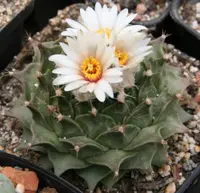
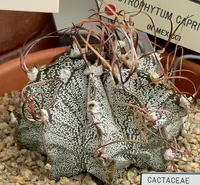
Goat's horn cactus (Astrophytum capricorne) is a small, slow-growing desert cactus known for its twisted, horn-like spines and round, ribbed stem. Mature plants often stay compact, which suits containers and small indoor spaces.

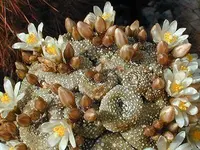
This species comes from arid regions of northern Mexico, where it is adapted to strong sun, high temperatures, and very limited rainfall. The plant produces silky yellow flowers with a red center, usually from the crown, once it is well established.

Astrophytum capricorne is considered moderately easy to grow if given bright light, fast-draining mineral soil, and sparse watering, and these conditions guide how to care for Goat's Horn Cactus.

Main Plant Requirements

Care Difficulty

Moderate Care

Light Preference

Full Sun

Water Requirements

Low Water

Temperature Preference

Tropical / Frost Sensitive

Hardiness Zone

9–11

Soil Texture

Sandy, Loamy, Rocky

Soil pH

Slightly acidic (6.5–7.0), Neutral (7.0)

Soil Drainage

Well-drained

Fertilization

Minimal (feed rarely)

Get Personalized Care Plan

Scan your plant to receive care tips personalized for your specific plant

Available on iOS and Android

How to Care for the Goat's Horn Cactus

This cactus prefers bright, mostly direct sun but benefits from some protection at the hottest times of day.

  • Provide 4–6 hours of direct morning sun plus bright, filtered light for the rest of the day; east or southeast exposure suits Goat's Horn Cactus well.
  • In very hot climates, protect from intense midday and late-afternoon sun to prevent bleaching or corky sunburn patches on the skin.
  • If light is too low, stems elongate and spines weaken; move gradually to a brighter position over 1–2 weeks to avoid shock.

Watering should be infrequent and controlled to prevent root rot in this desert-adapted cactus.

  • Allow the top 3–5 cm of soil to dry fully before watering, then soak thoroughly so excess drains away; soil should feel dry, not cool and damp.
  • During active growth in spring–summer, expect deeper watering roughly every 2–4 weeks, guided by dryness rather than the calendar for Astrophytum capricorne.
  • In autumn–winter, reduce watering sharply; signs of overwatering include yellowing, softness, and blackened base, while deep wrinkling signals prolonged drought.

This species favors warm, dry conditions with a clear difference between summer growth and cooler winter rest.

  • Optimal growing temperatures are 70–85°F (21–29°C) by day and 60–70°F (16–21°C) at night, with good air movement to reduce fungal risk.
  • It tolerates short heat spikes up to 95–100°F (35–38°C) if shaded at midday and kept slightly drier during extreme heat.
  • Minimum safe temperature is around 40°F (4°C); avoid frost, as freezing can cause tissue collapse, especially in wet or recently watered plants.

Astrophytum capricorne thrives in dry air and rarely needs special humidity management indoors.

  • Aim for 30–50% relative humidity, similar to typical heated or air-conditioned homes.
  • The plant tolerates very dry air; soft, swollen tissue or fungus on Goat's Horn Cactus usually indicates humidity combined with excess moisture, not dryness.
  • If air is extremely dry and hot, improve airflow rather than adding humidity to reduce the risk of fungal issues.

Astrophytum capricorne needs a very fast-draining, mineral-rich substrate that dries quickly between waterings.

  • Use a gritty mix such as 50–70% inorganic material (pumice, coarse sand, small gravel) with 30–50% cactus potting mix.
  • Ensure the texture is loose and airy so water runs through in seconds and roots receive ample oxygen.
  • Keep pH slightly acidic to neutral, around 6.0–7.2, which most commercial cactus mixes already provide.
  • Avoid dense peat-based mixes, unamended garden soil, or water-retentive composts that stay wet longer than 2–3 days.

This cactus is well suited to container growing due to its compact root system and slow growth.

  • Choose a pot only 2–3 cm wider than the plant’s diameter to prevent excess unused wet mix around the roots.
  • Select a heavy clay or ceramic pot if the plant becomes top-heavy so the container does not tip over easily.
  • Ensure drain holes stay unobstructed and elevate the pot slightly so excess water exits quickly and does not pool under the base.

This cactus benefits from light, controlled feeding during the warm growing season.

  • Use a diluted balanced cactus fertilizer (for example 10-10-10) or low-nitrogen formula at 1/4–1/2 strength in spring and summer.
  • Apply every 4–6 weeks when actively growing, always onto pre-watered soil to avoid root burn.
  • Avoid organic compost or manure, which stay wet and can cause rot around the roots.
  • Stop feeding Goat's Horn Cactus in fall and winter, when growth slows and the plant rests.

Astrophytum capricorne needs almost no pruning beyond basic cleanup and health maintenance.

  • Best timing is late spring or early summer, when the plant is actively growing and heals faster.
  • Remove only dead, diseased, or badly damaged tissue with a sterile, sharp knife or cactus shears.
  • Trim dried flower remnants or rotting spots at the base, cutting back to firm, healthy tissue.
  • Disinfect tools before and after use and allow cuts to dry and callus in bright, indirect light.

Repotting is infrequent but important to maintain healthy roots and sharply drained soil.

  • Plan to repot every 3–5 years, or when roots circle the pot, grow through drainage holes, or growth slows.
  • Carry out repotting in late spring, using a shallow pot with extra drainage and a gritty cactus mix.
  • Stop watering for several days before handling to firm the soil and reduce root breakage.
  • Gently loosen roots, remove old compacted mix, then replant at the same depth and keep dry 7–10 days before light watering.

Seed sowing is the standard method for propagating this species and suits patient growers.

  • Sow fresh seeds in late spring or early summer in a sterile, very well-drained cactus mix.
  • Press seeds onto the surface and barely cover; keep at 70–80°F with bright, indirect light.
  • Maintain lightly moist but never soggy conditions by using a humidity dome with small air vents.
  • Once seedlings develop several true ribs, gradually increase airflow, reduce watering, and transplant individually.

Cool, dry winter conditions are essential for healthy rest and future flowering.

  • This cactus is frost sensitive and should be kept above 40°F, ideally at 45–55°F in winter.
  • For containers, move plants indoors to a bright, airy window or an unheated but frost-free room.
  • Keep soil almost completely dry, watering only enough to prevent severe shriveling.
  • Ensure good airflow and low humidity to limit fungal problems during the dormant period.

Care Tips

Stabilize Shallow Roots

Top-dress the pot with a 1–2 cm layer of coarse grit or small stones to anchor the shallow root system and keep the stem base dry, which reduces rot risk when growing Goat's Horn Cactus.

Space For Spine Safety

Place the plant where people and pets do not brush past it, since the long, hooked spines can snag clothing and skin; a shelf edge or recessed window ledge is usually safer than a busy tabletop.

Rotate For Even Form

Rotate the pot 90° every 3–4 weeks so the stem receives light from all sides, which helps maintain a symmetrical globe instead of leaning toward one direction.

Dry Winter Rest

In late fall, gradually extend the interval between waterings and keep the plant completely dry for 6–8 weeks in winter to encourage stronger flowering and more compact growth in spring.

Inspect Spine Bases

During routine checks, look closely at the base of the spines and along the woolly areoles for mealybugs or scale, using a soft brush or cotton swab dipped in isopropyl alcohol to remove any pests before they spread.

Common Pests and Diseases

Mealybugs

This pest hides in woolly white clusters in areoles and between ribs, sucking sap and weakening the cactus over time. Symptoms include stunted growth, yellowing spots, and sticky honeydew on the plant or pot surface.

Solution

Isolate the plant, then dab visible insects with cotton swabs dipped in 70% isopropyl alcohol, repeating weekly until no new clusters appear. Improve air movement, avoid overfertilizing, and if the infestation is widespread, use a systemic insecticide labeled for cacti according to the manufacturer’s instructions.

Red spider mites

These insects are tiny and often appear as fine reddish dots, causing a dusty, dull surface on the epidermis and pale speckling that can turn bronze. Symptoms include webbing in spines and a general loss of the plant’s normal green color.

Solution

Increase humidity around but not directly on the plant by grouping pots or using a nearby pebble tray, then gently rinse the cactus with lukewarm water to remove mites from the spines. For persistent problems, apply a miticide or insecticidal soap labeled for succulents, making sure the plant then dries quickly in bright, airy conditions.

Scale insects

This pest forms hard, dome-shaped brown or gray bumps on ribs and around areoles, feeding on sap and causing localized yellowing and reduced vigor. Over time, heavy infestations can distort new growth and increase susceptibility to fungal infections.

Solution

Scrape off individual scales gently with a soft brush or wooden stick, then wipe affected areas with a cloth lightly moistened with 70% isopropyl alcohol. Inspect regularly and, if new scales keep appearing, use a systemic insecticide suitable for cacti during the active growing season, while keeping the plant in strong light to support recovery.

Fungal stem spots

This disease produces small sunken brown or dark gray spots on the green tissue that may slowly expand, especially after minor mechanical wounds or insect damage. Symptoms include firm but discolored patches that can later turn corky.

Solution

Cut out small, early lesions with a sterile, sharp blade, allowing the wound to dry and callus in a bright, dry place before the next watering. Reduce watering frequency, avoid wetting the body, improve airflow, and if spots continue to appear, apply a copper-based or sulfur-based fungicide suitable for cacti according to label directions.

Corking from sun or stress

Symptoms include tan to brown, rough, bark-like tissue forming on the lower parts of the stem, sometimes after sudden changes from shade to intense sun or chronic underwatering. This physiological change is common in mature plants but can be mistaken for disease if it progresses rapidly or appears in irregular patches higher on the body.

Solution

Adjust light levels gradually when moving the plant outdoors or to a sunnier window, and maintain a stable cycle of thorough but infrequent watering during the warm growing season. If new corky patches appear suddenly, check for pests or past sunburn, then stabilize conditions, since healthy new growth at the top is the best indicator that caring for Goat's Horn Cactus is appropriate.

Interesting Facts

Twisted horned spines

The long, thin spines often curl and twist like goat horns, a growth pattern that inspired both the common name and the species name capricorne, meaning goat-horned.

Spotty camouflage coat

Its stem is covered with small, white, woolly spots made of trichomes (tiny hairs) that scatter strong sunlight and help the plant blend into pale desert gravel in its native habitats in northern Mexico.

Night-pollinated blossoms

In habitat, the large, pale yellow flowers open during the day but often remain receptive into the evening, where they are frequently visited by nocturnal insects such as moths that help ensure cross‑pollination between widely spaced plants.

Botan icon

Did you know?

In the wild, this cactus often grows almost buried in stony, limestone-rich soils, with only the spiny stem top exposed, an adaptation that reduces water loss and grazing damage while allowing the plant to survive long periods of drought.

FAQs about Goat's Horn Cactus

Lack of blooms usually comes from insufficient light, a pot that is too large, or no cool, dry winter rest. Mature plants flower best with strong sun, lean soil, tight pots, and a marked winter temperature drop.

Grow Healthy Plants with Botan Care

Keep your plants happy and healthy with plant identification, disease detection, and easy care guidance.

Botan plant care app — identify plants on mobile

Explore More Plants