Melocactus curvispinus Care

Melocactus curvispinus

About Melocactus curvispinus

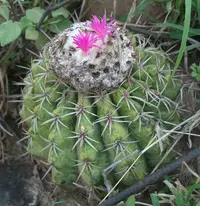
Melocactus curvispinus is a small, globular cactus known for its distinctive cephalium, a woolly, often reddish structure that forms on top of mature plants. This feature makes it visually striking and different from many common cacti.

It is native to dry, rocky habitats in northern South America and the Caribbean, where it experiences strong sun and well-drained, mineral-rich soils. In cultivation, it stays compact and slow-growing.

This species is considered moderately challenging, mainly because it dislikes root disturbance, prolonged cold, and excess moisture. Understanding how to care for Melocactus curvispinus often comes down to stable warmth, strong light, and careful, infrequent watering.

Main Plant Requirements

Care Difficulty

Hard Care

Light Preference

Full Sun

Water Requirements

Low Water

Temperature Preference

Tropical / Frost Sensitive

Hardiness Zone

11–13

Soil Texture

Sandy, Loamy, Rocky

Soil pH

Slightly acidic (6.5–7.0), Neutral (7.0)

Soil Drainage

Well-drained

Fertilization

Minimal (feed rarely)

Get Personalized Care Plan

Scan your plant to receive care tips personalized for your specific plant

Available on iOS and Android

How to Care for the Melocactus curvispinus

This cactus thrives in strong light but benefits from some protection from harsh midday sun.

  • Provide 6–8 hours of bright sun daily, ideally with morning sun and light afternoon shade, especially in hotter regions.
  • Young or newly acquired plants adapt best under filtered light for 1–2 weeks before full exposure to reduce sunburn risk on Melocactus curvispinus skin.
  • Outdoors, give some shade during intense summer afternoons; indoors, place at a south- or west-facing window with only thin curtain diffusion if needed.

This species prefers infrequent, deep watering that allows the soil to dry between soakings.

  • Water only when the top 3–5 cm of soil are completely dry; in warm growing seasons this may mean every 10–21 days depending on heat and airflow.
  • Use very fast-draining, gritty cactus mix and let excess water drain fully to prevent root rot, corking, and splitting of the stem.
  • In winter, reduce watering sharply, giving only small sips if the body starts to wrinkle slightly, which signals mild dehydration in Melocactus curvispinus.

Stable warmth is important because this cactus reacts poorly to cold and sudden temperature shifts.

  • Aim for 70–85°F (21–29°C) during active growth, as this range supports healthy tissue development and cephalium formation.
  • Keep above 55°F (13°C) at all times; growth slows below this, and brief drops under 45°F (7°C) can cause cold damage even without visible frost.
  • It tolerates short heat spikes up to about 95–100°F (35–38°C) if shaded from harsh afternoon sun and given good airflow, but avoid hot, stagnant locations.

This cactus prefers dry air and usually does not need special humidity management indoors.

  • Keep relative humidity around 30–50% to mimic its natural arid environment.
  • Tolerates drier air but prolonged humidity above 60% increases risk of rot and fungal spots at the stem base.
  • Signs of excess humidity include softening tissue, musty smell, and dark lesions; increase air movement rather than misting to correct.

Provide a very fast-draining, mineral-heavy mix to protect the shallow roots from rot.

  • Use a commercial cactus mix amended with extra coarse sand, pumice, or 3–5 mm grit to increase drainage and aeration.
  • Aim for a lean, sandy to gravelly substrate with low organic content; excessive peat or compost holds too much water.
  • Maintain slightly acidic to neutral pH around 6.0–7.0, which supports nutrient uptake without encouraging rot organisms.
  • Avoid dense, clay-based, or water-retentive soils; water should pass through the pot within seconds and not leave the mix muddy.

This species is well suited to container growing when drainage and stability are carefully managed.

  • Choose a heavy terracotta or ceramic pot to counterbalance the top-heavy cephalium and reduce tipping risk.
  • Select a pot only 2–3 cm wider than the root ball so the mix dries evenly and does not stay wet in unused zones.
  • Elevate the container on pot feet or a mesh stand so drainage holes stay clear and excess water escapes quickly.

This cactus benefits from light, controlled feeding during its active season.

  • Use a diluted (25–50% strength) balanced cactus fertilizer or low-nitrogen 5-10-10 liquid feed.
  • Apply every 4–6 weeks in spring and summer only, onto pre-watered soil to avoid root burn.
  • Do not feed in fall and winter, when growth slows and the plant rests.
  • Avoid compost or rich organic mixes; Melocactus curvispinus prefers lean, mineral substrates.

Melocactus curvispinus needs almost no pruning, as its form develops naturally.

This cactus prefers tight pots and resents frequent disturbance, so repot only when clearly necessary.

  • Check for roots circling the drainage holes, soil drying extremely fast, or stalled growth as repotting signals.
  • Plan to repot every 4–5 years at most, ideally in late spring when growth resumes.
  • Choose a pot only 1–2 in wider with a very fast-draining cactus mix.
  • Lift the plant gently, keep the root ball largely intact, and avoid watering for 3–5 days after repotting to limit root stress.

Propagation of Melocactus curvispinus is slow and usually done from seed rather than offsets.

  • Sow fresh seeds in late spring in a sterile, very gritty cactus mix.
  • Maintain 75–85°F, bright shade, and consistently lightly moist (not wet) substrate for germination.
  • Cover the tray with a clear lid or plastic to keep high humidity, ventilating daily to prevent fungus.
  • Grow seedlings in low light at first, then increase light gradually over several months.

This tropical cactus is not frost hardy and needs careful indoor winter management in most climates.

  • Keep temperatures around 60–70°F indoors; avoid exposure below 50°F.
  • Place in the brightest possible window or under grow lights to maintain the cephalium and overall health.
  • Water sparingly, allowing soil to dry almost completely; cool, wet conditions increase rot risk.
  • Ensure good air circulation indoors and keep the pot away from cold drafts or window condensation.

Care Tips

Protect the cephalium

Once the bristly cephalium forms, avoid touching or wetting it directly and rotate the pot only slightly at a time, as sudden changes or moisture on this structure can stress the plant and disrupt flowering.

Transition from nursery

If the plant arrives in peat-heavy nursery soil, wait 2–3 weeks for acclimation, then repot into a very mineral mix and keep it slightly drier for another 1–2 weeks to reduce transplant shock.

Controlled summer move

When moving the plant outdoors for summer, start in bright shade for 7–10 days and then increase sun exposure in small steps, while shielding it from warm rain that can over-saturate the potting mix.

Winter light support

In low-light winters, place the cactus as close as practical to a south- or west-facing window and consider a small LED grow light on a 10–12 hour timer to prevent the stem from elongating and losing its compact shape.

Inspect roots periodically

Every 1–2 years, unpot the plant in late spring to inspect roots, trimming only dead or blackened sections and allowing cut surfaces to dry for 24 hours before replanting into fresh, dry substrate to support long-term growing Melocactus curvispinus.

Common Pests and Diseases

Red spider mites

This pest thrives in hot, dry conditions common in cactus collections and can cause a dull, grayish surface and fine webbing on the ribs and cephalium. Symptoms include slowed growth and a rough, sandblasted look to the epidermis.

Solution

Increase humidity slightly around, but not on, the plant, then wash the cactus gently with a strong stream of room‑temperature water to remove mites and webbing. Follow with 2–3 treatments of insecticidal soap or a low-toxicity miticide at 7–10 day intervals, and isolate the plant from other cacti during treatment.

Mealybugs

These insects hide between ribs, in areoles, and around the cephalium, forming white cottony clusters and sucking plant sap. Symptoms include yellowing, shriveling, and sticky honeydew that can attract sooty mold.

Solution

Remove visible colonies with cotton swabs dipped in 70% isopropyl alcohol, taking care not to wet the cephalium excessively. For wider infestations, apply insecticidal soap or a systemic insecticide labeled for cacti, and repeat after 10–14 days while keeping the plant in good light and low humidity to reduce reinfestation risk.

Scale insects

These insects appear as small, hard brown or gray bumps on the green body and sometimes near the base of the cephalium, remaining fixed in place while feeding on sap. Symptoms include localized yellow patches and gradual weakening of the plant.

Solution

Manually scrape or pry off individual scales with a soft brush or toothpick, then wipe affected areas with diluted alcohol to remove residues. For persistent problems, use a systemic insecticide drench at the start of the warm season and monitor closely, as this is an important part of Melocactus curvispinus care instructions in larger collections.

Fusarium stem rot

This disease causes soft, sunken, often reddish-brown lesions on the stem that may spread quickly from a wound or from the base upward. Symptoms include internal discoloration and collapse of affected tissue, especially in plants kept too moist or damaged at the roots or neck.

Solution

At early stages, cut out all affected tissue with a sterile knife back to firm, healthy tissue and dust the wound with a dry fungicidal powder or sulfur. Improve pot drainage, use a very open mineral substrate, reduce watering frequency, and discard severely affected plants to prevent spread to nearby cacti.

Cephalium fungal blight

This disease affects the cephalium, causing blackening, softening, or moldy patches among the bristles and wool, often after overhead watering or prolonged surface moisture. Symptoms include a foul smell and gradual collapse of the cephalium that can later damage the stem apex.

Solution

Remove all visibly affected cephalium material with sterile tools, keeping cuts as dry and limited as possible, then apply a contact fungicide or sulfur powder to the area. Stop overhead watering, ensure strong air circulation, keep the crown completely dry, and maintain a warm, bright, low-humidity environment to prevent recurrence.

Interesting Facts

Cephalium at maturity

Melocactus curvispinus forms a permanent woolly and bristly cap called a cephalium only after it reaches full maturity, and all future flowers and fruits are produced exclusively from this structure instead of from the main stem.

Colorful bird-dispersed fruits

The species produces small, bright pink to reddish club-shaped fruits that protrude from the cephalium and are eaten by birds, which help disperse the seeds in its native dry habitats of northern South America and the Caribbean.

Spineless flower zone

On mature plants, the flowering zone in the cephalium is almost spineless, allowing the tubular pink flowers to emerge between the dense wool and bristles without obstruction while the lower stem remains strongly spined for protection.

Botan icon

Did you know?

In some coastal populations of Melocactus curvispinus, plants can grow directly on exposed limestone and rocky outcrops, anchoring themselves in very shallow crevices where only a thin layer of substrate accumulates, which makes them highly specialized for extreme, drought-prone microhabitats.

FAQs about Melocactus curvispinus

This species grows slowly, often adding only a few millimeters in diameter each year. Under good conditions it may take 5–8 years to reach a small mature size and develop its characteristic cephalium.

Grow Healthy Plants with Botan Care

Keep your plants happy and healthy with plant identification, disease detection, and easy care guidance.

Botan plant care app — identify plants on mobile

Explore More Plants