Summer rain protection
If you grow this cactus outdoors, place it under a clear overhang or in a cold frame during summer storms so the woolly areoles and crown dry quickly and do not trap moisture that encourages rot.

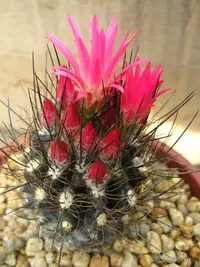
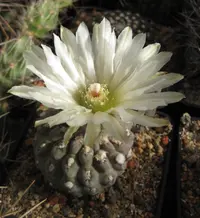
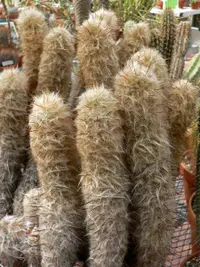
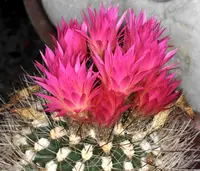
Eriosyce villosa is a small, slow-growing cactus native to the coastal and inland deserts of Chile. It typically forms a solitary, rounded stem covered with dense, bristly spines and fine hairs. Flowers appear near the crown and are usually tubular to funnel-shaped, adding a brief but striking display. This species is adapted to strong light, low rainfall, and mineral-rich, sharply draining soils. Its compact size and drought tolerance make it suitable for containers, but slow growth and sensitivity to excess moisture require attentive but not complicated care for E. villosa.

Care Difficulty
Moderate Care

Light Preference
Full Sun

Water Requirements
Low Water

Temperature Preference
Warm Climate

Hardiness Zone
9–11

Soil Texture
Sandy, Rocky, Loamy

Soil pH
Slightly acidic (6.5–7.0), Neutral (7.0)

Soil Drainage
Well-drained

Fertilization
Minimal (feed rarely)
Scan your plant to receive care tips personalized for your specific plant
Available on iOS and Android
This small Chilean cactus needs strong light but protection from intense summer scorch.
This cactus requires infrequent, deep watering and very fast-draining soil.
This species prefers warm, dry conditions with cool but not freezing winters.
This cactus prefers dry air and does not require special humidity control indoors.
This species needs a very fast-draining, mineral-based soil to prevent root rot.
This species is well suited to container growing when drainage and pot choice are carefully managed.
This slow-growing cactus needs only light feeding to support healthy growth without forcing soft, weak tissue.
This species needs minimal pruning, focused mainly on hygiene and safety rather than shaping.
This cactus prefers to stay slightly root-bound and only needs repotting when growth or drainage decline.
Propagation is usually done from seed, as offsets are uncommon on this solitary cactus.
This cactus benefits from a cool, very dry winter rest to maintain long-term health and flowering potential.

Plant Health Check
Not sure what's wrong with your plant? Check your plant's health inside the app.
This species is native to low coastal hills and cliffs of central Chile, where it relies heavily on ocean fog and cool sea breezes instead of regular rainfall to meet much of its moisture needs.
The cactus shows notable variation in spine length, thickness, and color between populations, with some plants appearing densely shaggy and others more sparsely armed, which is why older literature treated several of these forms as separate species or varieties.
In habitat it often grows in gritty, sandy or decomposed granite soils on steep slopes, where its strong taproot anchors the plant and allows it to access deeper, more stable moisture reserves.

In its native range this cactus is sometimes found growing partly buried among coastal rocks, with only the upper part of the stem exposed, an adaptation that helps protect it from intense sun, temperature swings, and sand-laden winds while still allowing enough light for photosynthesis.
This species usually blooms in late spring to summer, once mature. It produces relatively large, funnel-shaped flowers, often yellow to orange or reddish, emerging near the crown above the spines.
Keep your plants happy and healthy with plant identification, disease detection, and easy care guidance.