BotaN logo

Old Man of the Mountain Care (Oreocereus trollii)

Old Man of the Mountain

About Old Man of the Mountain

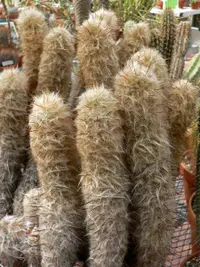
Old man of the mountain (Oreocereus trollii) is a slow-growing columnar cactus known for its dense white hairs that give it an aged, woolly look. The spines beneath the hairs are sharp and add good protection in its native habitat.

This species comes from high-altitude regions of the Andes in Bolivia and Argentina, where it tolerates strong sun, wind, and cool, dry air. It grows upright, forming solitary or slowly clumping stems over many years.

Its tough nature makes it relatively easy to keep alive if overwatering is avoided, but fast drainage and strong light are essential. Understanding how to care for Old Man of the Mountain mainly means balancing bright sun with dry, gritty soil and minimal moisture.

Main Plant Requirements

Care Difficulty

Moderate Care

Light Preference

Full Sun

Water Requirements

Low Water

Temperature Preference

Warm Climate

Hardiness Zone

8–10

Soil Texture

Sandy, Loamy, Rocky

Soil pH

Slightly acidic (6.5–7.0), Neutral (7.0)

Soil Drainage

Well-drained

Fertilization

Minimal (feed rarely)

Get Personalized Care Plan

Scan your plant to receive care tips personalized for your specific plant

Available on iOS and Android

How to Care for the Old Man of the Mountain

This high-altitude cactus needs strong light with some protection from harsh afternoon sun.

  • Provide 6–8 hours of bright sun daily, ideally with direct morning sun and light afternoon shade, especially in hot, lowland climates.
  • In very intense summer sun, give Oreocereus trollii slight shading (30–40% shade cloth or filtered light) to prevent scorching of the white hairs and skin.
  • If stems stretch or lean strongly toward a window, light is insufficient; move to a brighter, south- or west-facing position outdoors when conditions allow.

Watering should mimic an arid, rocky habitat with thorough but infrequent moisture.

  • Allow the top 3–5 cm of soil to dry fully before watering; in hot growing seasons this may mean deep watering every 2–3 weeks in fast-draining, gritty soil.
  • Reduce watering sharply in winter, giving only a light drink every 4–6 weeks if the stems start to wrinkle slightly, to avoid root rot during dormancy.
  • Signs of overwatering include yellowing, soft, or blackened tissue at the base, while persistent deep wrinkling and shrinking tips indicate underwatering.

This mountain cactus prefers cool, bright conditions but tolerates a broad temperature range when kept dry.

  • Aim for active growth in 60–80°F (16–27°C); short spells up to 90°F (32°C) are tolerated if soil is very free-draining and not kept wet.
  • Protect from hard frost; it can briefly endure about 20–25°F (-6 to -4°C) only if completely dry, but damage increases as exposure lengthens or soil stays damp.
  • In cold, wet climates, move plants under cover before nights drop below 40°F (4°C) and maintain excellent airflow to prevent cold-related rot.

This high-altitude cactus prefers quite dry air and rarely needs extra humidity.

  • Aim for 20–40% relative humidity, similar to a dry indoor room or arid outdoor climate.
  • Dry air is well tolerated; problems arise mainly if humidity stays above 60% for long periods.
  • High humidity stress shows as black or mushy spots near the stem base; increase air circulation rather than misting.

This species needs a very fast-draining, mineral-rich substrate to prevent root rot.

  • Use a gritty mix of roughly 60–70% inorganic material (pumice, coarse sand, or small gravel) and 30–40% cactus potting mix.
  • Structure should be loose and crumbly, so water drains through within seconds rather than pooling on the surface.
  • Aim for slightly acidic to neutral pH around 6.0–7.0, which suits Oreocereus trollii and helps nutrient uptake.
  • Avoid peat-heavy, compact, or moisture-retentive mixes; if soil clumps when squeezed, add more pumice or coarse sand to improve aeration.

This cactus is very suitable for container growing when the pot supports its dry, fast-draining needs.

  • Choose a heavy clay or terracotta pot to balance the tall, woolly stem and speed evaporation from the root zone.
  • Select a container just 2–4 cm wider than the root ball to prevent excess unused soil from staying wet.
  • Elevate the pot slightly on feet or mesh so drainage holes stay clear and water runs off quickly after watering.

This high-altitude cactus needs only light feeding to support healthy growth in containers.

  • Use a dilute balanced liquid cactus fertilizer (around 10-10-10) at 1/4–1/2 strength in spring and early summer.
  • Feed every 4–6 weeks during active growth if soil is very low in nutrients.
  • Avoid compost or rich organic mixes, which hold moisture and can cause root rot.
  • Stop feeding Old Man of the Mountain in late summer and do not fertilize in winter dormancy.

Pruning needs for Oreocereus trollii are minimal and mainly hygiene focused.

  • Best time for any pruning is late spring to early summer, when growth is active and wounds seal faster.
  • Remove only dead, diseased, or rotting stems using clean, sharp pruning shears.
  • Cut close to the base without damaging healthy tissue to keep the clump shape natural.
  • Avoid cosmetic shaping, since heavy cutting can distort growth and reduce future flowering.

Container-grown plants benefit from infrequent but careful repotting to prevent root congestion.

  • Plan to repot every 3–5 years, or when roots circle the pot, emerge from drainage holes, or growth slows.
  • Choose late spring, when Oreocereus trollii starts active growth, to help recovery.
  • Use a dry, well-draining cactus mix and a pot only 2–5 cm wider than the old one.
  • Gently loosen the root ball, remove rotted roots, replant slightly high, then keep soil almost dry for 7–10 days.

This species is most reliably propagated from seed, though it germinates and grows quite slowly.

  • Sow fresh seeds in late spring or early summer in a sterile, sandy cactus mix.
  • Lightly press seeds into the surface and keep at 70–80°F with bright, indirect light.
  • Maintain slightly moist but never wet conditions using a clear cover for humidity and gentle airflow.
  • Expect slow germination and growth; seedlings may need several years before showing typical hair development.

Winter care focuses on keeping the plant cold but dry to prevent root and stem rot.

  • Mature plants tolerate brief drops near 20°F if completely dry, but young plants are less hardy.
  • In cold regions, move container plants indoors to a bright, cool (40–50°F) location.
  • Keep soil almost entirely dry in winter, watering only enough to prevent extreme shriveling.
  • Outdoors in mild climates, use a raised, very free-draining bed and shelter from winter rain.

Care Tips

Rotate for symmetry

Turn the pot 90° every 2–3 weeks during active growth so the cactus receives light evenly and develops a straight, balanced column without leaning toward the brightest side.

Use a mineral mulch

Top-dress the soil with a 1–2 cm layer of coarse gravel or pumice to keep the stem base dry, reduce algae and fungus gnat issues, and protect the wool from splashing during watering.

Protect the wool

Keep the shaggy hairs dry and gently lift them with a dry stick or brush when checking the stem for rot or pests so that problems are found early without tearing the fibers.

Cool, bright wintering

If possible, overwinter the plant in a bright spot at 45–55°F with very little or no water to mimic its native high-elevation conditions and encourage stronger growth in the following season.

Stabilize tall stems

As plants get tall, place a discreet bamboo stake and use soft ties loosely around the stem to prevent top-heavy columns from tipping or snapping, especially after repotting or transport when caring for Old Man of the Mountain.

Common Pests and Diseases

Mealybugs

This pest hides in woolly white clusters between ribs and around areoles, feeding on sap and weakening the cactus over time.

Solution

Isolate the plant, then dab visible insects with cotton swabs dipped in 70% isopropyl alcohol and repeat weekly until no new clusters appear; for heavier infestations, use a systemic insecticide labeled for cacti and improve light and air movement to discourage reinfestation while following Oreocereus trollii care instructions overall.

Spider mites

These insects thrive in hot, very dry indoor air and can cause pale, stippled patches on the green tissue beneath the hair, sometimes with fine webbing at rib junctions.

Solution

Rinse the plant under a strong but gentle stream of water to remove mites, then increase humidity slightly around the plant without wetting the wool excessively and use a targeted miticide or insecticidal soap sprayed carefully on green tissue, repeating as directed until damage stops spreading.

Scale insects

This pest appears as small, hard, tan to brown bumps along ribs and near the base, often partly hidden by the long hairs while it feeds on sap.

Solution

Manually scrape or peel off individual scales with a fingernail or soft brush, wipe affected zones with 70% isopropyl alcohol, and if the problem persists apply a systemic insecticide suitable for succulents while regularly inspecting the plant base and areoles.

Corking and sunscald

Symptoms include brown, rough, bark-like patches or bleached, sunken spots on exposed sides of the stem when light or temperature changes are too abrupt.

Solution

Move the cactus gradually to brighter sites over 1–2 weeks, provide bright but lightly filtered sun during the hottest hours, and avoid sudden shifts from cool, low light to intense full sun so new growth remains firm and evenly colored.

Fungal stem spots

This disease can develop as localized brown, soft, or slightly sunken lesions on the stem, sometimes starting where moisture lingers beneath the hair or after minor mechanical damage.

Solution

Cut out small affected spots with a sterile knife back to firm, healthy tissue, dust the wound with a dry sulfur or copper-based fungicidal powder, keep the plant in a dry, airy, bright position, and avoid overhead watering so new infections do not form.

Interesting Facts

Andean wool adaptation

This cactus forms dense white hair-like spines that trap air and reduce ultraviolet radiation and evaporation, an adaptation to high-elevation Andes habitats with intense sun and strong temperature swings.

High-altitude specialist

It is naturally found in the Argentine and Bolivian Andes at roughly 3,000–4,000 m, where it endures strong winds, low atmospheric pressure, and frequent night frosts that many other cacti cannot tolerate.

Slow, columnar growth

The species grows as a solitary to sparsely branching column that elongates slowly over many years, which helps it conserve resources in nutrient-poor, rocky mountain soils.

Botan icon

Did you know?

Field observations show that the thick woolly covering can capture and hold wind-blown dust and organic particles, gradually enriching the surface around the stem and slightly improving the microsite where its roots draw nutrients in an otherwise very poor substrate.

FAQs about Old Man of the Mountain

Flowering usually starts only on older, well-established stems and needs strong light plus a cool, dry winter rest. Overfeeding, warm winters, or insufficient light commonly delay buds. Patience is important, as first blooms can take many years.

Grow Healthy Plants with Botan Care

Keep your plants happy and healthy with plant identification, disease detection, and easy care guidance.

Botan plant care app — identify plants on mobile

Explore More Plants