Adromischus schuldtianus Care

Adromischus schuldtianus

About Adromischus schuldtianus

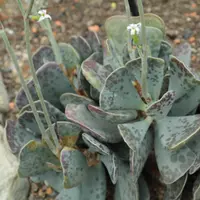
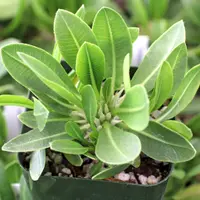
Adromischus schuldtianus is a compact, slow-growing succulent from South Africa, forming low clumps of thick, often slightly wavy leaves on short stems. Leaves may show fine spotting or marbling, giving each plant a somewhat unique appearance.

In habitat it grows on rocky slopes with excellent drainage and strong light, which explains its preference for bright, dry indoor conditions. Its drought tolerance and small size make it suitable for windowsills and small containers.

This species is generally considered manageable for growers who understand how to care for Adromischus schuldtianus, but it dislikes excess moisture and poorly draining soil, which can lead to root problems.

Main Plant Requirements

Care Difficulty

Moderate Care

Light Preference

Partial Sun

Water Requirements

Low Water

Temperature Preference

Tropical / Frost Sensitive

Hardiness Zone

10–11

Soil Texture

Sandy, Loamy, Rocky

Soil pH

Slightly acidic (6.5–7.0), Neutral (7.0)

Soil Drainage

Well-drained

Fertilization

Minimal (feed rarely)

Get Personalized Care Plan

Scan your plant to receive care tips personalized for your specific plant

Available on iOS and Android

How to Care for the Adromischus schuldtianus

This compact succulent needs bright, mostly indirect light to keep its leaves dense and well colored.

  • Provide 4–6 hours of bright morning sun with light shade or filtered light from midday onward, especially in hot, dry climates.
  • Tolerates light partial shade, but stems may stretch and leaves lose patterning if grown with less than 3–4 hours of strong light daily.
  • Protect from intense afternoon sun in summer, which can cause leaf scorch; gradually increase sun exposure when moving plants outdoors in spring for Adromischus schuldtianus care instructions.

Watering should mimic a dry, rocky habitat with thorough soakings followed by clear drying periods.

  • Allow the top 3–5 cm of soil to dry completely before watering, then soak until water drains freely from the pot or planting area.
  • Reduce watering sharply in winter, giving only small amounts once the leaves start to soften slightly, and avoid watering cool, wet soil.
  • Watch for overwatering signs such as mushy leaves, blackened bases, or sudden leaf drop in Adromischus schuldtianus; wrinkles and limp, thin leaves suggest it is too dry.

Stable, moderate warmth keeps this species compact and reduces stress.

  • Optimal growth occurs around 65–80°F (18–27°C), with slightly cooler nights improving color and reducing stretch.
  • Protect from cold below 40°F (4°C); prolonged exposure near 32°F (0°C) or any hard frost can damage or kill the fleshy leaves and roots.
  • In hot spells above 90°F (32°C), give afternoon shade and good airflow, and avoid watering with very cold water on sun-heated soil to limit temperature shock.

This species prefers dry indoor air and does not need elevated humidity.

  • Aim for 30–50% relative humidity, similar to most heated homes.
  • Dry air is usually tolerated; problems arise more from excess moisture than from low humidity.
  • If leaves wrinkle while soil is dry, slightly increase watering rather than raising humidity.

This succulent needs a very fast-draining, gritty substrate to prevent root rot.

  • Use a sandy, mineral-rich mix such as 50–60% coarse grit or perlite blended with cactus soil.
  • Ensure the structure is loose and crumbly so water drains within seconds and air reaches the roots.
  • Keep pH slightly acidic to neutral, around 6.0–7.0, which suits Adromischus schuldtianus.
  • Avoid dense peat-heavy mixes, fine compost, or clay-based garden soil that hold water for many hours.

This species is very suitable for container growing.

  • Choose a shallow, wide pot that matches the relatively fine root system and limits prolonged moisture around the crown.
  • Select unglazed terracotta if extra evaporation is needed in cooler or dimmer situations.
  • Elevate the pot on feet or a stand so drainage holes stay clear and water cannot pool under the base.

This compact succulent has low nutrient needs, so fertilizing Adromischus schuldtianus should stay light and infrequent.

  • Use a balanced liquid fertilizer (for example 10-10-10 or 20-20-20) diluted to 25–50% strength in a gritty, well-drained mix.
  • Feed once every 4–6 weeks during the active growing season in spring and summer only.
  • Skip feeding in fall and winter when growth slows and the plant rests.
  • Flush the pot with plain water occasionally during the season to reduce salt buildup in the soil.

Pruning Adromischus schuldtianus is mainly cosmetic and focused on hygiene and maintaining a compact form.

  • Carry out light pruning in late winter or early spring before strong new growth begins.
  • Remove dead, shriveled, damaged, or diseased leaves using clean, sharp scissors or small snips.
  • Pinch or cut back overly long, leggy stems to encourage branching and a denser rosette structure.
  • Allow cut surfaces to dry and callus for several days in bright, indirect light to lower rot risk.

This species prefers a small, stable pot and only occasional repotting in a sharply draining mix.

  • Plan to repot every 2–3 years, or when roots circle the container, emerge from drainage holes, or growth slows despite good light.
  • Repot in late spring, using a shallow pot with excellent drainage and a cactus/succulent mix with added grit or pumice.
  • Lift the plant gently, loosen circling roots slightly, and remove old, compacted soil without breaking healthy roots.
  • After repotting, keep the plant dry for 3–5 days, then resume light watering to reduce transplant shock and rot risk.

Adromischus schuldtianus is commonly propagated from leaf or short stem cuttings under warm, bright, dry conditions.

  • Take healthy, firm leaves or 2–4 cm stem segments in late spring or early summer using a clean blade.
  • Let cut pieces dry and callus for 3–7 days before placing on or slightly in a gritty, barely moist succulent mix.
  • Provide bright, indirect light, 70–80°F temperatures, and very sparing misting or watering until roots form.
  • Once new roots and small rosettes appear, pot each plantlet individually and gradually increase watering frequency.

This succulent is not frost hardy and needs cool, dry, bright conditions indoors during winter in most climates.

  • Move container plants indoors before temperatures drop below 40°F, choosing the brightest, coolest room available.
  • Aim for a winter range of about 45–55°F with plenty of light to maintain compact growth and reduce stress.
  • Keep soil almost dry, watering lightly only when leaves begin to soften, to avoid root rot in cold conditions.
  • Ensure good air circulation and avoid cold drafts or contact with freezing window glass around the foliage.

Care Tips

Rotate for symmetry

Turn the pot 90° every 1–2 weeks so new leaves stack evenly and the plant does not lean toward the light, which keeps the rosette compact and stable.

Top-dress with grit

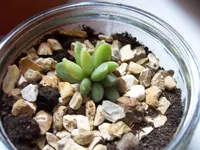
Apply a 0.5–1 cm layer of coarse mineral grit or fine gravel on the soil surface to keep leaf bases dry, reduce fungus gnat breeding, and visually signal when the top layer has fully dried.

Use breathable pots

Choose small, unglazed terracotta pots with a single central plant instead of crowded mixed containers to improve root aeration, reduce rot risk, and make it easier to control watering when growing Adromischus schuldtianus.

Seasonal rest adjustment

If light and growth slow in winter, reduce both watering volume and frequency and avoid repotting or propagating until active growth resumes in spring.

Quarantine and inspect

Keep new succulents isolated for 2–3 weeks and inspect leaf bases and undersides regularly so mealybugs or scale are caught early before they spread to established plants.

Common Pests and Diseases

Mealybugs

This pest feeds on leaf juices and hides in leaf axils and along the thick stems of this compact succulent. Symptoms include white, cottony clusters, sticky honeydew, and gradual leaf yellowing or wrinkling.

Solution

Isolate the plant, then dab visible insects with cotton swabs dipped in 70% isopropyl alcohol and repeat weekly until no new insects appear. Increase light and airflow, remove heavily infested leaves, and use a ready-to-use insecticidal soap or neem oil spray on all plant surfaces, including under leaves and in crevices.

Aphids

These insects sometimes colonize tender new growth and flower stalks, sucking sap and causing distortion of small leaves. Symptoms include sticky residue, deformed young leaves, and occasional sooty mold on the surface.

Solution

Rinse the plant gently with a strong but controlled stream of water to dislodge aphids, then let the foliage dry quickly in bright, airy conditions. If needed, apply insecticidal soap, ensuring full coverage of new growth and stems, and repeat every 5–7 days until no aphids are visible.

Spider mites

This pest is more common in very dry indoor air and attacks the thin leaf edges, causing pale stippling and fine webbing between leaves. Symptoms include dull, dusty-looking foliage and tiny moving dots on the undersides of leaves.

Solution

Shower the plant with lukewarm water to remove mites and webbing, allowing the soil to stay protected from excess soaking. Improve airflow, avoid extreme heat, and use a miticidal product or neem oil spray, focusing on leaf undersides and repeating applications several times over 2–3 weeks.

Basal stem rot

This disease affects the thickened stem base when the plant is kept in poorly draining soil or watered too often, especially in cool conditions. Symptoms include a soft, brown or black stem base and sudden collapse of leaves near the soil line.

Solution

At the first signs, stop watering, unpot the plant, and cut away all soft, discolored tissue with a sterile blade, then dust cuts lightly with sulfur or a copper-based fungicide. Re-root only firm, healthy stem sections in a gritty, fast-draining mix, and adjust watering to allow the substrate to dry fully between waterings as part of general Adromischus schuldtianus care instructions.

Leaf spot (fungal)

This disease may appear when foliage stays damp and air circulation is low, producing small dark spots that can merge on the fleshy leaves. Symptoms include irregular brown or black lesions and sometimes a thin yellow halo around affected areas.

Solution

Remove and discard all spotted leaves, keep the plant in a bright, airy spot, and avoid overhead watering so leaves dry quickly. If new spots develop, apply a labeled succulent-safe fungicide and ensure a very well-draining mix and reduced humidity around the plant.

Interesting Facts

Karoo rock specialist

This species is naturally restricted to rocky slopes and sandstone outcrops in the Little Karoo region of South Africa, where it grows in shallow crevices that provide excellent drainage and protection from extreme heat.

Distinctly warty leaves

Its small, paddle-shaped leaves often develop raised, wart-like bumps and irregular purple spotting, a combination that helps distinguish it from most other Adromischus species in the wild and in cultivation.

Highly localized forms

Different wild populations show noticeable variation in leaf shape, thickness, and markings, and some botanists recognize geographic variants, which makes precise field identification dependent on knowing the exact locality.

FAQs about Adromischus schuldtianus

Leggy, stretched stems usually result from insufficient light. The plant elongates between leaves to reach stronger light. Move it to a brighter position with indirect sun, rotate the pot regularly, and avoid excess nitrogen fertilizer that promotes weak growth.

Grow Healthy Plants with Botan Care

Keep your plants happy and healthy with plant identification, disease detection, and easy care guidance.

Botan plant care app — identify plants on mobile

Explore More Plants