


Offset ring management
Lift and reset crowded rosettes from the outer ring every 2–3 years, replanting only the firm, well‑rooted offsets so the clump stays open, well‑ventilated, and less prone to rot.


Houseleek, Sempervivum tectorum, is a hardy perennial succulent known for tight rosettes of fleshy leaves that store water. Rosettes often form dense mats and produce tall flower stalks once before dying back.
This species is native to mountainous and rocky areas of Europe, where it grows in shallow, stony soils and full sun. Its drought tolerance and compact growth make it suitable for containers, rock gardens, and green roofs.
The plant is generally easy to grow thanks to its strong tolerance of poor soils, heat, and neglect. Understanding how to care for Houseleek starts with providing bright light, very free-draining soil, and avoiding consistently wet conditions.

Care Difficulty
Easy Care

Light Preference
Full Sun

Water Requirements
Low Water

Temperature Preference
Cold Hardy

Hardiness Zone
3–8

Soil Texture
Sandy, Loamy, Rocky

Soil pH
Slightly acidic (6.5–7.0), Neutral (7.0)

Soil Drainage
Well-drained

Fertilization
Minimal (feed rarely)
Scan your plant to receive care tips personalized for your specific plant
Available on iOS and Android
This hardy succulent needs abundant direct light to stay compact and maintain strong leaf color.
This mountain succulent prefers infrequent, deep watering and very fast drainage.
This species tolerates a wide temperature range but grows best in cool to mild conditions.
Humidity is rarely a concern for Sempervivum tectorum, which is adapted to dry, open sites.
Sempervivum tectorum prefers very lean, fast-draining mineral soil that mimics rocky slopes.
This species is very suitable for container growing, including shallow bowls and troughs.
Sempervivum tectorum needs very little feeding, as it is adapted to poor, rocky soils.
Pruning Sempervivum tectorum focuses on hygiene and maintaining neat rosettes rather than reshaping the plant.
Repotting or transplanting Houseleek is infrequent and mainly done to refresh soil or manage spreading clumps.
Sempervivum tectorum is most commonly propagated by offsets, which form naturally around the mother rosette.
Sempervivum tectorum is generally very cold hardy and needs minimal winter care in the ground.

Plant Health Check
Not sure what's wrong with your plant? Check your plant's health inside the app.
This species naturally grows on thin, stony soils in European mountain regions and famously colonizes traditional stone roofs, where its shallow roots and drought tolerance allow it to survive extreme heat, cold, and wind exposure.
Each individual rosette is monocarpic, meaning it flowers once then dies, but before that it produces many offsets so the mat-like colony persists and slowly expands over time.
Sempervivum tectorum has evolved a high tolerance to freezing temperatures and can survive sub-zero winters in exposed sites, partly thanks to compact leaf rosettes that reduce surface area and protect the inner growing point from frost.

In parts of central and northern Europe, this species was historically planted on thatched and stone roofs under the name houseleek and was believed to protect buildings from lightning and fire, a tradition so widespread that it is referenced in writings dating back to Roman times.
Blooming occurs only on mature rosettes, often after several years. Lack of flowers usually relates to immaturity, insufficient cold in winter, or recent disturbance. In very warm climates, flower production can also be reduced.
Keep your plants happy and healthy with plant identification, disease detection, and easy care guidance.


Haworth's aeonium
Aeonium haworthii
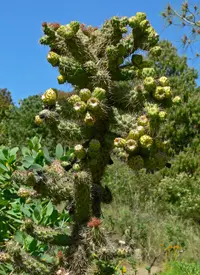
coastal cholla
Cylindropuntia prolifera

Stenocereus pruinosus
Stenocereus pruinosus
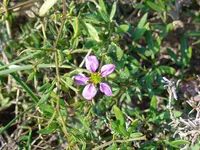
Zygophyllum mayanum
Zygophyllum mayanum
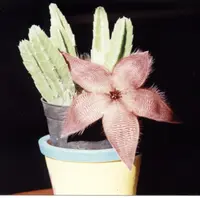
starfish flower
Stapelia hirsuta
 POPULAR
Tree Aeonium
Aeonium arboreum
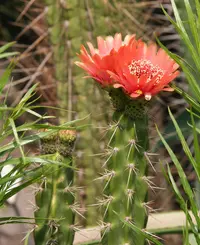
Corryocactus melanotrichus
Corryocactus melanotrichus
California cholla
Cylindropuntia californica