Seasonal rest shift
In late summer heat, move containers to a bright, airy spot with a few hours of morning sun only and slightly reduce water to respect the semi-dormant rest period and prevent rosette collapse.

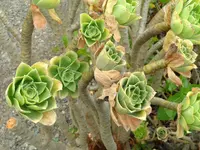
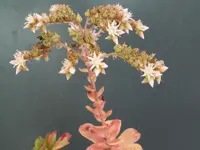
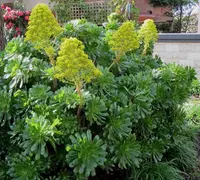
Balsam aeonium (Aeonium balsamiferum) is a small, shrubby succulent from the Canary Islands. It forms branching stems topped with rounded rosettes of yellow‑green leaves. When mature, it can develop into a low, many-branched mound, giving a structured, architectural look in pots or dry gardens.
The leaves often have a resinous, balsam-like scent when rubbed, which gives the plant its common name. It prefers bright light, good air flow, and fast-draining, gritty soil.
This species is generally considered easy to grow for those familiar with succulents, but it dislikes prolonged wet conditions and heavy frost. Understanding how to care for balsam aeonium mainly involves balancing strong light with careful watering and avoiding waterlogged soil.

Care Difficulty
Moderate Care

Light Preference
Full Sun

Water Requirements
Low Water

Temperature Preference
Tropical / Frost Sensitive

Hardiness Zone
10–11

Soil Texture
Sandy, Loamy, Rocky

Soil pH
Slightly acidic (6.5–7.0), Neutral (7.0)

Soil Drainage
Well-drained

Fertilization
Minimal (feed rarely)
Scan your plant to receive care tips personalized for your specific plant
Available on iOS and Android
This sun-loving succulent needs bright light but benefits from some protection during the hottest hours.
This drought-tolerant succulent prefers infrequent, deep watering and fast drainage.
This species prefers mild, frost-free conditions with moderate warmth year-round.
This drought-adapted succulent handles typical indoor humidity but prefers fairly dry air.
This species needs a very fast-draining, airy mix that prevents water from sitting around the roots.
This species is well suited to container culture when the pot controls moisture around its shallow root system.
This succulent needs modest feeding to support compact rosettes and healthy roots.
Pruning is mainly used to maintain shape and remove weak growth on Aeonium balsamiferum.
Container-grown plants benefit from occasional repotting to refresh soil and manage root growth.
This species is commonly propagated from stem cuttings to maintain desired forms.
This succulent is frost-tender and needs protection in regions with cold winters.

Plant Health Check
Not sure what's wrong with your plant? Check your plant's health inside the app.
This species is naturally restricted to the island of Lanzarote in the Canary Islands, where it grows on dry, rocky slopes and cliffs exposed to coastal winds.
The leaves and young stems exude a sticky, aromatic resin with a sweet balsamic scent, which likely helps reduce water loss and may deter some herbivores and insects.
Unlike some related species that close or distort their rosettes in strong sun, this plant typically maintains relatively open, flat rosettes, an adaptation to the milder, ocean-influenced climate of its native range.

This species is considered threatened in parts of its very limited natural range on Lanzarote, where habitat disturbance and development have reduced some wild populations, leading to conservation interest from local botanists and authorities.
Brown leaves usually come from underwatering, intense sun scorch, or old age of lower rosettes. Check soil moisture, protect from harsh midday sun, and remove oldest, shriveled leaves so energy goes to healthy growth.
Keep your plants happy and healthy with plant identification, disease detection, and easy care guidance.