


Encourage Compact Form
Rotate the pot 90° every 1–2 weeks and lightly pinch back overly long stems in late spring to keep the plant dense and prevent lanky, unbalanced growth.

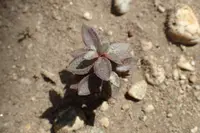
Crassula volkensii is a small, shrubby succulent in the stonecrop family, valued for its compact form and drought tolerance. It typically forms low, branched mounds of fleshy, oval leaves that may flush red in strong light. Native to eastern Africa, it grows in rocky, well-drained habitats, which explains its preference for bright light and minimal moisture. The plant is generally easy to maintain as long as excess water is avoided and the soil drains quickly. For those learning how to care for Crassula volkensii, its slow growth and forgiving nature make it suitable for containers, windowsills, and small indoor succulent displays.

Care Difficulty
Easy Care

Light Preference
Partial Sun

Water Requirements
Low Water

Temperature Preference
Tropical / Frost Sensitive

Hardiness Zone
10–11

Soil Texture
Sandy, Loamy, Rocky

Soil pH
Slightly acidic (6.5–7.0), Neutral (7.0)

Soil Drainage
Well-drained

Fertilization
Minimal (feed rarely)
Scan your plant to receive care tips personalized for your specific plant
Available on iOS and Android
This succulent prefers bright, gentle light that mimics open, rocky habitats.
This plant stores water in its leaves and needs infrequent but thorough watering.
This species prefers warm, dry conditions with protection from frost and extreme heat.
This succulent handles typical indoor humidity well and rarely needs special adjustments.
Crassula volkensii needs a sharply draining, mineral-rich mix that dries quickly between waterings.
This species is well suited to container growing for tight control of moisture and light exposure.
Light feeding supports steady growth in Crassula volkensii without overstimulating soft, weak tissue.
Pruning is mainly used to maintain shape and remove damaged growth on Crassula volkensii.
This succulent prefers slightly tight quarters and benefits from infrequent, careful repotting.
New plants are most often produced from stem or leaf cuttings rather than seed.
This species is not frost hardy and needs careful winter management in most temperate climates.

Plant Health Check
Not sure what's wrong with your plant? Check your plant's health inside the app.
This species naturally forms low, spreading mats or trailing cushions on rocky slopes in East Africa, with stems that root as they creep, which helps stabilize shallow, stony soils.
Its small, often cylindrical or club-shaped leaves can show translucent tissue near the tips, acting as light windows that allow deeper leaf layers to photosynthesize efficiently in strong sun.
In intense light and drier conditions, the normally green leaves often flush red or bronze, a response linked to protective pigments that reduce sun damage.
Brown leaves usually come from underwatering, intense direct sun scorch, or sudden cold drafts. Check soil moisture, move the plant away from harsh midday sun, and protect it from temperatures below its preferred range.
Keep your plants happy and healthy with plant identification, disease detection, and easy care guidance.

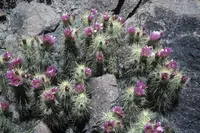
pinkflower hedgehog cactus
Echinocereus fendleri
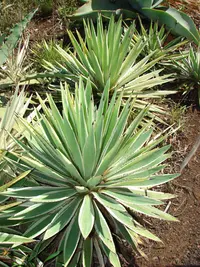
Century Plant
Agave vivipara
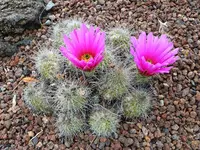
strawberry hedgehog cactus
Echinocereus stramineus
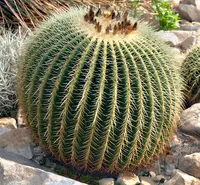
golden barrel cactus
Kroenleinia grusonii
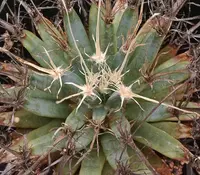
Agave cactus
Leuchtenbergia principis
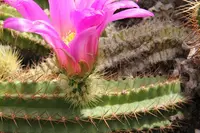
Echinocereus viereckii
Echinocereus viereckii
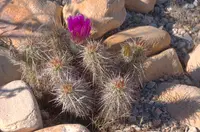
Engelmann's hedgehog cactus
Echinocereus engelmannii
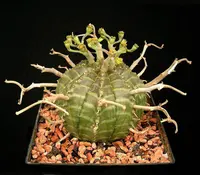
Zebra Milkball
Euphorbia meloformis