Zebra Milkball Care (Euphorbia meloformis)

Also known as: Melon Milkball, Donkey Food
Zebra Milkball

About Zebra Milkball

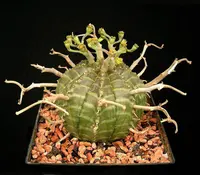
Zebra milkball (Euphorbia meloformis) is a compact, sculptural succulent from arid regions of South Africa. It forms a rounded, ribbed stem with dark green and pale banding that resembles a striped cactus. Small, short-lived flowers appear near the top of the plant and are usually modest in size and color. Over time, it can produce offsets, slowly forming a small clump. This species suits bright indoor spaces and is forgiving of occasional missed watering, but the fleshy stem is sensitive to overwatering and poor drainage. Understanding how to care for Zebra Milkball mainly involves controlling moisture and providing strong light in a gritty, fast-draining soil mix.

Main Plant Requirements

Care Difficulty

Easy Care

Light Preference

Partial Sun

Water Requirements

Low Water

Temperature Preference

Tropical / Frost Sensitive

Hardiness Zone

10–11

Soil Texture

Sandy, Loamy, Rocky

Soil pH

Slightly acidic (6.5–7.0), Neutral (7.0)

Soil Drainage

Well-drained

Fertilization

Minimal (feed rarely)

Get Personalized Care Plan

Scan your plant to receive care tips personalized for your specific plant

Available on iOS and Android

How to Care for the Zebra Milkball

This compact succulent prefers bright, indirect light with some gentle direct sun.

  • Provide 4–6 hours of bright, filtered light daily; morning sun with light afternoon shade suits Euphorbia meloformis well.
  • Outdoors, give it dappled sun or east exposure; protect from harsh midday summer sun that can cause scorch or pale, corky patches.
  • In low light it stretches and loses its round Zebra Milkball form; move gradually to brighter light, especially in spring.

This species stores water in its stem and prefers infrequent, deep watering.

  • Water only when the top 3–5 cm of soil are completely dry; in active growth this may mean every 2–4 weeks, but always check the soil first.
  • Use sharply draining, gritty soil and a container or bed that never stays soggy, to prevent root rot and stem softness.
  • Reduce watering in fall and winter; wrinkling ribs suggest mild thirst, while yellowing, mushy tissue indicates overwatering in Euphorbia meloformis.

This drought-adapted succulent prefers warm, stable temperatures and good airflow.

  • Aim for 70–85°F (21–29°C) during active growth, with slightly cooler nights to mimic its native conditions.
  • Protect from cold; growth slows below 60°F (16°C) and tissue damage occurs near 40°F (4°C), so avoid frost exposure entirely.
  • It tolerates brief heat up to about 95°F (35°C) if shaded from intense afternoon sun and given extra airflow, but avoid extreme, prolonged heat.

Humidity is not a major factor for Euphorbia meloformis, which prefers dry indoor air.

  • Aim for 30–50% humidity, similar to typical heated or air-conditioned homes.
  • This Zebra Milkball tolerates drier air but suffers if kept in constantly damp, steamy rooms.
  • Soft, pale, or mushy stem tissue usually indicates excess humidity combined with poor air circulation, so increase airflow instead of misting.

This species needs a very fast-draining, mineral-rich mix that dries quickly between waterings.

  • Use a gritty, sandy mix such as 50–70% inorganic material (pumice, coarse perlite, or gritty sand) with 30–50% cactus potting mix.
  • Aim for slightly acidic to neutral pH around 6.0–7.0, which supports steady nutrient uptake without salt buildup.
  • Improve aeration by using large, angular particles (3–5 mm) and avoiding fine peat that compacts and holds water around the roots.
  • Avoid dense, moisture-retentive garden soil or high-compost mixes that stay wet for more than 2–3 days, as this strongly increases root rot risk for Euphorbia meloformis.

This species is very suitable for container growing due to its compact, slow growth and shallow root system.

  • Choose a shallow, wide pot that matches the plant’s spread rather than depth to limit excess wet substrate below the roots.
  • Select unglazed terracotta if extra evaporation is needed, especially in cooler or low-light locations where mix dries slowly.
  • Place the pot where it cannot tip, since the heavy, rounded stem can make a small, light container unstable as the plant matures.

This succulent Euphorbia needs modest feeding to support compact, healthy growth in containers.

  • Use a balanced liquid fertilizer (such as 10-10-10 or 20-20-20) diluted to 25–50% strength for Zebra Milkball.
  • Feed once every 4–6 weeks during the warm, active growing season only.
  • Do not fertilize in winter dormancy; excess nutrients then may cause root stress or rot.
  • Avoid rich compost; use a cactus or succulent fertilizer or a low-dose slow-release product in very sparing amounts.

Pruning Euphorbia meloformis is minimal and mainly done for health, size control, and safety.

  • Best time for any trimming is late spring to summer during active growth.
  • Remove dead, shriveled, damaged, or diseased stems with sharp, clean scissors or pruners.
  • Lightly thin crowded offsets to maintain the spherical form and improve air flow.
  • Wear gloves and avoid skin contact with the white sap, which can be irritating.

This compact succulent prefers slightly tight pots and infrequent repotting to stay stress-free.

  • Repot every 3–4 years or when roots circle the pot base, drainage slows, or growth stalls.
  • Plan repotting for late spring to early summer when the plant is growing and recovers faster.
  • Use a small pot only 1–2 in wider with fast-draining cactus mix to limit moisture around roots.
  • Gently loosen the root ball, remove old soggy soil, then keep slightly dry for 5–7 days after repotting to reduce shock.

Propagation of this species is possible but slower than many other succulents and needs careful handling of the sap.

  • Most commonly, separate small offsets from the parent plant in late spring or early summer.
  • Allow cut surfaces to dry and callus for several days before planting in dry, gritty cactus mix.
  • Provide bright, indirect light, warm temperatures around 70–80°F, and very light watering to encourage rooting.
  • Seed propagation is possible but much slower and less predictable for home growers.

This tender Euphorbia is not frost hardy and needs careful winter management, especially in containers.

  • Keep plants above 50°F; sustained temperatures near freezing can damage or kill tissues.
  • Move container plants indoors before first frost, placing them in bright, cool, and dry conditions.
  • Reduce watering sharply in winter, letting soil dry thoroughly between light waterings to avoid rot.
  • Ensure pots have excellent drainage and no sitting water, since cold plus moisture is especially harmful.

Care Tips

Rotate For Symmetry

Turn the pot 90° every 2–3 weeks so the ribbed sphere develops evenly and does not lean toward the strongest light source.

Use Heavy Pots

Plant in a weighty ceramic or clay pot to reduce the risk of tipping as the stem elongates and offsets develop on one side.

Manage Offsets Wisely

Allow pups to reach at least 2–3 cm before removing with a sterile knife, then air-dry the cut surfaces 3–5 days before potting to reduce rot risk.

Handle Sap Safely

Wear gloves and avoid touching eyes or mouth when pruning or taking cuttings, since the white latex sap is irritating and can cause skin reactions.

Winter Rest Routine

During late fall and winter, keep the plant in a bright, cool, very dry spot and avoid repotting or propagating, as this quiet period supports long-term health when growing Zebra Milkball.

Everything About Zebra Milkball

Common Pests and Diseases

Mealybugs

This pest commonly hides in rib grooves and around the stem base, sucking sap and causing stunted growth and a dull, dusty look on the plant body. Symptoms include white, cottony clusters in crevices and at the junction with roots.

Solution

Isolate the plant, then remove visible insects with a cotton swab dipped in 70% isopropyl alcohol and gently scrub between ribs. Follow with 2–3 repeat treatments at 7–10 day intervals and, for larger infestations, use a labeled systemic insecticide for succulents while improving light and air movement to reduce reinfestation when caring for Zebra Milkball.

Spider mites

These insects favor dry, warm indoor conditions and can cause fine speckling, faded patches, and a rough, sandblasted look on the spherical stem. Symptoms include very fine webbing in grooves and around offsets.

Solution

Rinse the plant thoroughly with a strong but gentle stream of lukewarm water, including the underside and between ribs, then allow it to dry in bright, airy conditions. For persistent mites, apply a miticide or insecticidal soap labeled for succulents in repeated applications, and slightly increase humidity without leaving the plant wet for long periods.

Scale insects

This pest appears as small, hard, brown or gray bumps that adhere tightly to the stem and sometimes the roots, slowly weakening the plant. Symptoms include sticky honeydew, sooty mold growth on that honeydew, and overall decline.

Solution

Manually remove scale with a cotton swab or soft brush dipped in 70% isopropyl alcohol, working carefully along each rib. Dispose of heavily infested offsets, then apply a systemic insecticide suitable for Euphorbia species if the infestation is extensive, monitoring closely for reinfestation over several weeks.

Corking with fungal infection

This disease can occur where normal age-related corking on the lower stem becomes invaded by fungi, leading to dark, sunken, or spreading soft patches. Symptoms include discolored, crumbly or mushy areas at the base instead of firm, even tan corky tissue.

Solution

Cut away all affected tissue with a sterile blade until only firm, healthy tissue remains, then allow the wound to dry and callus in a dry, bright place for several days. Reduce watering, improve drainage and airflow, and avoid wetting the plant body; if necessary, dust cut surfaces lightly with a sulfur-based fungicide before replanting.

Powdery mildew

This disease develops in humid, poorly ventilated conditions and appears as white, powdery patches on the ribs and between grooves. Symptoms include slowed growth and a dull, patchy coating that does not rinse off easily with plain water.

Solution

Increase airflow and light, avoid overhead watering, and let the plant stay on the dry side. Gently wipe affected areas and apply a sulfur or potassium bicarbonate fungicide labeled for succulents, repeating as directed until new growth appears clean.

Interesting Facts

Mimicry with stones

This species grows in rocky habitats in South Africa and its rounded, segmented body closely matches surrounding stones, helping it avoid herbivores by visual camouflage.

Seasonal ridge patterns

The plant forms distinct vertical ribs and patterned markings that can become more pronounced in higher light, which increases the surface area for photosynthesis while maintaining a compact, water-storing body.

Hidden toxic latex

Like many members of Euphorbia, it produces a white, milky latex that is toxic and irritant to skin and eyes, serving as a chemical defense against grazing animals and insect damage.

Botan icon

Did you know?

This species often forms natural clumps by producing offsets around the base, gradually creating a tight colony of near-spherical heads that can persist for many years in the same rocky crevice.

FAQs about Zebra Milkball

Growth is relatively slow, with small size increases each year. Under good light and careful watering, it may add only a few millimeters in height and girth annually, remaining compact for many years.

Grow Healthy Plants with Botan Care

Keep your plants happy and healthy with plant identification, disease detection, and easy care guidance.


Botan plant care app — identify plants on mobile

Explore More Plants