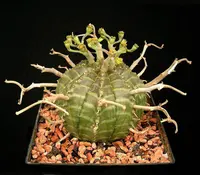


Zebra Milkball (Euphorbia meloformis) Light Needs

Zebra Milkball grows best in bright light with partial sun and several hours of direct exposure.

Light Preference

Partial Sun

Euphorbia meloformis Light Requirements

Zebra Milkball is native to dry, open habitats in South Africa, where sunlight is strong but often broken by rocks, slope angle, and nearby low vegetation. In cultivation, its rounded body handles bright exposure better than shade, but sudden harsh sun can mark the skin. It prefers bright light with several hours of gentle direct sun during much of the growing season.

  • Ideal exposure:

    Zebra Milkball needs about 6–8 hours of bright light daily, including 3–5 hours of direct sun, preferably morning or late-day sun.

  • Full sun tolerance:

    Mature, acclimated plants can tolerate more direct sun outdoors, but increase exposure over 1–2 weeks to reduce scorching.

  • Lower light limits:

    Bright shade may keep it alive for a time, but dim rooms often lead to stretched, weaker growth.

  • Afternoon sun:

    Hot west or south glass can intensify heat, so filter the strongest rays if the body starts to pale or scar.

Indoors, choose the brightest window that gives direct sun for part of the day without trapping excessive heat.

NPoor
North-facing window:

A north window is usually too dim unless it is very large and unobstructed.

EBest
East-facing window:

An east window is often ideal because it gives several hours of gentler morning sun.

SSuitable
South-facing window:

A south window is suitable if the plant is set close to the glass and acclimated to the stronger midday light.

WConditional
West-facing window:

A west window can work with a sheer curtain or 1–2 ft of distance during hot summer afternoons.

If the plant leans or stretches, move it gradually to a brighter position.

Excess light usually shows after a fast move into stronger sun.

Pale patches:

Bleached cream or tan areas on the sun-facing ribs can suggest sunburn, especially behind hot glass.

Corky scars:

Damaged spots may dry into rough brown scars that stay on the body rather than greening again.

Bronze tint:

A reddish or bronze cast can be mild stress when it appears after longer afternoon exposure.

Uneven heat stress:

The side facing the window may look duller or more marked than the shaded side.

Move Euphorbia meloformis out of harsh afternoon sun and return it to brighter light in stages. Use a sheer curtain if the window stays hot.

Low light changes the plant’s compact shape over time. The signs are usually gradual during active growth.

  • Stretched crown:

    New growth may rise into a taller, narrower shape instead of staying compact and rounded.

  • Leaning body:

    The plant may tilt toward the nearest bright window as it searches for stronger light.

  • Faint banding:

    The pale and green striping can look less crisp when light remains weak for long periods.

  • Reduced flowering:

    Mature plants may flower less often when daily light is too short or too dim.

Move it closer to a brighter window over several days. Avoid shifting Euphorbia meloformis from dim shade straight into full sun.

If ideal sun is not available, choose the brightest indoor spot that gives a few hours of direct morning or late-day light. Keep the plant close to the light source rather than across the room.

Rotate the pot a quarter turn every 1–2 weeks during active growth to keep the rounded body more even.

A dim shelf away from a window is not suitable because it cannot meet Euphorbia meloformis light needs.

Get Personalized Care Plan

Scan your plant to receive care tips personalized for your specific plant

FAQ

The best light for Zebra Milkball is bright exposure with partial sun, about 6–8 hours of total light and 3–5 hours of direct sun when acclimated. Avoid deep shade.

More Plant Light Guides

Get the Botan App

Discover how to care for your plants with Botan.

Botan app identifying a plant with a phone camera
Best Plant Identification Apps – Accuracy, Features, and Price

11 min read · 27 Jul 2026

Best Plant Identification Apps – Accuracy, Features, and Price

We’ve tested, analyzed, and reviewed 8 top tools to find the best plant identification app. Find out which recognized common and rare plants are on the 1st attempt. Learn each app’s key features, pros, and cons — and make a fully informed choice.

Plant Recommendations
Best Plant Identification Apps – Accuracy, Features, and Price
Best Time to Water Grass in Summer – Lawn Watering Tips

5 min read · 21 Jul 2026

Best Time to Water Grass in Summer – Lawn Watering Tips

Summer watering is easy to get wrong. This guide explains when to turn on your sprinkler, how much liquid your grass needs each week, and how to tell if you're overwatering or underwatering.

Plant Care
Best Time to Water Grass in Summer – Lawn Watering Tips
20 Most Popular Fruits Around the World

7 min read · 22 Jul 2026

20 Most Popular Fruits Around the World

Curious which fruits the world actually eats the most? Here's the top-20 by production volume, an overview of what people choose in each region, and a few figures that defy common assumptions.

Plant Recommendations
20 Most Popular Fruits Around the World