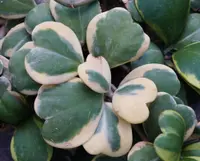


Hoya Hearts (Hoya kerrii) Light Needs

Hoya Hearts grows best in bright, indirect light with a little gentle morning sun when acclimated.

Light Preference

Bright Indirect Light

Hoya kerrii Light Requirements

In its native tropical forest habitat in Southeast Asia, Hoya kerrii grows as a climbing or trailing vine where tree cover softens the sun. Leaves may receive bright filtered light and brief gentle sun, but not long hours of exposed midday sun. This helps explain why cultivated plants handle some partial sun yet stay healthier away from harsh direct rays. Preferred light is bright, indirect or filtered light.

  • Ideal exposure:

    Ideal exposure: Hoya kerrii needs about 6–8 hours of bright, indirect or filtered light daily, including up to 1–2 hours of gentle direct morning sun.

  • Direct sun:

    Brief early sun is usually tolerated, but hot afternoon rays can scorch the thick leaves, especially through glass.

  • Lower light:

    It can survive in shade or lower indoor light, but growth is slower and flowering is less likely.

  • Seasonal shift:

    Winter sun is weaker, so a brighter spot near a window is often helpful.

Indoors, window direction matters because this plant likes brightness without prolonged hot sun.

NConditional
North-facing window:

Use a north-facing window only if it is bright and unobstructed; otherwise growth may be slow.

EBest
East-facing window:

Place it close to an east-facing window where it gets morning sun and bright light without intense afternoon heat.

SSuitable
South-facing window:

Set it 2–4 ft from a south-facing window, or use a sheer curtain to soften direct midday sun.

WConditional
West-facing window:

A west-facing window is workable only with filtering or distance from the glass to reduce strong afternoon rays.

Choose the brightest safe position and adjust slowly if the leaves show scorch or stretching.

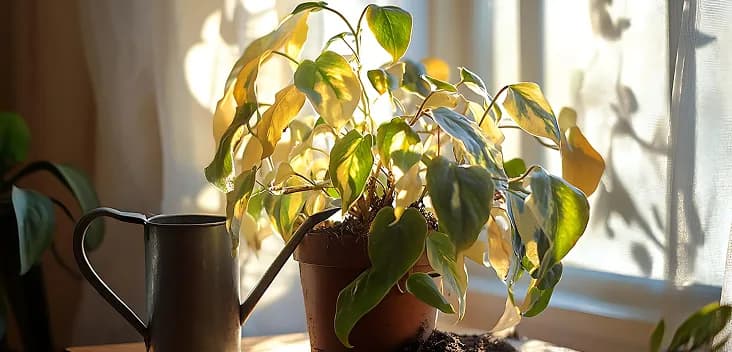
Strong direct sun can mark the leaves, especially after a sudden move.

Bleached patches:

Pale yellow or whitish areas may appear on the window-facing side of thick leaves after harsh sun.

Dry scorch spots:

Tan, corky, or brown patches can form where glass-amplified afternoon rays hit the same leaf surface.

Reddish stress tint:

A bronze or red cast can develop in strong light; it is a caution sign when paired with fading or scorch.

Hot leaf surface:

Leaves that feel warm during afternoon sun are likely receiving more direct exposure than Hoya kerrii prefers.

Move it back from the glass or filter the rays with a sheer curtain. Keep the new light level steady for several weeks before judging recovery.

Low light often shows as weak new growth rather than sudden decline. This species is naturally slow, so look for patterns during spring and summer.

  • Long gaps:

    New vine sections may stretch with wider spaces between leaves as growth reaches toward brighter areas.

  • Leaning growth:

    Stems may angle strongly toward the nearest window instead of growing evenly around the support or pot.

  • Small new leaves:

    New heart-shaped leaves may develop smaller than older leaves when light stays too weak.

  • Few blooms:

    Mature Hoya kerrii may be less likely to flower without several hours of bright indirect light.

Shift the plant closer to a bright window, but avoid sudden harsh afternoon sun. Recheck new growth after several weeks.

If ideal light is limited, choose the brightest area that avoids hot afternoon rays, then place the pot within a few feet of that light source.

Rotate the pot a quarter turn every 2–4 weeks so the vine and leaves do not lean strongly in one direction.

A dark shelf across the room is not a good long-term setup because it usually weakens new growth.

Get Personalized Care Plan

Scan your plant to receive care tips personalized for your specific plant

FAQ

The best light for Hoya Hearts is bright, indirect or filtered light for most of the day. A little gentle morning sun is useful, but harsh direct sun is not ideal.

Everything About Hoya Hearts

More Plant Light Guides

Get the Botan App

Discover how to care for your plants with Botan.

Botan app identifying a plant with a phone camera
Plants That Repel Bugs – 20 Effective Options

12 min read · 16 Jul 2026

Plants That Repel Bugs – 20 Effective Options

Mosquitoes on the patio? Gnats in the kitchen? Some plants keep them away with the scent of their own leaves. Here are 20 that deal with mosquitoes, flies, aphids, and more, plus where to put them so they help.

Plant Recommendations
Plants That Repel Bugs – 20 Effective Options
How to Water Houseplants: Watering Guide

7 min read · 24 Aug 2026

How to Water Houseplants: Watering Guide

Learn how often to water indoor plants, key factors for proper watering, and how to adjust the care routine by plant type, season, pot size, light, and indoor conditions.

Plant Care
How to Water Houseplants: Watering Guide
Plant Pot Sizes: How to Choose the Right Plant Container

7 min read · 20 Aug 2026

Plant Pot Sizes: How to Choose the Right Plant Container

Plant pot sizes can be confusing because the number on the label only tells you part of the required information. A container may look spacious but actually be too shallow. So, how to choose pot size for plant species?

Beginner Guides
Plant Pot Sizes: How to Choose the Right Plant Container