

Weeping Fig (Ficus benjamina) Light Needs

Weeping Fig grows best in bright, indirect light with a few hours of gentle morning sun when acclimated.

Light Preference

Bright Indirect Light

Ficus benjamina Light Requirements

Ficus benjamina is native to tropical and subtropical parts of South and Southeast Asia and northern Australia, where it grows as a tree in warm, humid forests and along brighter edges. Young plants often develop under filtered canopy light, while mature trees can receive stronger seasonal sun. This background explains its indoor preference for steady brightness without harsh, sudden exposure. Preferred light is bright, indirect or filtered light.

  • Ideal exposure:

    Ficus benjamina needs about 6–8 hours of bright, indirect or filtered light daily, including up to 2–3 hours of gentle direct morning sun.

  • Direct sun limit:

    Tolerates direct sun after gradual acclimation, but hot afternoon rays through glass can scorch leaves.

  • Lower light tolerance:

    Can live in bright shade, though growth may become thinner and slower over time.

  • Best sun timing:

    Morning sun is safer than late-day sun because it is cooler and less intense.

Indoors, place it where the canopy receives bright light for most of the day without harsh afternoon sun.

NConditional
North-facing window:

A north-facing window can work only if it is large, unobstructed, and the plant sits close to the glass.

EBest
East-facing window:

An east-facing window is often the best indoor position because it gives bright morning sun and softer light later in the day.

SSuitable
South-facing window:

A south-facing window is suitable if the plant is set 2–5 ft back or filtered by a sheer curtain during strong midday sun.

WConditional
West-facing window:

A west-facing window is conditional because afternoon rays can be hot, so use distance or filtering to reduce scorch risk.

Avoid sudden moves between dim and very bright conditions, since this species responds best to steady light changes.

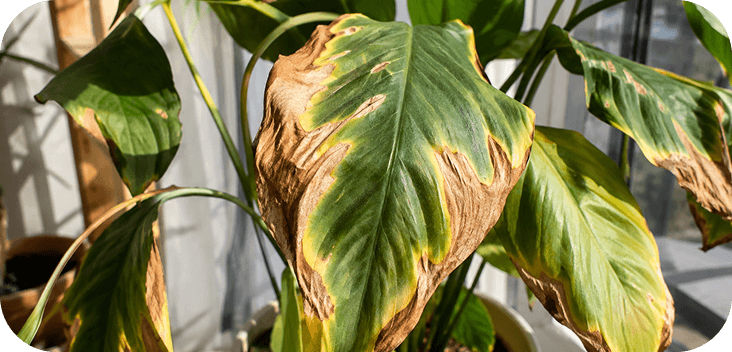
Excess light usually shows first on leaves facing the strongest sun.

Bleached patches:

Pale tan or whitish areas may appear where leaves were suddenly exposed to direct rays.

Crisp sun spots:

Dry, papery spots on the sunny side suggest localized scorch rather than general aging.

Faded canopy:

Leaves closest to hot glass may look washed out while shaded inner leaves stay deeper green.

Heat-stressed leaves:

New leaves may curl slightly or lose their smooth surface after repeated hot afternoon exposure.

Move Ficus benjamina out of harsh afternoon sun and use a sheer curtain if the window is intense. Reintroduce direct sun gradually, starting with short morning exposure.

Too little light often develops gradually, especially away from windows. Ficus benjamina may stay alive in shade but usually grows less densely.

  • Leggy stems:

    New shoots may stretch toward the light and look weaker than older, brighter-grown growth.

  • Wider spacing:

    Leaves may form farther apart along stems when the plant is trying to reach stronger light.

  • Smaller new leaves:

    Fresh leaves may be noticeably smaller when light is too weak to support full growth.

  • Interior thinning:

    Older inner leaves may shed first, especially where little light reaches the center of the canopy.

Move the plant to a brighter position with indirect light, then allow time for new growth to show the response. Increase exposure gradually if adding direct sun.

Choose the brightest spot that does not receive long hot afternoon sun if ideal exposure is not available. A few hours of soft morning sun is a better compromise than deep shade.

Rotate the pot a quarter turn every 1–2 weeks so the canopy grows evenly toward the light.

A dim corner is unsuitable because Ficus benjamina light needs are higher than typical room light.

Get Personalized Care Plan

Scan your plant to receive care tips personalized for your specific plant

FAQ

The best light for Weeping Fig is bright, indirect light for most of the day, with gentle morning sun if it has been introduced gradually. Avoid sudden hot afternoon exposure indoors.

Everything About Weeping Fig

More Plant Light Guides

Get the Botan App

Discover how to care for your plants with Botan.

Botan app identifying a plant with a phone camera
Best Plant Identification Apps – Accuracy, Features, and Price

11 min read · 27 Jul 2026

Best Plant Identification Apps – Accuracy, Features, and Price

We’ve tested, analyzed, and reviewed 8 top tools to find the best plant identification app. Find out which recognized common and rare plants are on the 1st attempt. Learn each app’s key features, pros, and cons — and make a fully informed choice.

Plant Recommendations
Best Plant Identification Apps – Accuracy, Features, and Price
Rice Water for Plants – Which Plants Love It and How to Make It

8 min read · 14 Jul 2026

Rice Water for Plants – Which Plants Love It and How to Make It

Rice water can be an ideal DIY solution for orchids, roses, or fruiting plants. It supports growth, leaf count, and height. We’ll share how to make and apply it correctly for your plant.

Plant Care
Rice Water for Plants – Which Plants Love It and How to Make It
Best Time to Mow Lawn – A Complete Guide

5 min read · 10 Aug 2026

Best Time to Mow Lawn – A Complete Guide

Explore when to mow your lawn for its health and a pleasant green color. Find out the best time for this task during the summer heat, and follow practical tips for correctly cutting the grass, and learn common mistakes to avoid.

Plant Care
Best Time to Mow Lawn – A Complete Guide