Best Fertilizer for Vegetable Gardens – What to Use for Each Plant
Here, you’ll find the right fertilizer formula for vegetables in your garden. Learn how to adjust feeding correctly throughout the growing cycle, spot nutrient deficiencies by their symptoms, and keep your plants healthy and prolific.

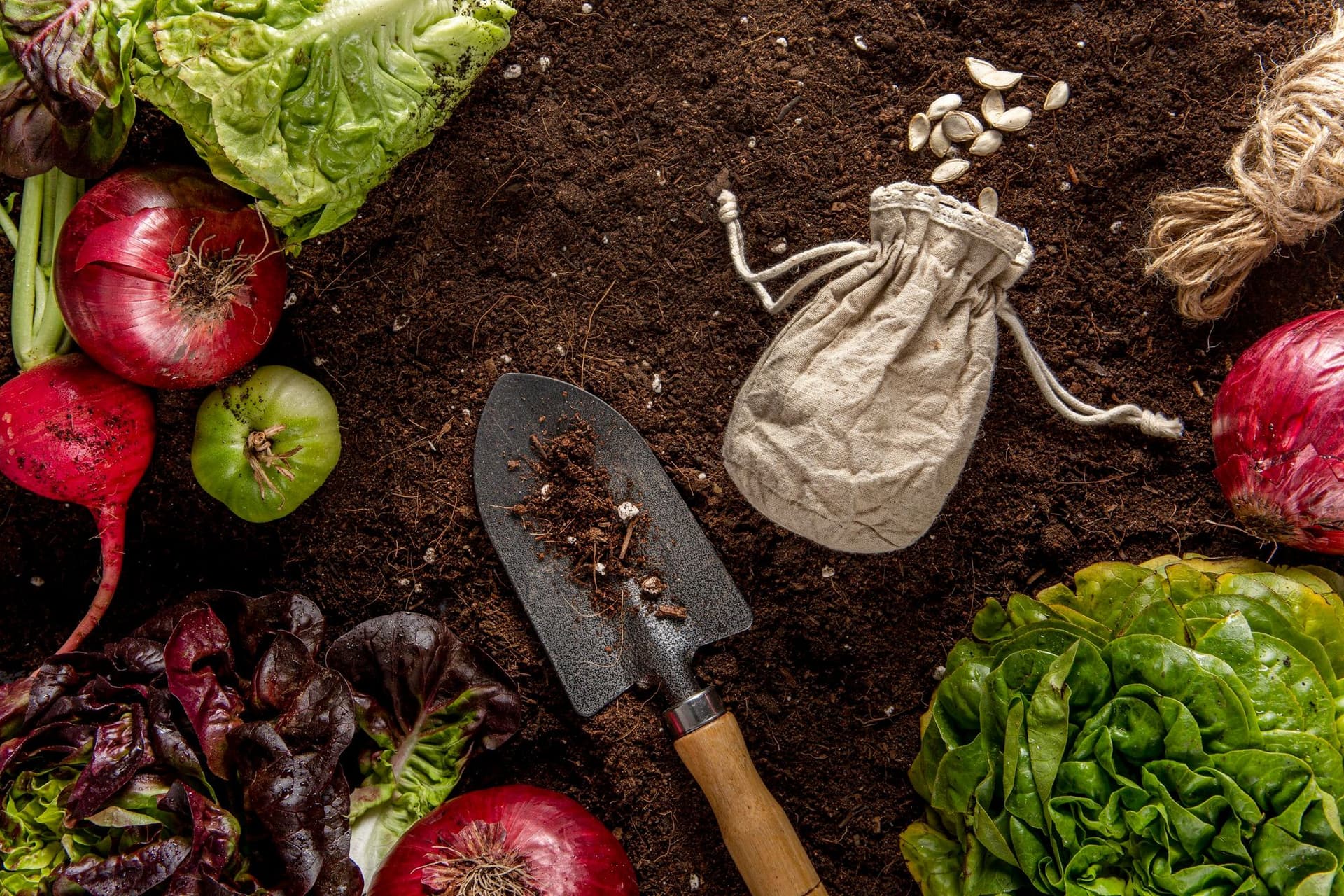
The best fertilizer for vegetable gardens always includes nitrogen, phosphorus, and potassium, but the concentrations and combinations of these ingredients vary. The thing is, leafy greens, root vegetables, fruiting plants, beans, and other crops have different nutrient demands at different growth stages.
We’ll explain N-P-K proportions for 15 vegetables, share tips on micronutrient feeding, and cover how to avoid common mistakes — all to make every single crop perform at its best.
What Fertilizer is Best By Vegetable Type
The best vegetable fertilizer is the one that suits the specific plant’s needs. All complete fertilizers contain the 3 major nutrients: nitrogen (N), phosphorus (P), and potassium (K). But again, they are not the same — the difference lies in the proportions of nutrients and their concentrations.
We’ll provide exact formulas later. Now, let’s take a look at the dominant nutrients for each vegetable and the most suitable types of fertilizers.
Vegetable | Most Critical Nutrient Need | Best Fertilizer Types (early → later phases) | Feeding Note |
K | Balanced → bloom & fruit (lower nitrogen, high P/K) | Balanced formulas work best; use calcium to prevent deficiency | |
Cucumber | K | Balanced → Low-nitrogen bloom & fruit | Maintain bloom feeding throughout the season, watch for calcium/magnesium deficiency |
Pepper | K | Balanced → High nitrogen | Add higher concentrations of nitrogen, even compared to tomatoes |
Carrot | P + K | Low-nitrogen root booster | No excessive nitrogen, potassium for sweetness |
Lettuce | N | Balanced → High-nitrogen | No big changes throughout the season, nitrogen feeding |
Spinach | N | Balanced → High-nitrogen | Use N and reduce it late to avoid bolting |
Zucchini | K | Balanced → Potassium finisher | Switch fertilizers from the flowering phase |
P + K | Low nitrogen | Avoid high nitrogen overall | |
Garlic | N + K | High-nitrogen → potassium finisher | Stop all nitrogen at bulbing, use sulfur for flavor |
Onions | N + K | Nitrogen → Phosphorus & potassium booster | Feed leaves to form rings |
N | Nitrogen → potassium finisher | Add V8 side-dress during the critical vegetative period | |
P + K | High-nitrogen → potassium finisher | Prefer potassium sulfate; reduce nitrogen at flowering | |
Brassicas (cabbage, broccoli, kale) | N | Nitrogen boosters | Use boron pre-plant |
Eggplant | K | Balanced → phosphorus booster | Reduce nitrogen at flowering, feed through harvesting |
Radish | P | Low-nitrogen root starter | Pre-plant fertilization matters most |
The system might seem a bit confusing at first, but it becomes easier to fertilize and grow vegetables if you learn more about each plant’s type and specific needs.


Keep Plants Thriving
Get simple care guidance tailored to each plant’s needs in the app
Best Fertilizer for Each Vegetable
The best fertilizer for your vegetable garden is the one that has the necessary concentrations and proportions of the ingredients.
Figures like 10-10-10 N-P-K mean the formula contains equal parts of the main nutrients: 10% nitrogen, 10% phosphorus, and 10% potassium.
There are many variations. For example, it can be 5-10-20, meaning it contains 5% nitrogen, 10% phosphorus, and 20% potassium.
So, let’s take a look at which options are best for each vegetable at different growth phases.
Tomatoes
Tomatoes are very nutrient-demanding and need flexible feeding.
At pre-planting, use compost and a fertilizer that’s low in nitrogen, high in phosphorus, and medium to high in potassium, such as 5-10-5. Once you notice the first two sets of true leaves, dilute your 10-10-10 fertilizer to half or quarter strength to avoid burning your tomato plant.
Once tomatoes start flowering, lower nitrogen and switch to 5-10-10. When fruiting, continue applying the 5-10-10 formula or switch to the 4-18-38 (a more specialized formula).
If you are growing determinate “bush” tomatoes, remember they need little to no feeding after fruiting. For indeterminate “vining” varieties, fertilize every 4-6 weeks until the plant dies.

Cucumbers
Cucumbers are a fast-growing and heavy-feeding crop.
During pre-planting, compost or well-rotted manure is enough. At the seedling and vine stages, use a balanced, diluted 10-10-10 vegetable fertilizer. At the flowering stage, switch to a lower-nitrogen fertilizer with emphasis on phosphorus and potassium, e.g., 5-10-10.
Secondary macronutrients, such as calcium and magnesium, are typically applied before planting or not applied at all if the soil already contains them. Still, if you notice a deficiency mid-season, apply calcium nitrate or Epsom salt separately.

Peppers
Peppers are heavy feeders, too. However, unlike cucumbers, they need extra feeding, specifically nitrogen, even at the pre-planting phase.
At this stage, we’d recommend mixing aged compost and a standard balanced fertilizer (10-10-10). At the early seedling stage, hold off on fertilization until the first leaves appear, then apply a 25-50% dilution of 10-10-10. During the vegetative stage, switch to a fertilizer with a higher nitrogen concentration (20-10-10).
When you notice the first flower buds, adjust your program again and choose a higher-phosphorus, higher-potassium option, such as 5-10-10.

Carrots
Carrots are a root crop, not a fruiting one. That’s why the classic N-P-K formula should be adjusted. You need lower nitrogen levels, as this macronutrient encourages foliage rather than root growth and makes them fork and split.
At the pre-planting stage, use a 5-10-10 formula and avoid fresh manure due to its high nitrogen content. Skip fertilization when seeding, then use the same 5-10-10 fertilizer during early growth (tops 3-4 inches tall) and the root development stage. Stop a few weeks before harvest.

Lettuce
Lettuce is the opposite of carrots and other root crops. Hence, it needs more nitrogen.
At the pre-planting phase, use rich compost and a balanced, 10-10-10 granular fertilizer. At the seedling stage, dilute the same formula to half and apply lightly. When leaves start to develop, apply a more nitrogen-rich liquid fertilizer (10-5-5 or 24-8-16).
When the head begins to form, continue using the nitrogen-heavy formula and watch for brown, dead edges on inner leaves. If they appear, reduce feeding.

Spinach
Spinach also needs more nitrogen as a leafy crop. However, it’s a heavier feeder than lettuce and quite vulnerable to magnesium deficiency, so some side-fertilizing might be needed.
Start with a balanced 10-10-10 formula and manure to create an organic base at pre-planting. Keep using the same diluted (1/4) formula when the first true leaves appear. When you see 3-4 leaves, switch to a more nitrogen-rich fertilizer, such as 20-10-10 or 15-5-10. Stop fertilization entirely or switch to a low-nitrogen formula 1-2 weeks before harvesting.

Zucchini
Zucchini is a very prolific but hungry crop. It thrives on a balanced diet but doesn’t tolerate excess magnesium or a lack of calcium. So, avoid using Epsom salt during planting.
Use manure and a slow-release 14-14-14 fertilizer instead. At the seedling phase, also use a balanced 10-10-10 or switch to a phosphorus-focused formula like 5-15-5 for enhanced root development. When the first 2-3 leaves appear, keep using a 10-10-10 balanced formula.
Only at the flowering and fruiting phase, choose a fertilizer with higher potassium: 10-10-15 or 12-12-18.

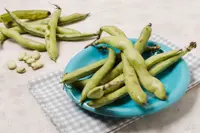
Beans
Beans are among the plants that fix their own nitrogen, so you don’t need to add much more.
Start fertilization during the pre-planting period with compost or a low-nitrogen 5-10-10 fertilizer. At the seedling stage, you can either skip feeding entirely or use a light 5-10-5 formula.
During the active growth, switch to 5-10-10 or a light 10-10-10. The same mix will work for later stages, too.

Garlic
Garlic has one of the longest growing seasons (8 to 9 months). It also needs rich soil to thrive, and the feeding process consists of two phases: one focused on leafy growth and the other on bulbs.
In the fall, before planting, prepare the soil using manure and a balanced 10-10-10 fertilizer. Ideally, add a source of sulfur, for example, calcium sulfate. Use the same balanced formula when planting, but switch to a nitrogen-heavy 16-6-4 fertilizer in spring, when the first 3-6 inch shoots appear.
In the late spring, during the bulbing phase, stop nitrogen partially or entirely. Apply 0-0-50 potassium sulfate lightly or use the 4-8-12 formula.

Onions
Onions are similar to garlic in terms of fertilization. However, there’s something special about this crop: every leaf becomes one ring in the bulb, which is why proper feeding during the vegetative stage is crucial.
Onions need compost and a balanced 10-10-10 fertilizer before planting. Once you see the first 3 leaves, switch to a phosphorus-heavy option, such as 10-20-10 or 12-24-12.
When onions enter the vegetative phase and are 3-12 inches tall, switch to a more nitrogen-rich fertilizer to promote leaf growth. It can be a balanced 10-10-10 mix or 21-0-0 ammonium sulfate as a side-dressing. When bulbs start to form, switch to a higher-phosphorus, higher-potassium option, such as 5-10-10.

Corn
Corn is basically grass, so it needs a lot of nitrogen. At pre-planting, use manure and a 10-10-10 fertilizer.
When plants are 2-4 inches tall, use a balanced 10-10-10 formula. At the vegetative stage, switch to 21-0-0 ammonium sulfate or 46-0-0 urea. When the first tassels appear, stop heavy nitrogen feeding and switch to 3-4-6 or 5-10-5 fertilizer.
Note that corn is vulnerable to zinc deficiency, which appears as broad white banding on young leaves, so some additional side dressing might be needed.

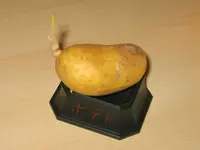
Potatoes
Potatoes are unique and highly demanding crops. At pre-planting, the soil needs compost and a low-nitrogen or balanced fertilizer — 5-10-10 or 10-10-10. Apply the same balanced option lightly during planting.
For vegetative growth, use nitrogen-rich 46-0-0 urea or choose a balanced 16-16-16 fertilizer if the soil lacks phosphorus and potassium.
When flowering begins, switch to 5-10-10 to reduce nitrogen. At the active underground growth phase, use 0-0-50 potassium sulfate or another high-potassium formula, such as 4-8-16. When vines turn yellow, stop feeding entirely.

Brassicas (cabbage, broccoli, kale)
Brassicas are different from all the plants above. They are more vulnerable to deficiencies in calcium, boron, and sulfur and require high nitrogen levels during the vegetative phase.
At pre-planting, use compost and a balanced 14-14-14 or 10-10-10 granular fertilizer. At the early growth phase, use a 10-20-10 or 12-24-12. Avoid too much nitrogen at this stage.
During the active growth phase, apply a high-nitrogen fertilizer, such as 21-0-0 ammonium sulfate or 27-3-3. You can also use a standard balanced 10-10-10 fertilizer if you believe the soil still needs extra phosphorus and potassium.
When the head is forming (for broccoli and cabbage), switch to a 5-10-10 fertilizer. If you notice a calcium deficiency, supplement with a calcium nitrate fertilizer. Stop all heavy feeding at the maturation phase.

Eggplant
Eggplant needs a lot of nitrogen and magnesium, but again, everything depends on the growth stage.
At pre-planting, use animal manure and a light 10-10-10 fertilizer. If you believe there might be a calcium deficiency, add gypsum as well. At the transplanting phase, use a phosphorus-based formula, such as 5-20-10 or 5-10-5.
At the vegetative growth stage, increase nitrogen. But keep it balanced with 10-10-10 or 12-12-12 fertilizer. When flowering, reduce nitrogen — choose a 5-10-10 mix.
Don’t stop feeding when eggplants are fruiting. Use a low-nitrogen 5-10-10 formula every 3-4 weeks.

Radishes
Radishes have a quick life cycle. They are among the fastest and lightest feeders.
Before planting them, use aged compost and a 5-10-10 granular fertilizer. At the seedling phase, use the same one at ¼ strength. Keep using the same formula when the roots begin to actively develop.
Remember that with radishes, overfertilization is more damaging than underfertilization. Stop feeding entirely 1-2 weeks before harvesting.

Signs Your Vegetables Need Fertilizer
Soil testing is the best way to determine whether your garden needs fertilizers. However, symptoms of nutrient deficiency vary depending on which nutrient is missing, so we can use them to identify the specific deficiency.
Symptom | Nutrient Deficiency |
Yellowing leaves, typically in the older, mature foliage | Nitrogen |
Wrinkled, dark purple, older leaves | Phosphorus |
Brown or dark purple outer margin on the mature leaves | Potassium |
Uniform interveinal yellowing on mature leaves | Magnesium |
Overall yellowing and cupping of the leaves, blossom-end rot | Calcium |
Yellowing between the veins, veins themselves remain green, typically seen in the top leaves | Iron |
Pale green, yellowish leaves, but on the upper, younger leaves | Sulfur |
The plant always shows signs, so pay attention and choose the vegetable garden fertilizer your plants need right now.
If you don’t want to get confused with the similar symptoms and their causes (some may be caused by over- or underwatering or overfertilization), use Botan. Identify vegetables by photo and get instant, science-based tips on fertilization, care, and disease treatment for your plants’ health.
7 Common Vegetable Fertilizing Mistakes
What is the best fertilizer for vegetables? It’s not only the one that provides your plant with the right nutrients but also the one that’s applied correctly.
If you want nutrients to do good without any harm, don’t do the following:
- Use too much nitrogen for fruiting vegetables
- Fertilize dry soil, which burns roots
- Use too much fertilizer or apply it too frequently
- Apply fertilizer under direct sunlight or during a heat wave
- Focus too much on NPK, ignoring micronutrient (calcium, magnesium) deficiencies
- Let granular fertilizers touch stems or leaves directly
- Use fresh, uncomposted manure that contains too much nitrogen
Also, check soil pH before fertilization. For most vegetables (there are exceptions, such as potatoes, which need a lower pH of 5.5), it should be 6.0-7.0. If it’s too high or too low, they just can’t absorb nutrients properly.
FAQ
The key phases include pre-planting, seedling, active vegetative growth, and flowering/fruiting. However, the exact schedule, along with the NPK concentration and additional micronutrient feeding, will depend entirely on the crop’s specific needs.
Dariia Plaksina
Botanist
5 years of botanical research experience
Dariia Plaksina is a biologist, botanist, and writer of informational articles with over 5 years of experience exploring the world of plants, nature, and biology. She studied at Taras Shevchenko National University of Kyiv, Educational and Scientific Center “Institute of Biology and Medicine,” where she built a strong scientific foundation for her future work.
For Dariia, writing is a hobby, a calling, and a way to make reliable knowledge easier to understand. Her articles focus on plant care, plant health, and natural processes, helping readers learn more about the living world through clear, accessible, and science-based explanations.
Related Articles
4 min read · 20 Oct 2026
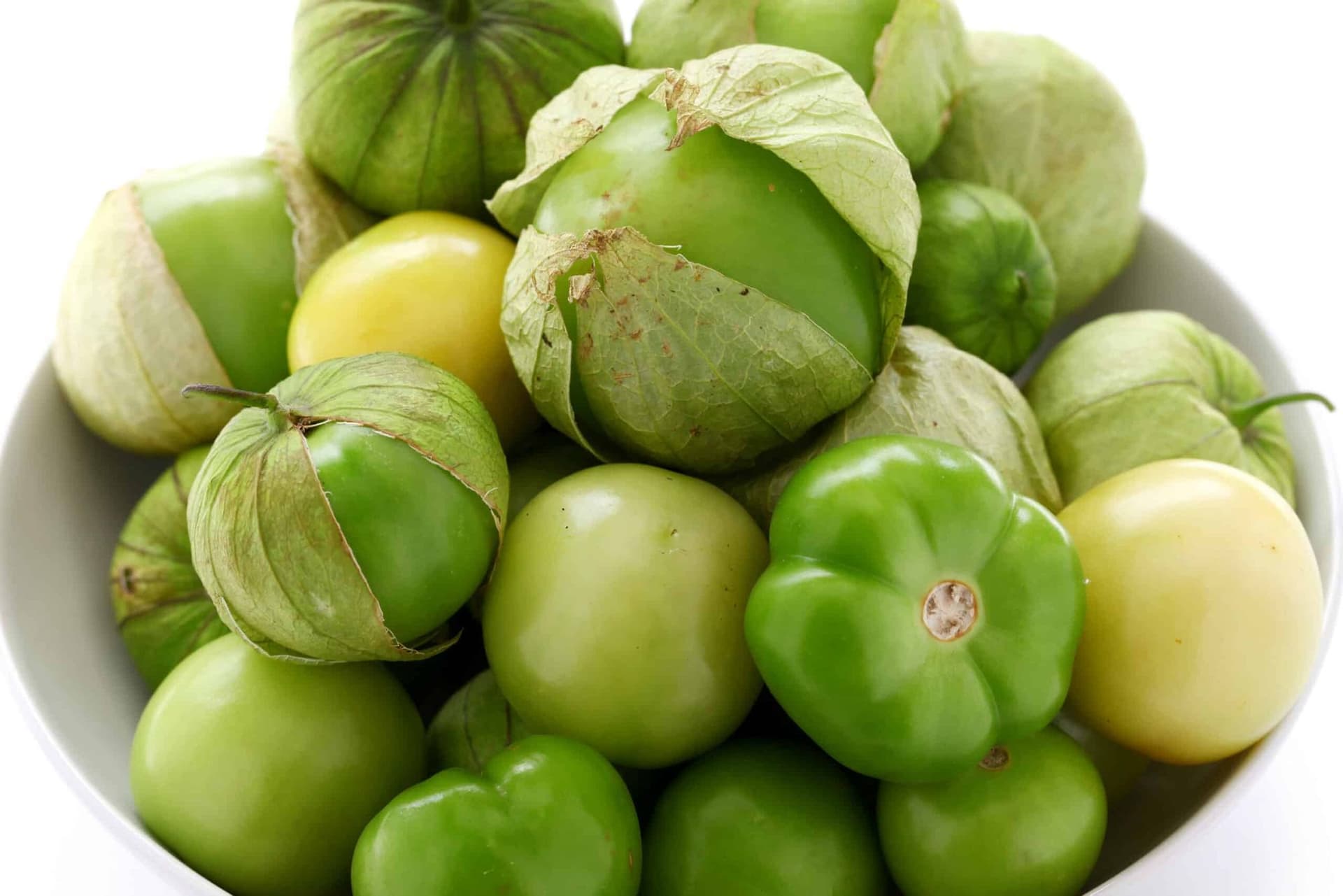
When to Harvest Tomatillos: How to Tell When They're Ripe
Tomatillos grow inside papery husks, making it hard to judge ripeness at a glance. This guide explains how to know when tomatillos are ripe and offers practical advice on harvesting and storage.
8 min read · 16 Oct 2026
20 Funny Plant Names That Make You Laugh
Some plants carry names that sound like jokes. This guide explains the origins of 20 funny plant names. You will also see which of these plants you can grow at home.
7 min read · 13 Oct 2026
12 Best Cold-Hardy Vegetables for Cold Weather
Cold-hardy vegetables can keep a garden productive through chilly fall, winter, and early spring weather. This guide covers 12 reliable crops, their frost tolerance, and practical growing tips for better cold-season harvests.
Explore Plants by Care Needs

-1-200x150.webp)
Identify the plant and problem. Help your plant recover
Identify plant problems early, understand what's wrong, and get clear care guidance. Botan helps you turn guesswork into confident plant care