

Purple Heart (Tradescantia pallida) Light Needs

Purple Heart grows best in bright light with several hours of direct sun, especially gentle morning sun.

Light Preference

Full Sun

Tradescantia pallida Light Requirements

Tradescantia pallida is native to eastern Mexico, where it grows in warm climates with strong seasonal light. In open or lightly sheltered sites, the stems can receive direct sun for part of the day, with some protection from the most intense heat depending on exposure. This background explains why cultivated plants keep stronger color and denser growth in bright conditions. Preferred light is partial sun to full sun.

  • Daily exposure:

    Tradescantia pallida needs about 6–8 hours of bright light daily, ideally with 3–4 hours of direct sun.

  • Full sun tolerance:

    Acclimated outdoor plants can handle full sun, but sudden exposure after indoor growth can scorch leaves.

  • Morning sun:

    Morning sun is safest indoors; hot afternoon rays through glass are more likely to cause pale, dry patches.

  • Lower light:

    Low light is tolerated poorly, often leading to longer stems and weaker purple coloring.

Indoors, Purple Heart needs a bright window position to keep compact growth and strong color.

NPoor
North-facing window:

A north-facing window is usually too dim unless it is unusually bright and unobstructed.

EBest
East-facing window:

An east-facing window is often ideal because it provides direct morning sun with lower heat stress.

SSuitable
South-facing window:

A south-facing window is suitable if direct rays are watched during summer and the plant sits 1–3 ft from hot glass.

WConditional
West-facing window:

A west-facing window can work if harsh afternoon sun is softened by distance from the glass or a sheer curtain.

Choose the brightest safe placement available, then adjust if color fades or leaves show sun scorch.

Excess light usually appears after a sudden move into stronger sun.

Bleached color:

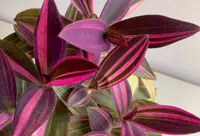
Purple foliage may look washed out, grayish, or less saturated on the sun-facing side.

Papery patches:

Tan or pale dry spots can form where leaves received harsh direct rays through glass.

Curled leaves:

Leaves may fold or curl during intense midday exposure, especially in hot, dry rooms.

Scorched tips:

Thin leaf tips may turn dry after repeated hot afternoon sun, particularly near a windowpane.

Move the plant out of the harshest rays and keep bright light. If stronger sun is desired, increase exposure gradually over 1–2 weeks.

Low light affects shape and color before it causes severe decline.

  • Long stems:

    Growth becomes stretched, with more space between leaves as stems reach toward brighter areas.

  • Duller color:

    The purple tone may fade toward green or brownish purple when light stays weak.

  • Sparse center:

    Older stems may look bare in the middle because new growth forms mostly at the tips.

  • Few flowers:

    Blooming may be reduced indoors when the plant does not receive enough bright exposure.

Move it to a brighter position with some direct sun, preferably earlier in the day. Make the change in stages if the new spot is much brighter.

When ideal sun is not available, choose the brightest usable area and prioritize a few hours of direct morning sun over all-day dim light.

Rotate the pot every 1–2 weeks so stems do not lean strongly toward the light source.

Avoid placing it deep inside a room because the purple color and compact growth are likely to weaken there.

Get Personalized Care Plan

Scan your plant to receive care tips personalized for your specific plant

FAQ

Purple Heart light requirements are bright light with partial sun. Indoors, this usually means a very bright spot with several hours of direct morning sun or strong filtered light.

More Plant Light Guides

Get the Botan App

Discover how to care for your plants with Botan.

Botan app identifying a plant with a phone camera
Is Sugar Water Good for Plants?

4 min read · 14 Sept 2026

Is Sugar Water Good for Plants?

Sugar water may sound like an easy boost, but most rooted plants do not need extra sucrose. This guide explains how green tissues produce carbohydrates, when a sweetened solution can be useful, and why too much can cause problems.

Plant Care
Is Sugar Water Good for Plants?
Best Water for Plants – How to Choose the Right Type

7 min read · 13 Aug 2026

Best Water for Plants – How to Choose the Right Type

Rainwater, filtered, distilled, and tap water affect plants differently. Learn which types support healthy growth and which cause slow damage. Match each to your plants and discover how to easily improve tap water quality.

Plant Care
Best Water for Plants – How to Choose the Right Type
Best Fertilizer for Grass in Summer: How to Choose the Right One

6 min read · 18 Aug 2026

Best Fertilizer for Grass in Summer: How to Choose the Right One

The right fertilizer in summer can make a lawn thrive. The wrong one can damage it. Here, you’ll learn the best NPK ratios by grass type, when and how to apply your formula, and how to recognize the signs of over- or under-fertilizing.

Plant Care
Best Fertilizer for Grass in Summer: How to Choose the Right One