


Peace Lily (Spathiphyllum wallisii) Light Needs

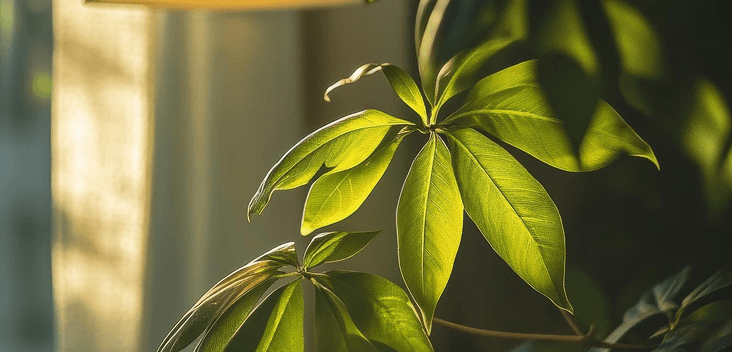
Peace Lily grows best in bright, indirect light with only brief, gentle morning sun if any direct sun reaches it.

Light Preference

Bright Indirect Light

Spathiphyllum wallisii Light Requirements

Spathiphyllum wallisii comes from warm, humid tropical forest understories in northern South America, where taller vegetation breaks up sunlight before it reaches the leaves. In that setting, the plant receives filtered light, partial shade, and occasional soft seasonal brightness rather than open midday sun. Indoor care should copy that sheltered pattern as closely as possible. It prefers bright, indirect or filtered light.

  • Ideal exposure:

    Peace Lily needs about 6–8 hours of bright, indirect or filtered light daily, including up to 1–2 hours of gentle direct morning sun.

  • Direct sun:

    Strong midday or afternoon sun is risky and can scorch the thin leaves, especially through hot glass.

  • Lower light:

    Shade and low indoor light are tolerated, but growth and flowering usually become weaker.

  • Gentle morning sun:

    Early sun is the safest direct exposure when the plant has been adjusted gradually.

Choose a bright room where sunlight is softened before it reaches the leaves.

NSuitable
North-facing window:

A bright north-facing window can work if the plant sits close to the glass and the room is not shaded by buildings or trees.

EBest
East-facing window:

An east-facing window is often best because it gives soft morning sun and bright indirect light for the rest of the day.

SConditional
South-facing window:

A south-facing window is suitable only if the plant is set several feet back or protected by a sheer curtain.

WConditional
West-facing window:

A west-facing window can be too intense unless afternoon sun is filtered or the plant is placed away from the direct beam.

Keep the foliage out of hot sunbeams, and adjust the distance if leaf surfaces feel warm in the afternoon.

Light may be too intense when damage appears on the brightest side of the plant.

Bleached areas:

Leaves facing the window may develop pale, washed-out patches after exposure to strong direct sun.

Tan scorch:

Sun-hit sections can turn tan, dry, or papery, often in irregular patches rather than across the whole leaf.

Afternoon droop:

Leaves may sag or angle away during hot afternoon sun, then look steadier after the beam passes.

Dull surfaces:

Glossy leaves can look flat or rough where intense light has stressed the surface tissue.

Move Spathiphyllum wallisii out of the direct beam right away. Use a sheer curtain or increase the distance from the window before returning it to brighter exposure.

Low light stress develops slowly. Look for growth changes during the brighter growing season.

  • Few flowers:

    The plant may keep leaves but produce fewer white blooms when light stays weak for long periods.

  • Leaning growth:

    Leaves and stems may angle strongly toward the nearest window instead of growing evenly.

  • Smaller leaves:

    New leaves may emerge smaller than older leaves when the plant cannot gather enough light.

  • Longer spacing:

    Stems may look stretched, with leaves held farther apart as the plant reaches toward brighter exposure.

Move Spathiphyllum wallisii gradually into brighter indirect light, closer to a suitable window or under a gentle grow light. Avoid moving it straight into harsh sun.

If ideal brightness is not available, choose the brightest spot that avoids hot direct rays rather than a dim corner. A sheer curtain can turn harsh sun into usable filtered light.

Rotate the pot every 1–2 weeks so new leaves do not lean strongly toward one side.

Avoid placing the plant far across a dark room because shade tolerance does not mean strong growth in very low light.

Get Personalized Care Plan

Scan your plant to receive care tips personalized for your specific plant

FAQ

The best light for Peace Lily is bright, indirect light for most of the day. A little gentle morning sun is acceptable, but strong direct sun is not ideal.

More Plant Light Guides

Get the Botan App

Discover how to care for your plants with Botan.

Botan app identifying a plant with a phone camera
How to Group Plants in Landscaping: A Practical Layout Guide

8 min read · 31 Aug 2026

How to Group Plants in Landscaping: A Practical Layout Guide

Good plant grouping can mean the difference between a well-planned garden and one that looks sloppy. This guide explores layers, spacing, cluster shapes, and the plants that thrive when you group them.

Plant Care
How to Group Plants in Landscaping: A Practical Layout Guide
How to Water Houseplants: Watering Guide

7 min read · 24 Aug 2026

How to Water Houseplants: Watering Guide

Learn how often to water indoor plants, key factors for proper watering, and how to adjust the care routine by plant type, season, pot size, light, and indoor conditions.

Plant Care
How to Water Houseplants: Watering Guide
Top 15 Fast-Growing Trees For Your Garden

13 min read · 28 Jul 2026

Top 15 Fast-Growing Trees For Your Garden

Learn which of the 15 fastest-growing trees will suit your area. We’ll share detailed information on each: growth rate, mature spread, key tree demands, and main vulnerabilities. Read on and make the best choice possible.

Plant Recommendations
Top 15 Fast-Growing Trees For Your Garden