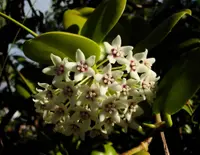


Hoya (Hoya australis) Light Needs

Hoya grows best in bright indirect light, with a short period of gentle morning sun when acclimated.

Light Preference

Bright Indirect Light

Hoya australis Light Requirements

Hoya australis is native to eastern and northern Australia, where it often grows as a climbing vine on trees and shrubs in warm woodland and forest-edge habitats. Its leaves are adapted to bright canopy light, with some gentle sun and protection from the harshest midday exposure. In cultivation, this points to bright, filtered conditions rather than full sun. Preferred light is bright indirect light.

  • Ideal exposure:

    Hoya australis needs about 6–8 hours of bright, indirect or filtered light daily, including up to 2–3 hours of gentle direct morning sun.

  • Safe direct sun:

    Early sun is usually tolerated, but hot afternoon rays can scorch leaves, especially through glass.

  • Lower light:

    It can survive in moderate shade, but growth becomes slower and flowering is less likely.

  • Seasonal shift:

    Winter sun is milder indoors, so a brighter spot may be useful when days are short.

Indoors, the best placement gives bright light without long exposure to hot direct sun.

NConditional
North-facing window:

Use only if the window is large, unobstructed, and close to the plant; otherwise it will be too dim for strong growth.

EBest
East-facing window:

Place it close to an east-facing window where it receives bright morning sun and softer light for the rest of the day.

SSuitable
South-facing window:

Set it 2–4 ft from the glass, or use a sheer curtain if direct sun reaches the leaves for several hours.

WConditional
West-facing window:

Keep it back from the window or filter the light, because late-day sun can overheat and mark the leaves.

Adjust placement by season if the room becomes much brighter in summer or noticeably dimmer in winter.

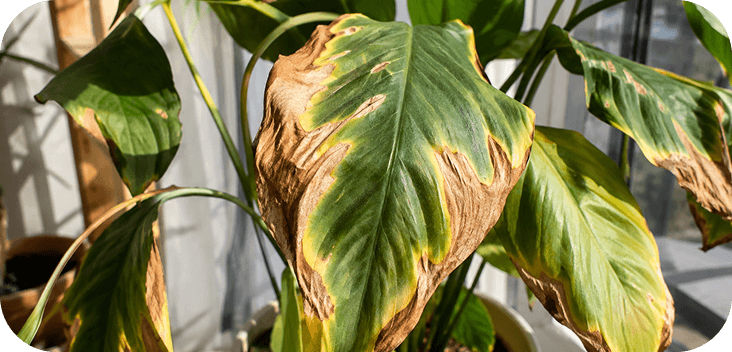
Excess light usually shows on the most exposed leaves first.

Bleached patches:

Sun-facing leaves may develop pale, washed-out areas after sudden exposure to strong direct rays.

Dry scald spots:

Tan or corky marks can appear where afternoon sun hits the same leaf surface repeatedly.

Bronzed leaves:

A reddish or bronze cast can signal strong light stress when it develops quickly with loss of leaf firmness.

Curled surfaces:

Leaves may cup or wrinkle slightly during intense window heat, even when the rest of the vine looks normal.

Move the plant back from harsh glass or add a sheer curtain. Keep bright indirect light, and reintroduce any direct sun slowly.

Low light usually affects new growth before older leaves. Hoya australis can tolerate shade, but it grows better with brighter exposure.

  • Stretched stems:

    New vines may grow long sections between leaves as they reach toward the nearest light source.

  • One-sided growth:

    The plant may lean strongly toward a window or produce most new growth on the brightest side.

  • Fewer flowers:

    Buds are less likely to form when the plant receives only weak light for many weeks.

  • Small new leaves:

    New leaves may stay smaller than older leaves, especially during spring and summer growth.

Move it to a brighter position with indirect light, then watch new growth rather than older leaves for improvement. Increase direct sun gradually if using a brighter exposure.

If ideal light is not available, choose the brightest room and keep the vine close enough to the light source that shadows still look soft. Filter harsh midday or afternoon rays with a sheer curtain instead of moving the plant into shade.

Rotate the pot a quarter turn every 1–2 weeks during active growth to keep stems from leaning toward one side.

A dim shelf several feet from a window is not suitable, because it will usually support survival rather than steady growth or flowering.

Get Personalized Care Plan

Scan your plant to receive care tips personalized for your specific plant

FAQ

The best light for Hoya is bright indirect or filtered light for most of the day, with a little gentle morning sun if the plant is acclimated.

More Plant Light Guides

Get the Botan App

Discover how to care for your plants with Botan.

Botan app identifying a plant with a phone camera
Best Fertilizer for Grass in Summer: How to Choose the Right One

6 min read · 18 Aug 2026

Best Fertilizer for Grass in Summer: How to Choose the Right One

The right fertilizer in summer can make a lawn thrive. The wrong one can damage it. Here, you’ll learn the best NPK ratios by grass type, when and how to apply your formula, and how to recognize the signs of over- or under-fertilizing.

Plant Care
Best Fertilizer for Grass in Summer: How to Choose the Right One
How To Revive a Dying Plant: 6 Steps To Bring A Plant Back To Life

6 min read · 1 Sept 2026

How To Revive a Dying Plant: 6 Steps To Bring A Plant Back To Life

Drooping leaves and brown tips don't always mean the end, and a weakened plant can often recover with a little help. These six simple steps will help you revive a dying plant and restore its health.

Plant Care
How To Revive a Dying Plant: 6 Steps To Bring A Plant Back To Life
How to Water Houseplants: Watering Guide

7 min read · 24 Aug 2026

How to Water Houseplants: Watering Guide

Learn how often to water indoor plants, key factors for proper watering, and how to adjust the care routine by plant type, season, pot size, light, and indoor conditions.

Plant Care
How to Water Houseplants: Watering Guide