

Hoya Identification (Hoya australis)

Recognize Hoya australis by its opposite pairs of thick, oval to nearly round leaves on twining stems, usually with a short pointed tip and a smooth, succulent texture.

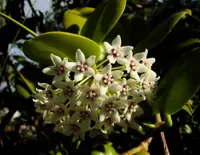
It also stands out for ball-shaped clusters of white, waxy flowers with a red to pink center, held on short spurs along the vine.

Hoya australis Identification

Is This Hoya?

Upload a plant photo and check the identification in seconds.

Clear images work best. Avoid photos taken too close or too far away

Check Hoya australis for these easy visible traits.

  • A twining or climbing vine with long, flexible stems that wind rather than stand upright.
  • Leaves are opposite in pairs, thick and fleshy, oval to nearly round, often 2 to 6 inches (5 to 15 cm) long.
  • Leaf surfaces look smooth and slightly glossy, with short stalks and a firm, succulent feel.
  • Flowers form in rounded hanging clusters; each waxy flower is white with a small pink to red center and five pointed lobes.

Look for the paired thick leaves and ball-like flower clusters together.

Hoya australis shows clear visual shifts as vines lengthen, branch, and begin flowering.

  • Juvenile plant: Leaves are smaller, thinner, and set farther apart on slender twining stems. The plant usually forms a simple vine with limited side branching.
  • Young plant: Leaf blades become broader, thicker, and glossier, often reaching about 3-6 inches (8-15 cm) long. Stems start branching and the vine looks sturdier.
  • Mature plant: Older growth carries thicker, woody basal stems and heavier pendent or climbing vines. Leaves appear more consistently rounded to oval and more densely spaced.
  • Flowering stage: Short stalks hold rounded umbels of waxy white flowers with pinkish centers. These clusters hang slightly away from the vine, unlike the flat leaf arrangement.

The main seasonal clue in Hoya australis is flowering. Mature plants usually show rounded clusters of waxy white flowers from spring into summer, often with pink-red centers. Outside bloom, the plant stays leafy and evergreen, so there is little seasonal change in leaf color or stem visibility to aid identification.

A few wax plants are regularly mistaken for Hoya australis.

wax plant(Hoya carnosa)

Confusion comes from thick, glossy, oval leaves and vine growth. Hoya carnosa usually has smaller leaves and often shows silver flecks; Hoya australis leaves are plainer, broader, and more rounded.

Chelsea wax plant(Hoya carnosa 'Chelsea')

This cultivar can resemble compact forms because the leaves are thick and rounded. The quickest check is the leaf edge: 'Chelsea' has noticeably cupped, puckered leaves, while Hoya australis leaves are flatter and smoother.

Hoya australis is native to Australia and also occurs in nearby parts of Melanesia and Polynesia, including Papua New Guinea and some southwest Pacific islands. It is usually found in coastal forest, rainforest margins, and other warm, humid woodlands, often climbing on trees or scrambling over rocky ground. That range helps with identification because it separates this species from Hoyas tied to mainland Asian forest habitats.

  • Sap contact: Broken leaves or stems release milky latex sap. Skin contact can cause mild irritation in some people, and contact with the mouth can also be irritating.
  • Pets and ingestion: Hoya australis is generally not classed among strongly toxic houseplants, but chewing leaves or stems can still cause stomach upset in pets and people. The main concern is ingestion of plant material and sap.

Confirm the Species with Botan

Upload a photo to identify the plant or verify your ID, which helps avoid mix-ups before you label or buy another one.

FAQ

The thick, glossy, opposite leaves are the most consistent clue. They are usually oval to round-oval with a pointed tip, and the plant often produces milky sap when cut, useful for Hoya australis identification.

More Plant Identification Guides

Identify the Plant and Get Its Profile

Use Botan to identify it from a photo, then review plant details, care information, and common problems.

Botan app identifying a plant from a photo
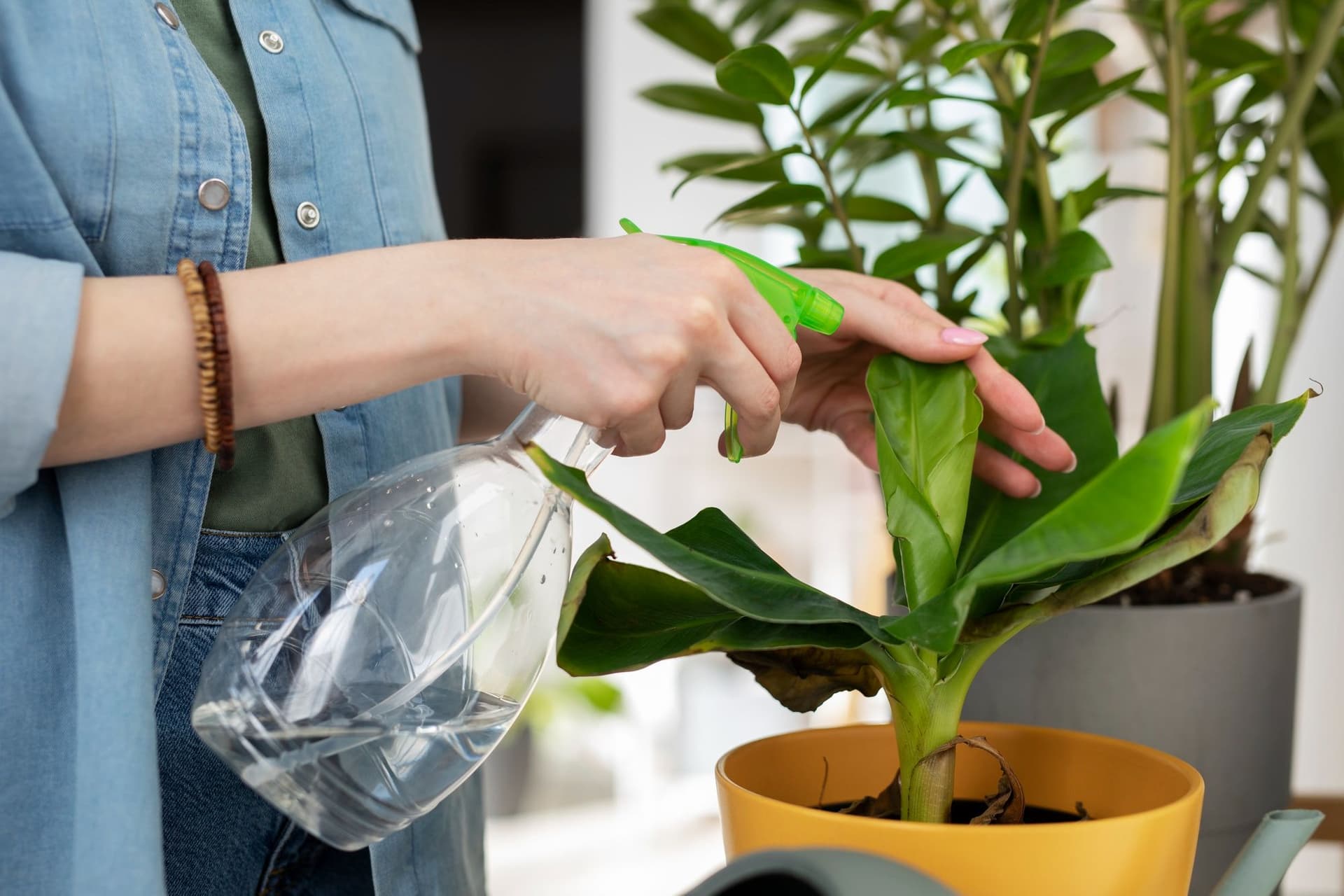
How to Mist Plants – Proper Technique and Common Mistakes

7 min read · 30 Jul 2026

How to Mist Plants – Proper Technique and Common Mistakes

Find out when misting works well and when to avoid it. Here, you’ll find detailed information about compatible and incompatible species, tips on how often to mist plants and do it correctly, and some great alternatives for raising humidity.

Beginner Guides

How to Mist Plants – Proper Technique and Common Mistakes
Can Plants Grow With Artificial Light?

6 min read · 15 Sept 2026

Can Plants Grow With Artificial Light?

Plants can grow under artificial light when the setup provides a suitable spectrum, enough intensity, and sufficient daily exposure. This guide explains how artificial lighting compares with sunlight, which options work indoors, and how to match a setup to houseplants.

Plant Care
Can Plants Grow With Artificial Light?
Rice Water for Plants – Which Plants Love It and How to Make It

8 min read · 14 Jul 2026

Rice Water for Plants – Which Plants Love It and How to Make It

Rice water can be an ideal DIY solution for orchids, roses, or fruiting plants. It supports growth, leaf count, and height. We’ll share how to make and apply it correctly for your plant.

Plant Care
Rice Water for Plants – Which Plants Love It and How to Make It