Baby Rubberplant Identification (Peperomia obtusifolia)

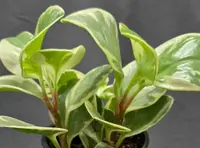
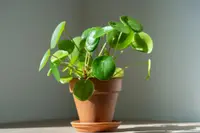
Recognize Baby Rubberplant by its thick, rounded to obovate leaves set in opposite pairs on stout, fleshy stems.

It forms a compact, upright to spreading clump, usually under 12 inches (30 cm) tall, and bears thin, upright flower spikes with no showy petals.

Peperomia obtusifolia Identification

Confirm What Plant You Have

Take a photo and use Botan to confirm your plant identification.

Clear images work best. Avoid photos taken too close or too far away

Check the plant’s thick leaves and compact, upright growth first.

  • Leaves are broad, oval to nearly round, with blunt tips and smooth edges.
  • Leaf blades are usually 2-4 inches (5-10 cm) long and feel noticeably thick and somewhat succulent.
  • Leaves grow in opposite pairs along stout, fleshy stems rather than singly.
  • Stems are smooth, green, and become slightly arching or spreading as the plant fills out.
  • Flowers, when present, appear as thin, upright greenish-white spikes with no showy petals.

Use the opposite leaf pairs and thick, rounded blades as the quickest confirming clues.

Baby Rubberplant shows clear visual shifts from compact juveniles to branched, flowering mature plants.

  • Juvenile plant: Juvenile plants have short, thick stems with closely spaced opposite leaves. The leaves are smaller, rounder, and held in a tighter, upright cluster.
  • Young plant: As it elongates, stems become more visible between leaf pairs and begin branching. Leaves turn broader and more obovate, often reaching 2-4 inches (5-10 cm) long.
  • Mature plant: Mature plants form a low, bushy mound with thicker succulent stems and wider spacing between branch tips. Older leaves look heavier, glossier, and more blunt-tipped.
  • Flowering stage: Flowering plants produce thin, upright greenish-white spikes above the foliage. These rat-tail-like inflorescences, meaning flower clusters, contrast strongly with the broad, fleshy leaves.

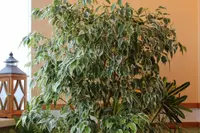
Several named forms of Baby Rubberplant are easy to separate by leaf variegation and growth habit.

  • 'Variegata': Leaves show cream to pale yellow margins around a medium green center, unlike the solid green typical form.
  • 'Golden Gate': Foliage is marbled green, cream, and soft yellow across much of the blade rather than only at the edges.
  • 'Albomarginata': Leaves have narrow white to creamy white margins with a darker green center, giving a cleaner two-tone pattern than broad variegates.
  • 'Minima': This form stays smaller, with noticeably shorter stems and smaller, thicker leaves than the standard plant.

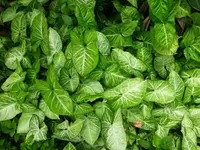
A few compact foliage plants are regularly mistaken for Baby Rubberplant.

Trailing jade(Peperomia rotundifolia)

Confusion happens because both have thick, glossy leaves. Trailing jade stays vine-like, with many small round leaves often under 1 inch (2.5 cm). Peperomia obtusifolia has upright to arching stems and larger oval leaves.

American rubber plant(Peperomia clusiifolia)

Both are bushy Peperomia with fleshy leaves. P. clusiifolia usually has narrower, more elongated leaves and often reddish leaf margins or stems. P. obtusifolia typically shows broader, spoon-shaped leaves without that regular red edging.

Peperomia obtusifolia is native to Florida, Mexico, the Caribbean, and parts of Central America. It occurs in tropical to subtropical coastal and lowland settings, including hammocks, forest edges, and limestone-based sites. This range helps with identification because the species is associated with humid, frost-free habitats in the American tropics rather than dry inland deserts or high mountains. Finding it naturalized far outside that range usually points to cultivation or escape, not a different wild habitat.

Confirm It from a Photo

Botan can identify or verify the plant in your photo, helping you avoid mix-ups before labeling or buying another one.

FAQ

A useful check is leaf texture and shape. This species has thicker, more succulent leaves with rounded or blunt tips, while many similar peperomias have thinner leaves or more pointed tips. That helps with Peperomia obtusifolia identification.

More Plant Identification Guides

One Photo. More About Your Plant.

Use Botan to identify a plant from a photo, then get plant details, care information, and common problem guidance.

Botan app identifying a plant from a photo
How to Group Plants in Landscaping: A Practical Layout Guide

8 min read · 31 Aug 2026

How to Group Plants in Landscaping: A Practical Layout Guide

Good plant grouping can mean the difference between a well-planned garden and one that looks sloppy. This guide explores layers, spacing, cluster shapes, and the plants that thrive when you group them.

Plant Care
How to Group Plants in Landscaping: A Practical Layout Guide
Top 15 Plants That Don’t Need Sunlight

8 min read · 17 Sept 2026

Top 15 Plants That Don’t Need Sunlight

Some plants thrive in dim rooms, shaded corners, and places with indirect light. In this guide, you’ll explore the top 15 species best suited to low-light conditions and how to care for them.

Plant Recommendations
Top 15 Plants That Don’t Need Sunlight
Plants That Repel Mosquitoes – 10 Effective Choices

8 min read · 6 Jul 2026

Plants That Repel Mosquitoes – 10 Effective Choices

Plants that repel mosquitoes can help mask human scent naturally and make outdoor spaces more comfortable. Explore the most effective options, their benefits and drawbacks, and choose the right plant for your space.

Plant Recommendations
Plants That Repel Mosquitoes – 10 Effective Choices