
Crystal Anthurium Identification (Anthurium crystallinum)

Recognize Anthurium crystallinum by its large, heart-shaped leaves with a deep basal notch and prominent pale veins radiating from the midrib.

Leaves rise individually on long stalks from a short, compact stem, forming a tight clump rather than a vine or trunk.

Anthurium crystallinum Identification

Check Your Plant ID

Upload a clear image to check whether your plant ID is correct.

Clear images work best. Avoid photos taken too close or too far away

Use these quick visual traits to check Anthurium crystallinum by eye.

  • Leaves are broad heart-shaped, with a deep basal notch and a pointed tip.
  • Blades are often 12-20 inches (30-50 cm) long and held on long upright stalks.
  • The upper leaf surface is dark green and velvety, crossed by thick pale white to silvery veins.
  • New leaves arise from a short, chunky stem rather than from a cane or trunk.

The leaf shape, velvet surface, and bold vein pattern are the most useful visible checks.

Anthurium crystallinum shows clear leaf and inflorescence changes as it moves from juvenile to mature stages.

  • Juvenile plant: Leaves are smaller, rounder to broadly heart-shaped, with a shorter tip and less contrast between the dark blade and pale veins.
  • Young plant: Blades become more elongated and velvety, and the sinus, the notch at the leaf base, appears deeper and more defined.
  • Mature plant: Leaves are distinctly large and elongated heart-shaped, often 12-20 inches (30-50 cm) long, with bold silvery venation and a more upright clumping habit.
  • Flowering stage: The plant produces a narrow greenish spathe and pale spadix held above or among the leaves, adding a visible reproductive structure absent earlier.

Several velvet-leaved anthuriums are often mistaken for Anthurium crystallinum.

Ace of spades anthurium(Anthurium forgetii)

Often confused because both have dark, velvety leaves with pale veins. A. forgetii has rounded leaf bases with no sinus, while A. crystallinum has a clear heart-shaped notch.

Queen anthurium(Anthurium warocqueanum)

Similar from the veining and velvety surface. It differs by having much longer, strap-like leaves, often over 2 feet (60 cm), rather than broader heart-shaped blades.

Velvet cardboard anthurium(Anthurium magnificum)

Commonly mixed up because the leaves are also large, dark, and strongly veined. A reliable check is the petiole: A. magnificum usually has a squarish, four-angled petiole instead of a rounder one.

Anthurium crystallinum is native to parts of Central and northwestern South America, including Panama and Colombia. It is typically found in humid tropical forest, especially shaded understory and lower slopes. That setting helps with identification because this species is associated with rainforest aroids rather than plants from seasonally dry forest, open ground, or swampy wetlands. In habitat it may grow terrestrially or on organic debris in very moist, sheltered sites.

  • Ingestion risk: All parts contain insoluble calcium oxalate crystals. Chewing leaves or stems can irritate the mouth and throat in humans and pets.
  • Skin contact: Sap can irritate skin in some people, especially after pruning or repotting. This is a contact risk rather than a poisoning risk.

Does Your Plant Match?

Use Botan to compare a photo and help verify the plant, which is useful before you label it or buy another one.

FAQ

The standout trait is its dark green, velvety, heart-shaped leaves marked by broad, bright silver-white veins. This contrast is central to Anthurium crystallinum identification and is usually more useful than the flowers.

Everything About Crystal Anthurium

More Plant Identification Guides

Identify Your Plant and Learn More

Use Botan to identify it from a photo, then get plant details, care information, and common problems for that species.

Botan app identifying a plant from a photo
How To Revive a Dying Plant: 6 Steps To Bring A Plant Back To Life

6 min read · 1 Sept 2026

How To Revive a Dying Plant: 6 Steps To Bring A Plant Back To Life

Drooping leaves and brown tips don't always mean the end, and a weakened plant can often recover with a little help. These six simple steps will help you revive a dying plant and restore its health.

Plant Care
How To Revive a Dying Plant: 6 Steps To Bring A Plant Back To Life
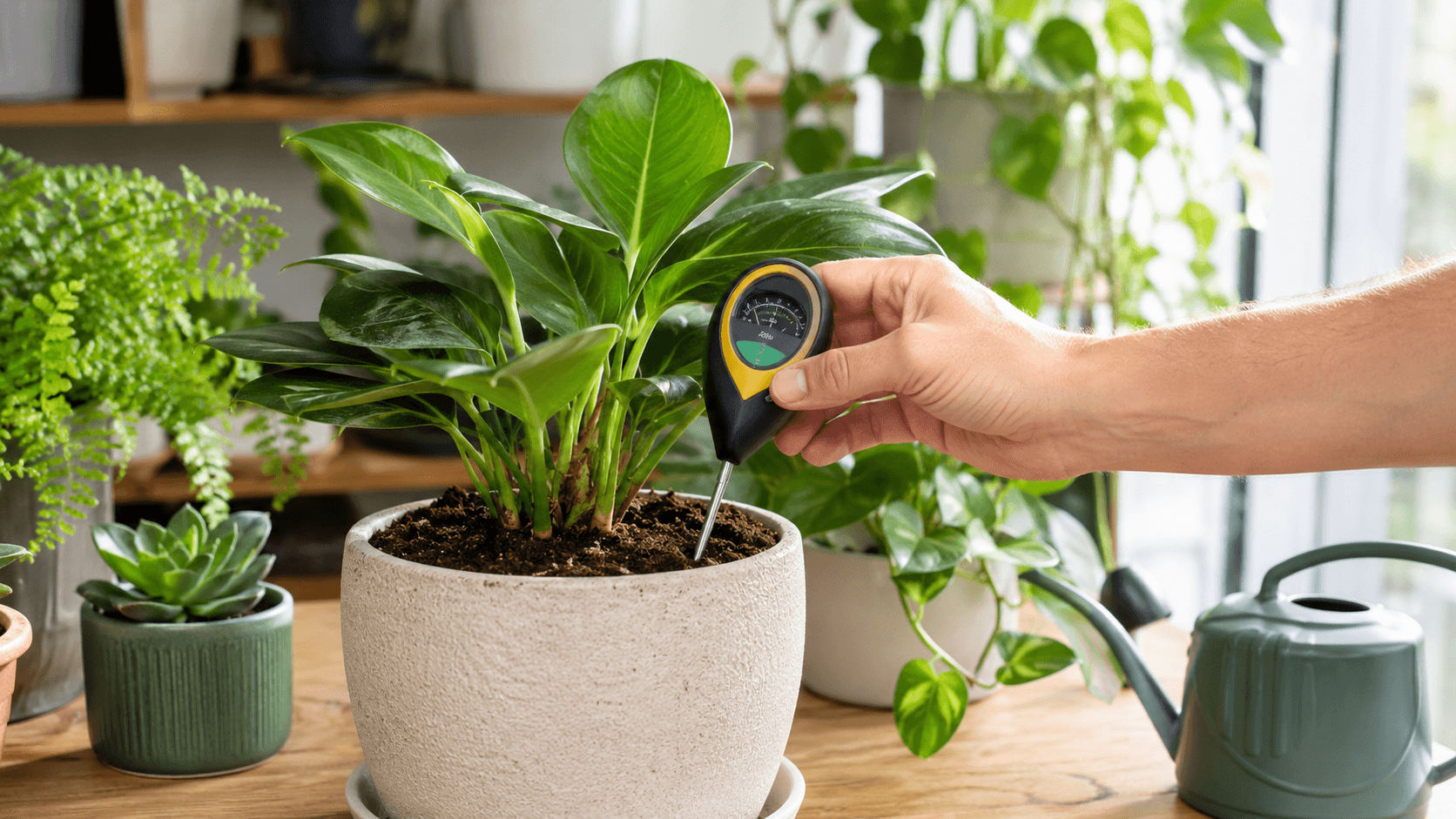
How to Use a Moisture Meter for Plants

5 min read · 4 Sept 2026

How to Use a Moisture Meter for Plants

Watering by feel kills plenty of houseplants. A moisture meter checks the soil for you, and takes the guesswork out of it. This guide will show you how to use it correctly, from the first touch to the final reading.

Beginner Guides
How to Use a Moisture Meter for Plants
12 Most Wanted Rare Houseplants to Grow at Home

6 min read · 21 Sept 2026

12 Most Wanted Rare Houseplants to Grow at Home

Rare houseplants can turn an ordinary corner in your apartment into a living botanical collection. This guide covers 12 most admired picks, what makes them special, and how to grow them successfully at home.

Plant Recommendations
12 Most Wanted Rare Houseplants to Grow at Home