
Flaming Katy Identification (Kalanchoe blossfeldiana)

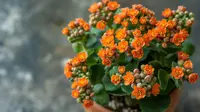
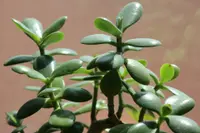
To recognize Flaming Katy, look for a compact, upright succulent with thick, glossy, oval leaves set in opposite pairs along short stems. Leaves usually have rounded, shallowly scalloped edges.

It also shows dense clusters of small, four-petaled flowers held above the foliage on short stalks, often on plants under 12 inches (30 cm) tall.

Kalanchoe blossfeldiana Identification

Confirm What Plant You Have

Upload a clear photo to check your plant identification with Botan.

Clear images work best. Avoid photos taken too close or too far away

Use these fast visual checks for Kalanchoe blossfeldiana.

  • Compact, upright succulent, usually 6-18 inches (15-45 cm) tall, often forming a dense mound.
  • Leaves are opposite, thick, glossy, and oval to obovate, with rounded, shallowly scalloped edges.
  • Leaf blades are typically 1-3 inches (2.5-7.5 cm) long on short, fleshy stems.
  • Flowers sit in tight clusters above the leaves; each small bloom usually has 4 petals.

Check both the opposite fleshy leaves and the clustered 4-petaled flowers for the strongest match.

Flaming Katy shows clear visual changes from a compact rosette to a flowering clump.

  • Juvenile plant: Small plants stay low and rosette-like, with opposite, fleshy leaves that are rounder and less distinctly scalloped than later growth.
  • Young plant: Stems begin to elongate and branch, lifting leaf pairs into a short clump about 6-12 inches (15-30 cm) tall rather than a flat rosette.
  • Mature plant: Established plants appear denser and more upright, with thicker branching stems and broader, glossy leaves showing the species' more obvious crenate margins.
  • Flowering stage: Terminal clusters rise above the leaves, carrying many four-petaled flowers in tight heads; the plant's outline shifts from leafy mound to branched bloom-topped clump.

Several well-known Flaming Katy cultivars are easy to tell apart by flower form or leaf variegation.

  • 'Calandiva': Differs from the typical form by fully double flowers with many extra petals, creating a rose-like bloom instead of a single 4-petaled flower.
  • 'Variegata': Shows cream to pale yellow leaf margins or irregular patches on the green leaves, rather than solid green foliage.
  • 'Tom Thumb': Stays distinctly smaller, often around 4 to 6 inches (10 to 15 cm) tall, with a tighter mound than the usual species form.

The clearest seasonal clue in Kalanchoe blossfeldiana is flowering, usually in late fall through winter and sometimes into early spring. Plants that were mainly leafy develop tight clusters of small, four-petaled flowers held above the foliage. Outside bloom, the plant keeps its thick, glossy green leaves, so seasonal identification relies less on leaf change and more on whether those flower clusters are present.

Several flowering succulents can be mistaken for Flaming Katy at a glance.

Calandiva(Kalanchoe × houghtonii group)

Often sold beside it, with the same compact habit and thick scalloped leaves. The fastest check is the bloom: Calandiva has double, roselike flower heads, while Kalanchoe blossfeldiana has single four-petaled flowers.

florist kalanchoe(Kalanchoe garambiensis)

Can resemble it through clustered blooms and fleshy opposite leaves. It is usually looser and taller, and its leaves are narrower and less evenly rounded along the edges than Kalanchoe blossfeldiana.

Kalanchoe blossfeldiana is native to Madagascar. Reliable sources place it in seasonally dry parts of the island, where it occurs on rocky ground rather than in forest understory or wet habitats. That setting helps with identification only in a limited way. Within Kalanchoe, a Madagascar origin and association with dry, rocky sites support the ID, but geography is not a strong field clue outside its native range.

  • Ingestion toxicity: Leaves, stems, and flowers contain toxic compounds. Ingestion can affect both humans and pets, with pets, especially cats and dogs, a more common concern.
  • Heart-related risk in pets: Kalanchoe species contain cardiac glycosides, compounds that can disturb heart rhythm after ingestion. This safety issue is mainly documented for pets rather than routine skin contact.

Does Your Plant Match?

Use Botan to identify it or confirm your guess from a photo, which helps avoid mix-ups with similar houseplants.

FAQ

Flowers are borne in dense, rounded clusters above the leaves on upright stalks. Each small bloom is four-parted and tubular at the base, with clusters often covering much of the plant during flowering.

More Plant Identification Guides

Find Out What Plant It Is

Identify it from a photo with Botan, then get plant details, care information, and common problems for that species.

Botan app identifying a plant from a photo
What Plants Don't Like Epsom Salt?

11 min read · 29 Jul 2026

What Plants Don't Like Epsom Salt?

Learn which plants can be seriously damaged by Epsom salt and which will thrive on it. We’ll explain when and how to use it properly, provide tips for indoor & outdoor plants — read on and enjoy a healthy garden.

Plant Care
What Plants Don't Like Epsom Salt?
Best Time to Mow Lawn – A Complete Guide

5 min read · 10 Aug 2026

Best Time to Mow Lawn – A Complete Guide

Explore when to mow your lawn for its health and a pleasant green color. Find out the best time for this task during the summer heat, and follow practical tips for correctly cutting the grass, and learn common mistakes to avoid.

Plant Care
Best Time to Mow Lawn – A Complete Guide
Rice Water for Plants – Which Plants Love It and How to Make It

8 min read · 14 Jul 2026

Rice Water for Plants – Which Plants Love It and How to Make It

Rice water can be an ideal DIY solution for orchids, roses, or fruiting plants. It supports growth, leaf count, and height. We’ll share how to make and apply it correctly for your plant.

Plant Care
Rice Water for Plants – Which Plants Love It and How to Make It