

African Violet Identification (Streptocarpus ionanthus)

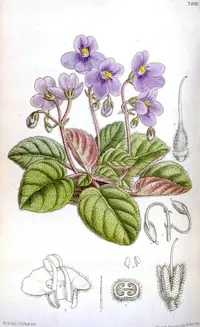
To recognize African Violet, look for a stemless rosette of broad, rounded leaves, each carried on a fleshy stalk from the crown.

Flowers rise just above the leaves on short stalks, with five fused petals forming a flat, open face, often about 1 to 2 inches (2.5 to 5 cm) across.

Streptocarpus ionanthus Identification

Is This African Violet?

Use a clear photo to confirm what plant you have.

Clear images work best. Avoid photos taken too close or too far away

Check the plant’s compact, low rosette form first.

  • Leaves grow in a basal rosette, with no visible woody stem or trunk.
  • Leaf blades are broadly oval to nearly round, usually about 2-4 inches (5-10 cm) long.
  • Leaves look thick, softly fuzzy, and slightly cupped, with a smooth to faintly scalloped edge.
  • Flowers rise just above the leaves on short stalks and are usually about 1-2 inches (2.5-5 cm) across.
  • Each flower has five lobes, with two smaller upper lobes and three broader lower lobes.

A tight rosette of fuzzy leaves plus five-lobed flowers is a practical visual match.

African Violet shows clear visual changes from early rosette growth to flowering maturity.

  • Seedling: Begins as a tiny basal rosette with a few rounded, softly hairy leaves and very short leaf stalks, lacking the layered symmetry seen later.
  • Young plant: The rosette becomes flatter and more regular, with broader, thicker leaves on distinct petioles; spread often reaches about 4 inches (10 cm).
  • Flowering stage: Mature rosettes send up slender stalks above the leaves, carrying several five-lobed violet, blue, pink, or white flowers, each about 1 inch (2.5 cm) across.

Streptocarpus ionanthus keeps its low rosette of softly hairy green leaves through the year, so seasonal leaf drop or bare stems are not useful clues. The clearest seasonal change is flowering. Blooms are often most visible from spring into summer, when short stalks rise above the foliage and carry violet, blue, pink, or white flowers with a yellow-centered throat.

A few gesneriads can be mistaken for African violet at a glance.

Cape primrose(Streptocarpus × hybridus)

Both make soft, fuzzy rosettes and tubular flowers. Cape primrose usually has longer, straplike leaves rather than rounded heart-shaped ones, and its flowers sit on longer stems and are more trumpet-shaped.

False African violet(Episcia cupreata)

Both have velvety leaves in a low rosette-like clump. Episcia spreads by runners, forming creeping stems, while Streptocarpus ionanthus stays as a tighter crown; Episcia flowers are narrower and more tubular.

Streptocarpus ionanthus is native to eastern Tanzania and adjacent southeastern Kenya in East Africa. Its natural range is useful in identification because this species belongs to a small group of streptocarpus from humid coastal and subcoastal forests there. In the wild it grows on shaded rocks, cliff faces, and mossy ledges in forested ravines and similar moist sites. That consistent link with humid, rocky forest habitats helps separate it from unrelated houseplants with similar flowers or leaves.

Scan. Check. Confirm.

Use Botan to identify or verify a plant from a photo, helping avoid mix-ups before you label it or compare similar plants.

FAQ

The best marker is the basal rosette of thick, fuzzy leaves with softly scalloped edges, plus five-petaled flowers held just above the foliage. For African Violet identification, that leaf texture and compact form are especially useful.

More Plant Identification Guides

Scan Your Plant. Get the Details.

Identify a plant from a photo with Botan, then see plant details, care information, and common problems.

Botan app identifying a plant from a photo
What Plants Don't Like Epsom Salt?

11 min read · 29 Jul 2026

What Plants Don't Like Epsom Salt?

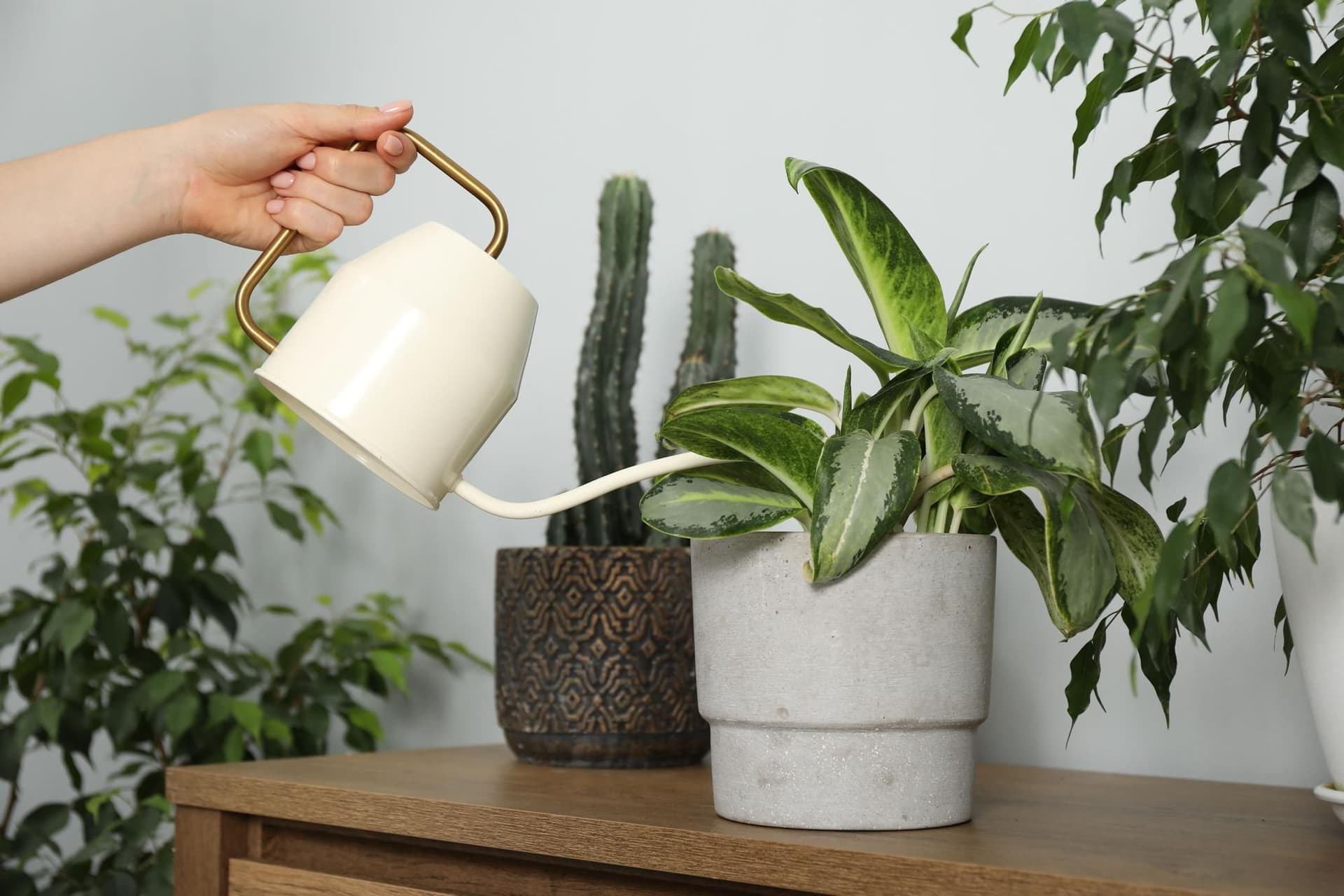
Learn which plants can be seriously damaged by Epsom salt and which will thrive on it. We’ll explain when and how to use it properly, provide tips for indoor & outdoor plants — read on and enjoy a healthy garden.

Plant Care
What Plants Don't Like Epsom Salt?
How to Water Houseplants: Watering Guide

7 min read · 24 Aug 2026

How to Water Houseplants: Watering Guide

Learn how often to water indoor plants, key factors for proper watering, and how to adjust the care routine by plant type, season, pot size, light, and indoor conditions.

Plant Care
How to Water Houseplants: Watering Guide
When to Harvest Carrots: Timing, Signs, and How to Pick Them

6 min read · 23 Oct 2026

When to Harvest Carrots: Timing, Signs, and How to Pick Them

Carrots are usually ready 60-80 days after sowing them in the soil, depending on the variety. Learn how to recognize maturity signs, choose the right harvest season, pull carrots without damaging them, and store roots after picking.

Plant Care
When to Harvest Carrots: Timing, Signs, and How to Pick Them