
Chinese Money Plant Identification (Pilea peperomioides)

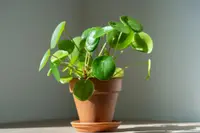
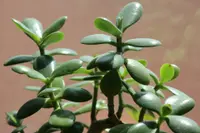
Recognize Chinese Money Plant by its nearly round, peltate leaves, with the leaf stalk attached near the center rather than the edge, and by leaves held singly on long petioles along an upright green stem.

Mature plants often form a bare lower trunk topped by a loose canopy of 2- to 4-inch (5-10 cm) leaves.

Pilea peperomioides Identification

Identify a Plant by Photo

Use a clear photo to confirm what plant you have.

Clear images work best. Avoid photos taken too close or too far away

Check the plant’s leaf shape, stalk placement, and upright stem.

  • Leaves are nearly round, flat, and usually 2-4 inches (5-10 cm) across, with smooth edges.
  • Each leaf sits on a long, thin stalk attached near the center of the blade, giving a coin-like look.
  • Leaves are spaced along a single upright, fleshy stem rather than forming a tight rosette.
  • The stem is plain, green to brownish, with clear leaf scars where older leaves have dropped.

A balanced crown of round leaves on long stalks is a strong visual match.

Chinese Money Plant shows clear age-related changes in stem, leaf proportion, and flowering structure.

  • Seedling: Tiny plants start as a short central stem with a few small, nearly round leaves; petioles are brief, and the coin-like shape is less pronounced.
  • Young plant: Leaves become distinctly circular and peltate, with the stalk attached near the center; plants stay compact, often under 8 inches (20 cm) tall.
  • Mature plant: The stem elongates and becomes clearly upright, sometimes bare below; larger leaves sit on longer petioles, and offsets often appear around the base.
  • Flowering stage: Small, airy clusters rise above the foliage on thin stalks, adding a loose, branched outline unlike the tighter leafy form of nonflowering plants.

Pilea peperomioides usually keeps its round, shield-like leaves year-round indoors, so seasonal identification clues are limited. The main visible change is flowering, most often in spring. Mature plants may produce tall, thin flower stalks with many tiny pale flowers held above the foliage. Lower leaves can yellow and drop over time, but that is not a reliable seasonal marker.

A few round-leaved houseplants are regularly mistaken for Chinese money plant.

Swedish ivy(Plectranthus verticillatus)

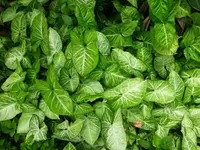
Often confused because both make rounded leaves on long stalks. Swedish ivy has scalloped leaf edges and opposite leaf pairs along trailing stems. Pilea peperomioides has smoother leaf margins and a more upright, central stem.

raindrop peperomia(Peperomia polybotrya)

This one also has glossy, peltate-looking leaves, so the silhouette can seem close. Its leaves are thicker and distinctly teardrop-shaped with a pointed tip. Pilea peperomioides usually has flatter, nearly circular leaves.

Pilea peperomioides is native to southwestern China, especially Yunnan Province. It occurs in montane forest settings, often on shaded, damp rock faces and among mossy stones in valleys and ravines. That range and habitat can help with identification because this species is tied to cool, humid upland sites rather than lowland tropical rainforest or arid ground. Reports place it at roughly 5,000-10,000 feet (1,500-3,000 m), which helps separate it from many look-alike houseplants with broader or different native habitats.

Scan. Check. Confirm.

Use Botan to compare a photo and confirm the plant’s identity when the match is uncertain.

FAQ

The clearest marker is its nearly round, coin-like leaves held on long, slender petioles, meaning leaf stalks. The leaves attach near the center underside, creating a peltate, umbrella-like look useful for identifying Chinese Money Plant.

More Plant Identification Guides

Scan Your Plant. Get the Details.

Use Botan to identify a plant from a photo, then get its profile, care information, and common problems.

Botan app identifying a plant from a photo
12 Best Plants for Bathroom That Thrive in Humid Conditions

9 min read · 29 Sept 2026

12 Best Plants for Bathroom That Thrive in Humid Conditions

Discover the 12 best plants for bathroom spaces. Each pick comes with its own advantages, plus light, humidity, watering, and placement tips. Take a look and match the plant to your specific bathroom.

Plant Recommendations
12 Best Plants for Bathroom That Thrive in Humid Conditions
How To Revive a Dying Plant: 6 Steps To Bring A Plant Back To Life

6 min read · 1 Sept 2026

How To Revive a Dying Plant: 6 Steps To Bring A Plant Back To Life

Drooping leaves and brown tips don't always mean the end, and a weakened plant can often recover with a little help. These six simple steps will help you revive a dying plant and restore its health.

Plant Care
How To Revive a Dying Plant: 6 Steps To Bring A Plant Back To Life
How to Clean Plant Leaves: A Simple Care Guide

6 min read · 4 Aug 2026

How to Clean Plant Leaves: A Simple Care Guide

Dusty leaves look dull and don't absorb light well. Below, you'll find simple ways to clean them, which tools are truly effective, how often you should do it, and what causes damage.

Beginner Guides
How to Clean Plant Leaves: A Simple Care Guide