13 Best Front Yard Trees for Every Home and Yard
A front yard tree can stay for decades. Therefore, choosing one deserves serious consideration. Here are 13 trees that have proven themselves, sorted by their purpose. You'll also find five species to avoid and basic planting information.

On this page
- Trees for Front Yards: Side-by-Side Comparison
- 13 Good Front Yard Tree Ideas
- Best Shade Trees for Front Yard
- Best Small Trees for Front Yard
- Best Flowering Trees for Front Yard
- 5 Trees to Avoid Planting in Front of House
- Silver Maple
- Bradford (Callery) Pear
- Weeping Willow
- Cottonwood
- Sweetgum
- Front Yard Tree Planting Tips
- How to Choose the Right Tree for Your Front Yard
Choosing a tree for the front of your house seems more challenging than it actually is. You're living with it for a long time. That's why the best trees for front yard are typically low-maintenance: red maple, eastern redbud, or Japanese maple. None of them require much care once established.
Maybe you don't even know what's currently growing in your yard. Fortunately, you can identify a tree by photo using Botan and quickly find care information. Below, we've grouped 13 trees by shade and size, and at the end, we've listed those with flowering foliage. You'll also find a few species you might want to avoid near your house.
Trees for Front Yards: Side-by-Side Comparison
There's no single tree that suits every yard. The front yard trees worth planting depend primarily on their size and growth rate. Your planting preferences are also important. Some people want shade over their porch, while others value charming views.
Let's compare the most suitable trees, their characteristics, and their intended uses.
Tree | Best For | Mature Height | Growth Rate |
Red Maple (Acer rubrum) | Fast shade and fall foliage color | 40–60 ft | Medium (1–2 ft/yr) |
Red Oak (Quercus rubra) | Heavy shade and long life | 60–75 ft | Medium-fast (up to 2 ft/yr) |
American Sycamore (Platanus occidentalis) | Large areas and dense foliage | 75–100 ft | Fast (2+ ft/yr) |
Honeylocust (Gleditsia triacanthos) | Light shade and small outdoor sites | 40–70 ft | Fast (up to 2 ft/yr) |
Japanese Maple (Acer palmatum) | Small spaces and landscape centerpiece | 10–25 ft | Slow (under 1 ft/yr) |
Crape Myrtle (Lagerstroemia indica) | Summer bloom and heat | 15–25 ft | Medium (1–2 ft/yr) |
Canadian Serviceberry (Amelanchier canadensis) | All four seasons and wildlife | 15–25 ft | Slow-medium (~1 ft/yr) |
Dwarf Magnolia (Magnolia grandiflora 'Little Gem') | Evergreen areas and tight spaces | 15–20 ft | Slow (under 1 ft/yr) |
Flowering Dogwood (Cornus florida) | Spring bloom and partial shade | 15–25 ft | Slow-medium (under 1 ft/yr) |
Eastern Redbud (Cercis canadensis) | Early color and small yards | 20–30 ft | Medium (1–2 ft/yr) |
Crabapple (Malus spp.) | Flowers and bird food | 15–25 ft | Medium (1–2 ft/yr) |
Tulip Tree (Liriodendron tulipifera) | Big yards and height | 70–90 ft | Fast (2+ ft/yr) |
Weeping Cherry (Prunus subhirtella 'Pendula') | Spring statement | 20–30 ft | Medium (1–2 ft/yr) |
Each of these species is suitable for planting near the house.
Keep Plants Thriving
Get simple care guidance tailored to each plant’s needs in the app
13 Good Front Yard Tree Ideas
So, what is a good tree for front yard planting? The answer depends on your space. We grouped these 13 species by what they do best. First come shade trees, then small trees, and finally, trees that thrive on flowering.
Best Shade Trees for Front Yard
These four trees create the deepest shade of all. They grow large, so keep them away from roofs and chimneys. Most of them also produce beautiful autumn colors.
Red Maple (Acer rubrum)
Zones: 3–9 | Mature Size: 40–60 ft tall, 30–40 ft wide | Growth Rate: 1–2 ft/year

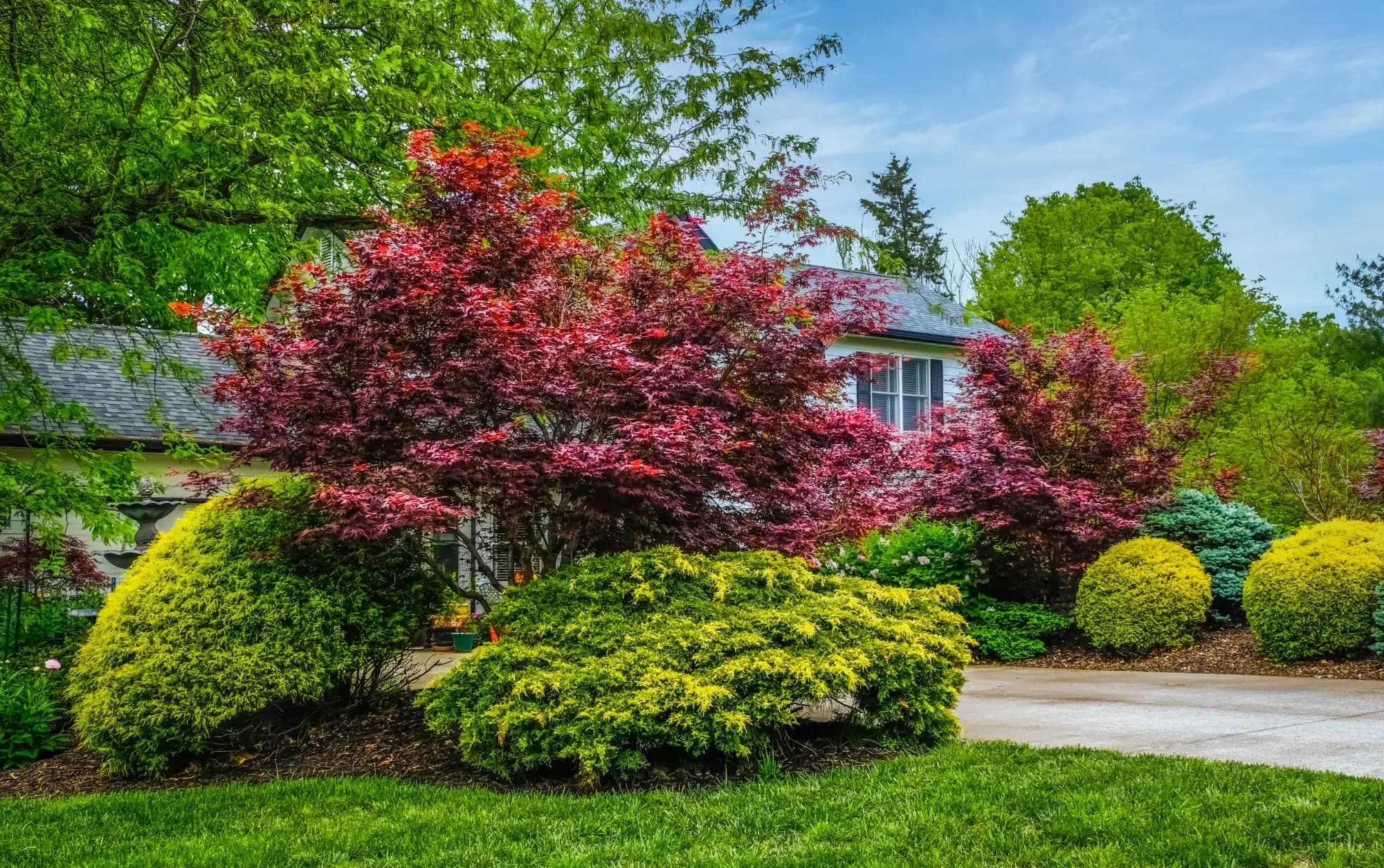
Red maple is the first one that comes to mind, and for good reason. It grows quickly and turns a rich red in the fall. Wet or poor soil has little effect on its growth. However, you should monitor the roots of Acer rubrum — they are shallow and can lift up a sidewalk if the tree grows too close. Keep it at least 20 feet (6 meters) from any pavement.
Red Oak (Quercus rubra)
Zones: 3–8 | Mature Size: 60–75 ft tall, 45–50 ft wide | Growth Rate: Medium-fast (up to 2 ft/year)

When it comes to trees for front yards, few can match this shade. Red oak pays off slowly but lasts for generations. In autumn, the tree turns a rich reddish-brown. Squirrels nibble on the acorns every autumn. It requires a wide, open site, as its crown spreads vigorously. Water it well for the first 2 years, and the roots will establish.
American Sycamore (Platanus occidentalis)
Zones: 4–9 | Mature Size: 75–100 ft tall, 60–70 ft wide | Growth Rate: Fast (2+ ft/year)

If you're looking for a true giant in the truest sense of the word, the American Sycamore is for you. In a large lot, it quickly fills the space and develops a broad crown and mottled camouflaged bark. This is not a tree for a small yard — it's suitable for front only if there's ample space. A backyard is another option.
Leaves and seed balls drop throughout the season, so expect cleanup. Keep it away from the house and any overhead power lines.
Honeylocust (Gleditsia triacanthos)
Zones: 3–9 | Mature Size: 40–70 ft tall, 30–50 ft wide | Growth Rate: Fast (up to 2 ft/year)

Gleditsia triacanthos allows plenty of light to pass through. The shade remains thin and diffuse, which allows grass to continue growing directly underneath.
The small leaves decompose on their own, so fall cleanup is virtually unnecessary. To save money, you can use a thornless, seedless variety, such as 'Shademaster'. It tolerates road salt and drought well.
Best Small Trees for Front Yard
Not everyone has room for a giant. These small trees for front yard beds and porch corners are proportionate to the average house. None grow taller than 25 feet (7.5 meters). They will still produce flowers and fall leaf color, just on a smaller crown.
Japanese Maple (Acer palmatum)
Zones: 5–8 | Mature Size: 10–25 ft tall, 10–25 ft wide | Growth Rate: Slow (under 1 ft/year)

People plant Acer palmatum to serve as a small ornamental. Its lacy leaves, red or green, catch the low sun and almost glow. Slow growth is part of its appeal — It won't clutter a small garden bed for years. In hot regions, provide afternoon shade to prevent the leaves from burning. A layer of mulch cools the roots from below.
Crape Myrtle (Lagerstroemia indica)
Zones: 7–9 | Mature Size: 15–25 ft tall, 6–15 ft wide | Growth Rate: Medium (1–2 ft/year)

For a summer delight, you can choose a Crape Myrtle. It produces wrinkled pink or white flowers for several weeks, while other trees simply stand green. Lagerstroemia indica thrives in warmth and full sun, so a south-facing location is ideal.
The peeling bark in winter also looks spectacular. Avoid heavy annual pruning as this ruins the tree's shape and deprives it of flowers.
Canadian Serviceberry (Amelanchier canadensis)
Zones: 3–7 | Mature Size: 15–25 ft tall, 10–20 ft wide | Growth Rate: Slow-medium (about 1 ft/year)

The Canadian serviceberry is a native species and requires virtually no maintenance. White flowers bloom in the spring. Then comes summer, when berries appear, quickly devoured by birds. In the fall, the leaves turn orange-red, so you get something for every season.
The plant remains narrow, which makes it ideal for a tight front garden bed. Plant it in moist, well-drained soil and leave it mostly alone.
Dwarf Magnolia (Magnolia grandiflora 'Little Gem')
Zones: 7–9 | Mature Size: 15–20 ft tall, 7–10 ft wide | Growth Rate: Slow (under 1 ft/year)

As an evergreen, it holds its leaves through winter — unlike most trees here. Browse the full list of evergreens if year-round foliage is a priority for your yard.
Its narrow shape makes it suitable for porch or driveway placement. While the plant is young, maintain a constant watering regimen.
Best Flowering Trees for Front Yard
Flowering trees for front of house borders and walkways provide much of the appeal. All five species below bloom in spring or summer. Some continue blooming with fruit, or change color in the fall. They remain medium-sized, so you can plant them close to the door.
Flowering Dogwood (Cornus florida)
Zones: 5–9 | Mature Size: 15–25 ft tall, 15–30 ft wide | Growth Rate: Slow-medium (under 1 ft/year)

Everyone knows the Florida Dogwood — in spring, its white or pink bracts cover the branches before the leaves emerge. Red berries and purple leaves appear later in the year. We like that Cornus florida thrives in partial shade, so it does well under large trees or on an east-facing side. Keep the soil moist and mulched. And watch the trunk around the lawnmower, as the bark is easy to damage.
Eastern Redbud (Cercis canadensis)
Zones: 4–9 | Mature Size: 20–30 ft tall, 25–35 ft wide | Growth Rate: Medium (1–2 ft/year)

Eastern Redbud blooms early, before most trees leaf out. The bright pink flowers are borne directly on the branches, which creates a striking yet beautiful appearance. Heart-shaped leaves then appear, and they remain nice-looking all summer. It is small enough for a small yard and thrives in full sun to partial shade. Redbuds do not transplant well, so choose the right spot the first time.
Crabapple (Malus spp.)
Zones: 4–8 | Mature Size: 15–25 ft tall, 15–25 ft wide | Growth Rate: Medium (1–2 ft/year)

An interesting feature of the Crabapple is that it blooms for 1-2 weeks each spring and produces clouds of pink or white flowers. After this, small apples appear. Autumn leaf color for wide varieties ranges from gold to orange. Choose a disease-resistant variety; otherwise, you'll have to contend with scab and rust.
Tulip Tree (Liriodendron tulipifera)
Zones: 4–9 | Mature Size: 70–90 ft tall, 30–50 ft wide | Growth Rate: Fast (2+ ft/year)

The tulip tree grows tall and very quickly. At high altitudes, it produces unusual tulip-shaped flowers, green with an orange stripe. The trunk grows perfectly straight, which gives the tree a solid look from the street.
Size is the catch — it eventually grows enormous, meaning you should keep it away from the house and wires. Young trees require consistent watering for the first few seasons.
Weeping Cherry (Prunus subhirtella 'Pendula')
Zones: 5–8 | Mature Size: 20–30 ft tall, 15–25 ft wide | Growth Rate: Medium (1–2 ft/year)

Nothing commands attention on a sidewalk like a Weeping Cherry in full bloom. The branches droop to the ground, laden with pink blossoms. It looks best as a standalone tree in a lawn, with open space around it. Stake young ones and prune lightly to keep the cascade neat. Watch for aphids on young shoots.
5 Trees to Avoid Planting in Front of House
Some common trees start causing problems as soon as they get close to the foundation. Keep these five species away from your house.
Silver Maple

A drawback of Silver maple is its shallow roots, which can crack driveways and clog sewer pipes. Storms also break the soft wood. Keep it away from anything you've built.
Bradford (Callery) Pear

Bradford pear looks neat while it's young, but then it ages and splits. Its flowers also have an unpleasant smell. Bradford pear is considered an invasive species in several states, so you should avoid it.
Weeping Willow

Weeping willow searches for water. Its roots find pipes and septic tanks and destroy them. It requires much more space than is available in the front yard. This tree is for the pond's edge, not the lawn.
Cottonwood

Poplar grows quickly — every summer it scatters fluffy seeds all over the yard. The branches become brittle and fall over in the wind. The roots push up the concrete. Nothing like this should be anywhere near the house.
Sweetgum

The main problem with Sweetgum is its seed balls. They are prickly and cover the lawn. Step on one with bare feet, and you'll remember it. The surface roots also lift up sidewalks. Choose a fruitless variety or don't plant them in front of the house.
Most of them are fine trees in a park or an open field, just not crammed next to a house.
Front Yard Tree Planting Tips
How you plant a tree matters as much as which one you choose. A lot of good front yard tree ideas can be wasted due to hasty planting. Here are several tips to avoid any issues:
- Maintain distance. It’s recommended to plant trees 15-20 feet (4.5-6 meters) from the house, depending on their height. This will protect the foundation and pipes.
- The hole should be wide but not too deep. Dig a hole 2-3 times wider than the root ball, and don't place it deeper than the root ball.
- Find the root collar, where the trunk widens and meets the roots. This collar should be at ground level, never cover it with soil.
- Apply a ring of mulch, and leave a space around the trunk. Two or three inches (5-8 cm) is enough.
- Young trees require deep and slow watering. Usually, once or twice a week is sufficient during the first summer.
Common Mistake: Piling mulch against the trunk like a volcano. It traps moisture and rots the bark over time.
How to Choose the Right Tree for Your Front Yard
The best tree to plant in your front yard isn't always the one that looks the best. A few simple checks upfront will save you a lot of trouble later:
- Start with the climate. Know your USDA hardiness zones, as a tree that won't survive your winter is a waste of money.
- Measure the actual space. Record the height and width of the mature tree's canopy, and check for overhead wires or power lines below.
- Know what you want from it. Shade over a window is a very different choice than spring flowers by the door.
- Consider clutter and maintenance. Some trees drop fruit or require annual pruning. Others can be largely ignored.
- Check the soil and sun exposure. See how moist the soil remains and calculate the hours of direct sunlight that corner receives.
Check these five points before you buy. It's much cheaper than replacing a tree in three years.
FAQ
For most homes, a red maple or an eastern redbud is a good and attractive choice. Simply choose a mature tree size that fits your available space.
Alex Yar
Plant Expert
7+ years of experience studying plants, researching their diseases, and examining their characteristics.
Alex is a plant expert and writer with more than 7 years of experience studying plants, their growing requirements, and their responses to environmental conditions. His areas of expertise include plant care, disease recognition, stress diagnosis, pest-related problems, and the distinctive characteristics of different species.
Over the years, Alex has developed a strong practical understanding of how light, temperature, humidity, watering, soil conditions, and nutrition affect plant health. He combines careful observation with in-depth research to explain effective care and recovery methods.
Alex has extensive hands-on experience caring for houseplants. His articles translate complex botanical topics into clear guidance that helps you better understand your plants and recognize early warning signs.
Related Articles
9 min read · 29 Sept 2026
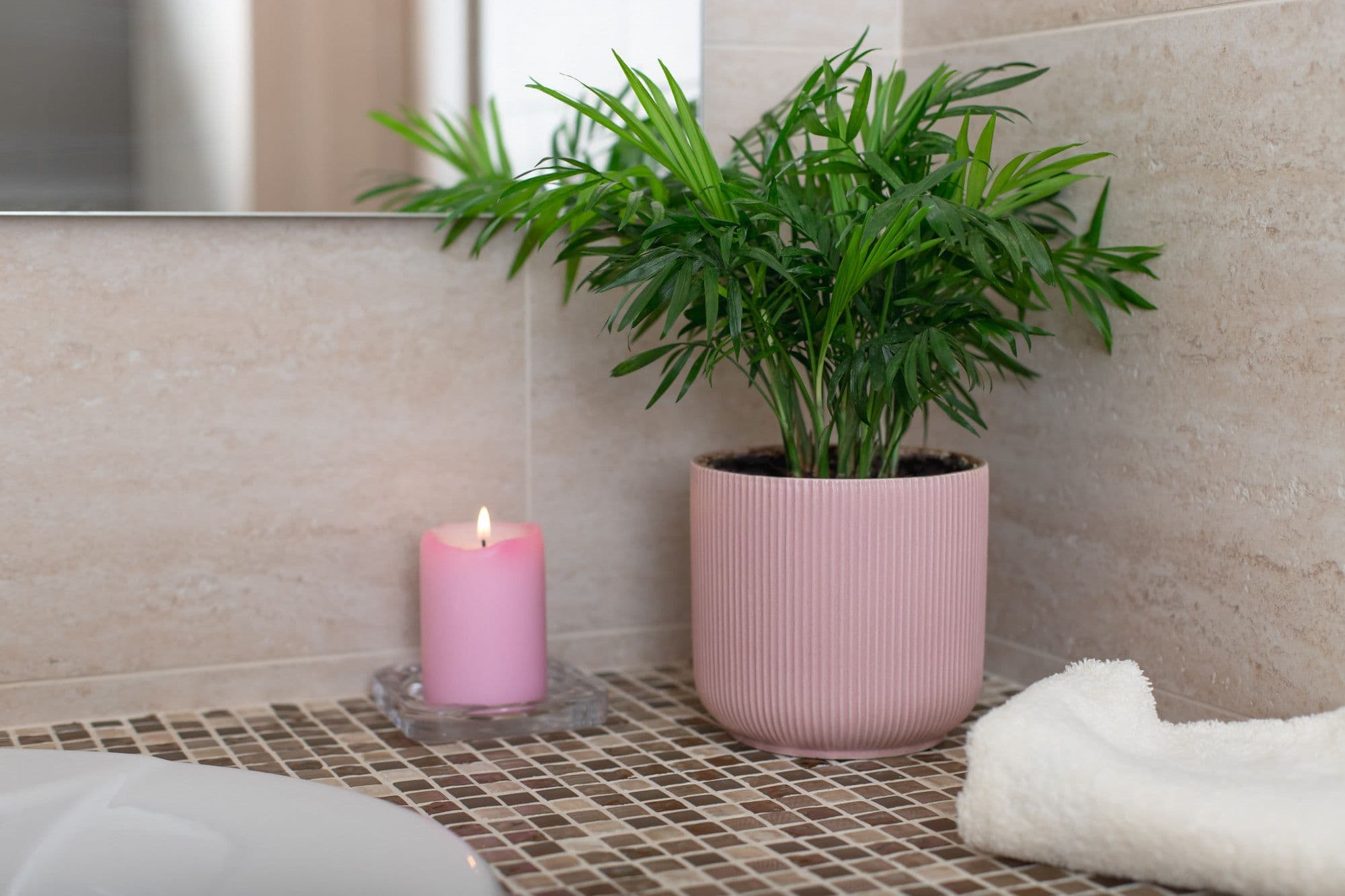
12 Best Plants for Bathroom That Thrive in Humid Conditions
Discover the 12 best plants for bathroom spaces. Each pick comes with its own advantages, plus light, humidity, watering, and placement tips. Take a look and match the plant to your specific bathroom.
6 min read · 21 Sept 2026
12 Most Wanted Rare Houseplants to Grow at Home
Rare houseplants can turn an ordinary corner in your apartment into a living botanical collection. This guide covers 12 most admired picks, what makes them special, and how to grow them successfully at home.
8 min read · 17 Sept 2026
Top 15 Plants That Don’t Need Sunlight
Some plants thrive in dim rooms, shaded corners, and places with indirect light. In this guide, you’ll explore the top 15 species best suited to low-light conditions and how to care for them.
Explore Plants by Care Needs
Identify the plant and problem. Help your plant recover
Identify plant problems early, understand what's wrong, and get clear care guidance. Botan helps you turn guesswork into confident plant care