
Bromeliad Identification (Aechmea blanchetiana)

Aechmea blanchetiana is recognized by a large, upright rosette of broad, strap-shaped leaves that form a deep central tank, often on a short trunklike base. Mature plants can reach about 3 feet (0.9 m) tall.

To recognize Aechmea blanchetiana, check for a tall, branched flower stalk rising above the rosette.

Aechmea blanchetiana Identification

Check Your Plant with Botan

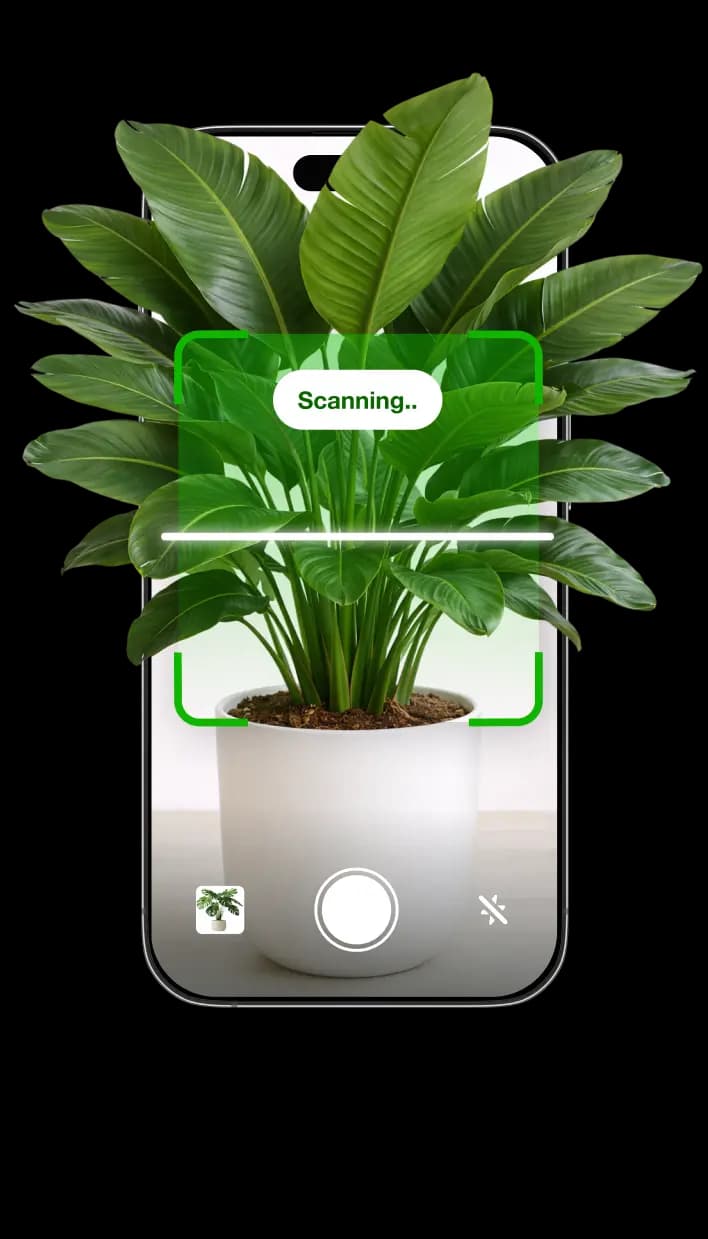
Take or upload a photo to confirm your plant ID with Botan.

Clear images work best. Avoid photos taken too close or too far away

Use these quick visual cues to check Aechmea blanchetiana by eye.

  • Forms a broad, upright rosette with a central cup that holds water.
  • Leaves are long, strap-shaped, and often arch outward, usually about 2-3 feet (0.6-0.9 m) long.
  • Leaf margins have small, evenly spaced spines that create a saw-toothed edge.
  • The plant grows as a clumping rosette, with several leafy offsets crowded around the base.
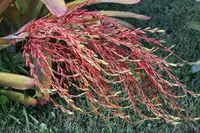
  • Flowering plants show a tall, stiff central stalk topped with many branched orange-red flower structures.

Check the rosette shape and spined leaf edges first, then the tall branched bloom if present.

Aechmea blanchetiana shows clear stage-to-stage changes in rosette size, posture, and reproductive structures.

  • Juvenile plant: Small rosettes stay tighter and more upright, with narrower leaves and less pronounced arching than older plants; the tank is shallower and less bulky.
  • Mature plant: The rosette becomes broad and vase-shaped, often 2-3 feet (0.6-0.9 m) tall, with long strap-like leaves that arch outward more strongly.
  • Flowering stage: A stout central inflorescence rises above the rosette, carrying tightly packed yellow-orange flowers and colorful bracts; the plant shifts from a leaf-focused form to a flower-centered silhouette.
  • Fruiting stage: After flowering, the upright cluster remains but appears heavier and more granular as berries develop, while the rosette stays largely unchanged in outline.

Several Aechmea blanchetiana selections are distinct enough to recognize by leaf color and variegation.

  • 'Albomarginata': Leaves have narrow creamy white to pale yellow margins instead of the plain green to orange blades of the typical form.
  • 'Rubra': Rosettes color much deeper red-orange to coppery red, especially in strong light, rather than staying mostly green or yellow-orange.
  • 'Variegata': Leaves show broad cream to yellow striping along the blade, usually in longitudinal bands, which breaks up the solid leaf color of the species.

Aechmea blanchetiana is most seasonally distinctive when it flowers. The rosette sends up a tall, upright bloom stalk, usually in spring into summer, making the plant much easier to spot from a distance. At the same time, the bracts below the flowers become bright red to orange-red, while the flowers themselves are yellow. Outside the blooming period, the plant usually keeps its broad rosette without a comparably dramatic seasonal shift.

Several large rosette bromeliads are often mistaken for this species.

imperial bromeliad(Alcantarea imperialis)

Both make big upright rosettes with orange to red tones. Alcantarea usually has broader, stiffer leaves and a much larger mature rosette, often over 4 feet (1.2 m) across.

urn plant(Aechmea fasciata)

Both are tank-forming rosettes, but Aechmea fasciata is smaller and has silver cross-banding on gray-green leaves. Aechmea blanchetiana is usually plain green to orange without that banded pattern.

Meyendorff's alcantarea(Alcantarea imperialis 'Rubra')

This cultivar can show a similar orange-red mass of foliage. It is told apart by its broader leaves and larger, heavier rosette than Aechmea blanchetiana.

Aechmea blanchetiana is native to eastern Brazil, especially the Atlantic Forest zone of Bahia and nearby coastal states. It occurs in coastal restinga vegetation and on rocky, exposed sites near the shore. That setting helps with identification because this species is strongly associated with sunny coastal habitats rather than deep rainforest understory. In the wild it may grow terrestrially or on rocks, which helps narrow it from bromeliads more typical of shaded inland forests.

  • Sharp leaf edges and tip: This bromeliad forms a rosette of stiff leaves with small spines along the margins and a sharp terminal point. Skin contact can cause scratches or punctures in humans and pets, especially during handling or when brushing past the plant.

Scan. Check. Confirm.

Use Botan to compare a photo and help verify the plant, reducing mix-ups before you label it or buy another.

FAQ

The most reliable trait is the large, upright tank rosette with broad, strap-shaped leaves edged by small spines. In strong light, the foliage often turns orange to yellow-orange, a useful clue in Aechmea blanchetiana identification.

Everything About Bromeliad

More Plant Identification Guides

From Plant ID to Plant Info

Identify it from a photo with Botan, then review plant details, care information, and common problems for the matched species.

Botan app identifying a plant from a photo
12 Most Wanted Rare Houseplants to Grow at Home

6 min read · 21 Sept 2026

12 Most Wanted Rare Houseplants to Grow at Home

Rare houseplants can turn an ordinary corner in your apartment into a living botanical collection. This guide covers 12 most admired picks, what makes them special, and how to grow them successfully at home.

Plant Recommendations
12 Most Wanted Rare Houseplants to Grow at Home
Rice Water for Plants – Which Plants Love It and How to Make It

8 min read · 14 Jul 2026

Rice Water for Plants – Which Plants Love It and How to Make It

Rice water can be an ideal DIY solution for orchids, roses, or fruiting plants. It supports growth, leaf count, and height. We’ll share how to make and apply it correctly for your plant.

Plant Care
Rice Water for Plants – Which Plants Love It and How to Make It
How to Mist Plants – Proper Technique and Common Mistakes

7 min read · 30 Jul 2026

How to Mist Plants – Proper Technique and Common Mistakes

Find out when misting works well and when to avoid it. Here, you’ll find detailed information about compatible and incompatible species, tips on how often to mist plants and do it correctly, and some great alternatives for raising humidity.

Beginner Guides
How to Mist Plants – Proper Technique and Common Mistakes