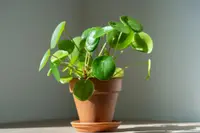

Chinese Money Plant (Pilea peperomioides) Watering Guide

This page explains when, how often, and how much to water Pilea peperomioides for steady, healthy growth.

Water Requirements

Moderate Water

Pilea peperomioides Watering

Native to seasonally damp, rocky habitats in China, this plant is adapted to brief moisture followed by gentle drying. Indoors, Pilea peperomioides generally prefers slightly moist soil rather than constant wetness or complete dryness.

Think of watering Chinese Money Plant as a light, regular refill that allows modest drying between sessions. This overview sets the stage for more detailed guidance on adjusting frequency for indoor light, temperature, and pot conditions.

Water when the top 1–2 inches (3–5 cm) of soil feel dry, which typically means about once a week in warm, bright indoor conditions. In lower light or cooler rooms, the interval usually stretches to every 10–14 days. Adjust gradually as the plant grows and pot size changes.

Water Chinese Money Plant when the top 1–2 inches (3–5 cm) of soil feel dry, using slow, even saturation.

  • Pour room-temperature water over the soil surface near the base, avoiding direct contact with leaves and central stems.
  • Add water gradually around the whole pot, letting it soak in until moisture reaches all parts of the root zone.
  • Continue watering until a steady trickle appears from the drainage holes, confirming the entire soil column is evenly moistened.
  • Discard any water collected in the saucer after a few minutes so the roots do not remain in standing moisture.

Incorrect moisture balance can stress Pilea peperomioides and trigger several avoidable growth problems indoors.

Yellowing Lower Leaves:

Older leaves fade to pale yellow from chronic overwatering and sluggish, poorly aerated potting mix.

Curling Or Drooping Foliage:

Leaves curl inward or hang limply when the root zone repeatedly swings between extremes of dryness.

Mushy Dark Stems:

Stems near the soil line soften and darken as waterlogged roots begin to rot.

Crisp Brown Leaf Edges:

Leaf margins turn dry and brittle when underwatering combines with low indoor humidity and warm drafts.

Soil Staying Wet For Days:

Potting mix remains soggy long after watering because drainage is restricted or container lacks adequate holes.

Keep soil lightly moist, allowing the top layer to dry before watering again to protect roots.

Unsuitable watering habits can stress Pilea peperomioides, causing weak growth and leaf loss for a Chinese Money Plant kept indoors.

  • Following a fixed schedule: Watering on the same calendar day each week ignores changing light and temperature; instead, check that the top soil feels dry first.
  • Using dense, heavy soil: Planting in compact garden soil keeps water around the roots too long; use a loose potting mix with added perlite for drainage.
  • Leaving water in saucers: Letting runoff sit under the pot keeps roots constantly wet; empty the saucer a few minutes after each watering.

Healthier Chinese Money Plants come from flexible watering based on soil dryness, light, and potting mix rather than rigid, automatic habits.

  • Spring: New leaves usually appear, so monitor soil weekly and water when the top 1–2 inches feel dry, avoiding prolonged soggy conditions.
  • Summer: Higher indoor temperatures and stronger light can dry the mix faster; expect slightly more frequent watering and check soil moisture more often.
  • Fall: Growth often slows as light decreases, so extend intervals between waterings and let the pot dry a bit deeper before rewatering.
  • Winter: In cooler, low-light rooms, growth is minimal; reduce watering volume and frequency, keeping soil barely moist while preventing complete long-term dryness.

Your Chinese Money Plant Care Companion

Use Botan to get a tailored watering guide and simple care steps for Pilea peperomioides, while gently checking plant photos to spot early signs of stress or other issues.

Botan plant care app — identify plants on mobile

Interesting Watering Facts

Moist Mountain Origins

Pilea peperomioides comes from shaded, moist, rocky slopes in Yunnan, China, where frequent mist and runoff keep the soil damp but never boggy. This background explains its preference for light, even moisture and its sensitivity to heavy, waterlogged substrates.


Shallow, Fibrous Roots

This species has a shallow, fine root system that spreads near the soil surface, adapted to thin mountain soils. The roots take up water quickly after rainfall but are more prone to rot if oxygen is limited by compacted or constantly wet potting mix.

FAQ

Wilting in wet soil usually means roots lack oxygen from overwatering or poor drainage. Check for soggy, compacted mix and blocked drainage holes, then trim rotten roots and repot into a well‑draining medium.

More Plant Watering Guides

Is Your Watering Routine Hurting Your Chinese Money Plant?

Botan quickly checks if your plant’s watering routine is on track.

Watering a plant with a copper watering can
Best Fertilizer for Grass in Summer: How to Choose the Right One

6 min read · 18 Aug 2026

Best Fertilizer for Grass in Summer: How to Choose the Right One

The right fertilizer in summer can make a lawn thrive. The wrong one can damage it. Here, you’ll learn the best NPK ratios by grass type, when and how to apply your formula, and how to recognize the signs of over- or under-fertilizing.

Plant Care
Best Fertilizer for Grass in Summer: How to Choose the Right One
12 Best Plants That Repel Spiders For Your Home and Garden

8 min read · 24 Jul 2026

12 Best Plants That Repel Spiders For Your Home and Garden

Spiders constantly appear in places you don't want them. A few common plants can help repel them using scent alone. Here are 12 options suitable for both indoors and outdoors, plus care tips for each.

Plant Recommendations
12 Best Plants That Repel Spiders For Your Home and Garden
How Often to Water Fruit Trees

7 min read · 11 Aug 2026

How Often to Water Fruit Trees

Irrigation needs change as roots establish and weather shifts. This guide gives practical starting intervals, explains how soil and tree type change them, and shows how to recognize both excess moisture and drought stress.

Plant Care
How Often to Water Fruit Trees