




Bilberry Cactus Identification (Myrtillocactus geometrizans)

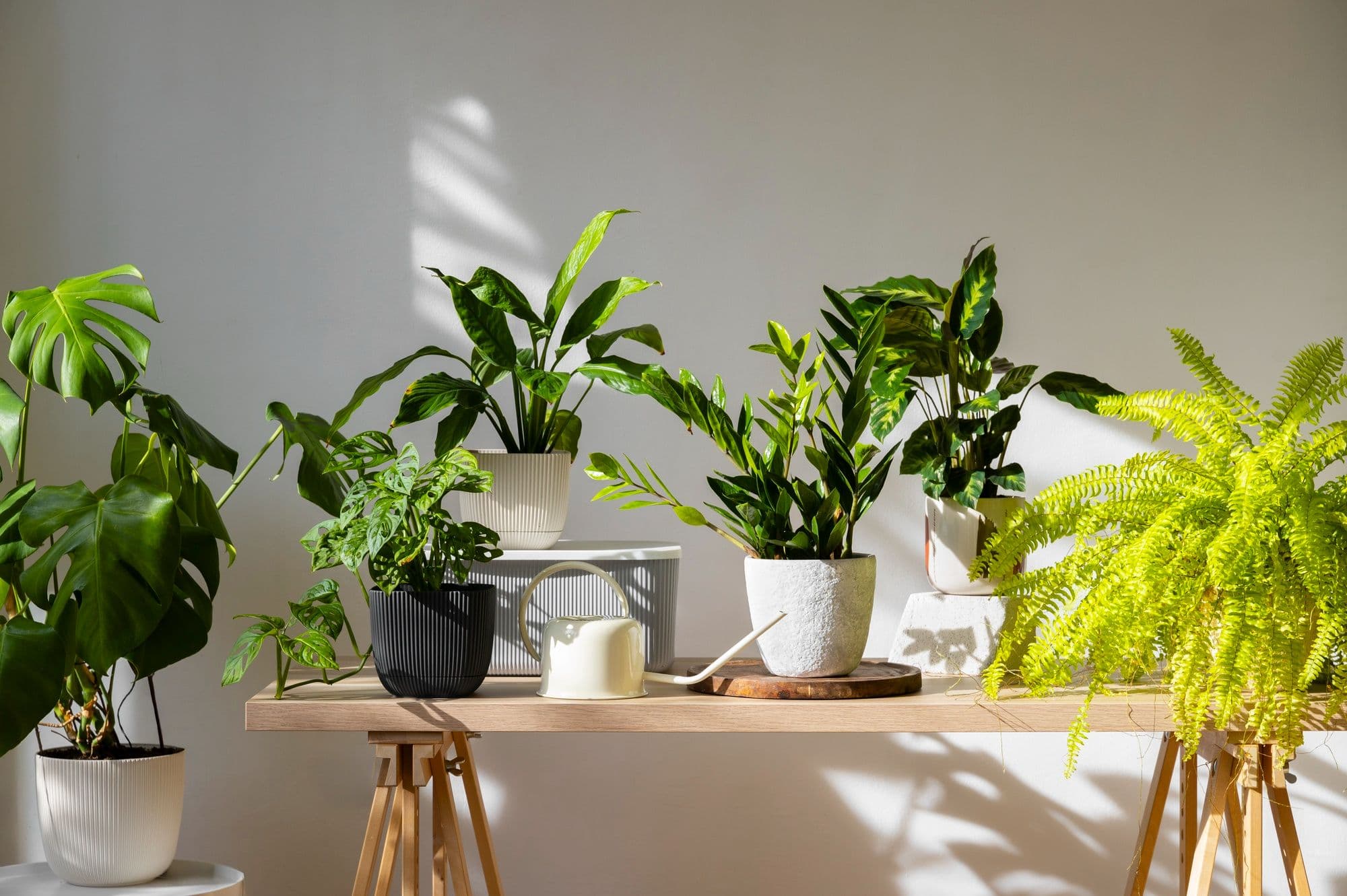
Recognize Myrtillocactus geometrizans by its blue-gray, succulent stems divided into 5 to 8 sharp ribs, with short spines set at evenly spaced areoles. It usually branches high into upright, candelabra-like arms rather than forming a single column.

Mature plants often develop a woody trunk below the branching stems.

Myrtillocactus geometrizans Identification

Check Your Plant with Botan

Not sure about your plant ID? Upload a photo and check it with Botan.

Clear images work best. Avoid photos taken too close or too far away

Check the stem shape, branching, and spine pattern first.

  • Forms a candelabra-like tree or large clump, with upright branches arising from a short woody trunk.
  • Stems are blue-green to gray-green and divided into 5-8 broad ribs with shallow grooves between them.
  • Each areole usually carries 3-6 short spines, spaced evenly along the rib edges.
  • Branches are thick, often around 2-4 inches (5-10 cm) across, giving the plant a sturdy, columnar look.

A mature plant usually looks more like a branched cactus tree than a single column.

Myrtillocactus geometrizans shows clear structural changes from a single stem to a tree-like cactus.

  • Seedling: Begins as a small, upright succulent stem with a simple columnar shape, few ribs, and no branching, lacking the candelabra outline seen later.
  • Young plant: Develops several blue-green, ribbed stems from the base or near the top, forming a compact candelabra shape before any obvious trunk appears.
  • Mature plant: Becomes distinctly tree-like, often 6-15 feet (1.8-4.6 m) tall, with a woody trunk and many upright branches held above ground level.
  • Fruiting stage: Older flowering stems carry small, rounded purple fruits after bloom, adding a berry-like feature absent from nonflowering juvenile and vegetative mature plants.

Several named forms of Myrtillocactus geometrizans are distinct enough to identify at a glance.

  • 'Fukurokuryuzinboku': A monstrose form with swollen, irregular blue-green stems and knobby ribs instead of straight, evenly ribbed branches.
  • 'Cristata': Crested growth makes broad, fan-shaped, wavy stems rather than upright cylindrical segments.
  • f. variegata: Shows stable cream to yellow sectoring or marbling on the blue-green stems, unlike the plain glaucous typical form.

In late spring to early summer, Myrtillocactus geometrizans may show small greenish-white flowers along the rib margins. These are brief but useful because the blooms sit close to the blue-green stems rather than on long stalks. By summer, the flowers can give way to small dark purple berries. When present, the fruit adds a strong seasonal clue against the plant’s candelabra-like branching.

A few blue, candelabra-form cacti are regularly mistaken for Myrtillocactus geometrizans.

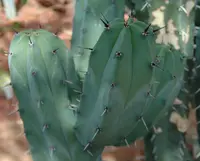
Blue Myrtle Cactus(Myrtillocactus schenckii)

Often confused because both form bluish, branched columns. M. schenckii usually has fewer, broader ribs and a looser, less symmetrical crown; its fruits are also larger and less bilberry-like.

Mexican Fence Post Cactus(Pachycereus marginatus)

Young plants can look similar from a distance because both are blue-green and upright. P. marginatus has narrower stems with 5-7 ribs and stays mostly columnar, rather than forming the shorter, tree-like candelabra shape typical of bilberry cactus.

Myrtillocactus geometrizans is native to central and southern Mexico, including dry regions such as Puebla, Oaxaca, and Hidalgo. It occurs in xeric scrub and tropical deciduous forest, often on rocky slopes and volcanic soils. That setting helps with identification because this species is a landscape cactus of inland, seasonally dry habitats rather than a coastal or true desert species. Seeing it associated with rocky thorn scrub in Mexico can help narrow it from similar cultivated cacti.

  • Sharp spines: The main risk is physical injury from the stem spines. Skin contact can cause punctures or embedded spine fragments in humans and pets.
  • Pet access: Pets that mouth or brush against the stems can injure the mouth, nose, paws, or eyes. This is a contact risk rather than a well-established poisoning risk.

Confirm the Species with Botan

Upload a photo to compare key features and get help identifying the plant or confirming your current label.

FAQ

Look for a blue-green, candelabra-shaped cactus with stout upright branches, usually 5 to 8 ribs per stem, and short spines clustered at areoles. Mature plants develop a tree-like trunk, which helps in identifying Bilberry Cactus.

More Plant Identification Guides

Identify First. Learn What Comes Next.

Use Botan to identify a plant from a photo, then get species-specific care information, safety notes, and common problems.

Botan app identifying a plant from a photo
Best Time to Mow Lawn – A Complete Guide

5 min read · 10 Aug 2026

Best Time to Mow Lawn – A Complete Guide

Explore when to mow your lawn for its health and a pleasant green color. Find out the best time for this task during the summer heat, and follow practical tips for correctly cutting the grass, and learn common mistakes to avoid.

Plant Care
Best Time to Mow Lawn – A Complete Guide
How Long Can Flowers Go Without Water? Everything You Need to Know

6 min read · 10 Jul 2026

How Long Can Flowers Go Without Water? Everything You Need to Know

Flowers can survive without water anywhere from 1-2 hours to several months, depending on the plant type, species, and growing conditions. Some strong-looking flowers are drought-sensitive, while delicate-looking plants may tolerate long dry periods surprisingly well.

Plant Care
How Long Can Flowers Go Without Water? Everything You Need to Know
Top 5 Best Indoor Plants for Air Quality

5 min read · 11 Sept 2026

Top 5 Best Indoor Plants for Air Quality

Indoor plants can make a room feel fresher thanks to their air-purifying qualities. Here are 5 of the most suitable choices for your routine and living space.

Plant Recommendations
Top 5 Best Indoor Plants for Air Quality