

Asian Taro Plant (Alocasia odora) Light Needs

Asian Taro Plant grows best in bright, indirect or filtered light with only gentle direct sun.

Light Preference

Bright Indirect Light

Alocasia odora Light Requirements

Alocasia odora is native to warm, humid parts of East and Southeast Asia, where it grows in sheltered sites such as forest edges, open woodland, and moist lowland areas. Its large leaves are adapted to bright, filtered light rather than long exposure to open sun. In cultivation, this means shade tolerance does not replace the need for brightness. Preferred light is bright, indirect or filtered light.

  • Ideal exposure:

    Asian Taro Plant needs about 6–8 hours of bright indirect or filtered light daily, including up to 1–3 hours of gentle morning direct sun.

  • Direct sun limit:

    Full sun is not recommended because large leaves can scorch, especially in hot afternoon light.

  • Lower light:

    Shade is tolerated, but growth is usually slower and new leaves may be smaller in dim rooms.

  • Best sun timing:

    Morning sun is safer than afternoon sun because it is cooler and less likely to burn leaf surfaces.

Indoors, this plant needs a bright position with protection from intense direct rays.

NConditional
North-facing window:

A north-facing window is workable only if it is large, unobstructed, and bright for much of the day.

EBest
East-facing window:

An east-facing window is often best, especially within 2–4 ft where the plant receives bright light and gentle morning sun.

SSuitable
South-facing window:

A south-facing window can suit it when the plant is set several feet back or direct rays are softened by a sheer curtain.

WConditional
West-facing window:

A west-facing window is conditional because late-day sun can be hot; keep the plant back from the glass or filter the light.

Choose the brightest position that keeps the leaves out of long, hot direct sun.

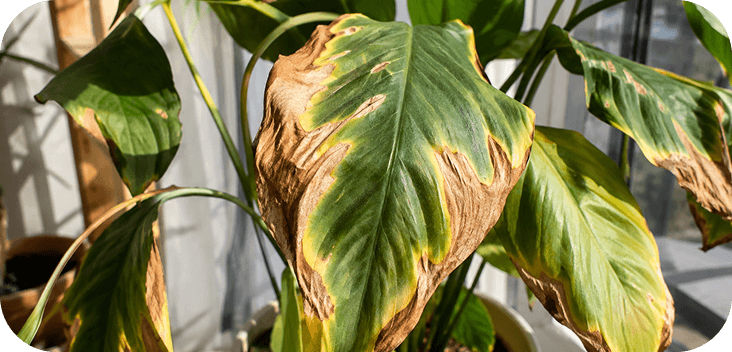
Excess light usually appears on the most exposed leaves first.

Bleached patches:

Leaves may develop pale, washed-out areas where direct sun hits the surface most strongly.

Tan scorch marks:

Dry tan or brown patches can appear on sun-facing parts of the leaf after harsh exposure.

Crisp spots:

Thin, crispy areas may form where leaf tissue was overheated by direct afternoon sun.

Curling leaves:

Leaves may curl or angle away from bright glass when light and heat are too intense.

Move the plant out of direct afternoon sun right away, or filter the window with a sheer curtain. Damaged areas will not turn green again, but new growth should improve in safer light.

Low light usually shows as weaker growth rather than immediate leaf damage.

  • Leaning growth:

    Stems and leaves may angle strongly toward the nearest bright window as the plant searches for better light.

  • Longer spacing:

    New growth can look taller, looser, or less sturdy when light is too weak for compact growth.

  • Smaller leaves:

    Fresh leaves may open smaller than older leaves during the active growing season.

  • Slow active growth:

    Alocasia odora may produce fewer new leaves in spring or summer when the room stays too dim.

Move the plant gradually into brighter indirect light. Avoid a sudden shift from shade into direct sun, which can damage leaves.

When ideal light is limited, choose the brightest spot that avoids harsh afternoon rays. Place the plant closer to a gentle light source rather than leaving it deep in a dim room.

Rotate the pot every 1–2 weeks so new leaves do not lean strongly toward one side. Use a sheer curtain when direct sun creates sharp leaf shadows.

Avoid placing it against hot glass in late-day sun. That setup can overheat and scorch the broad leaves.

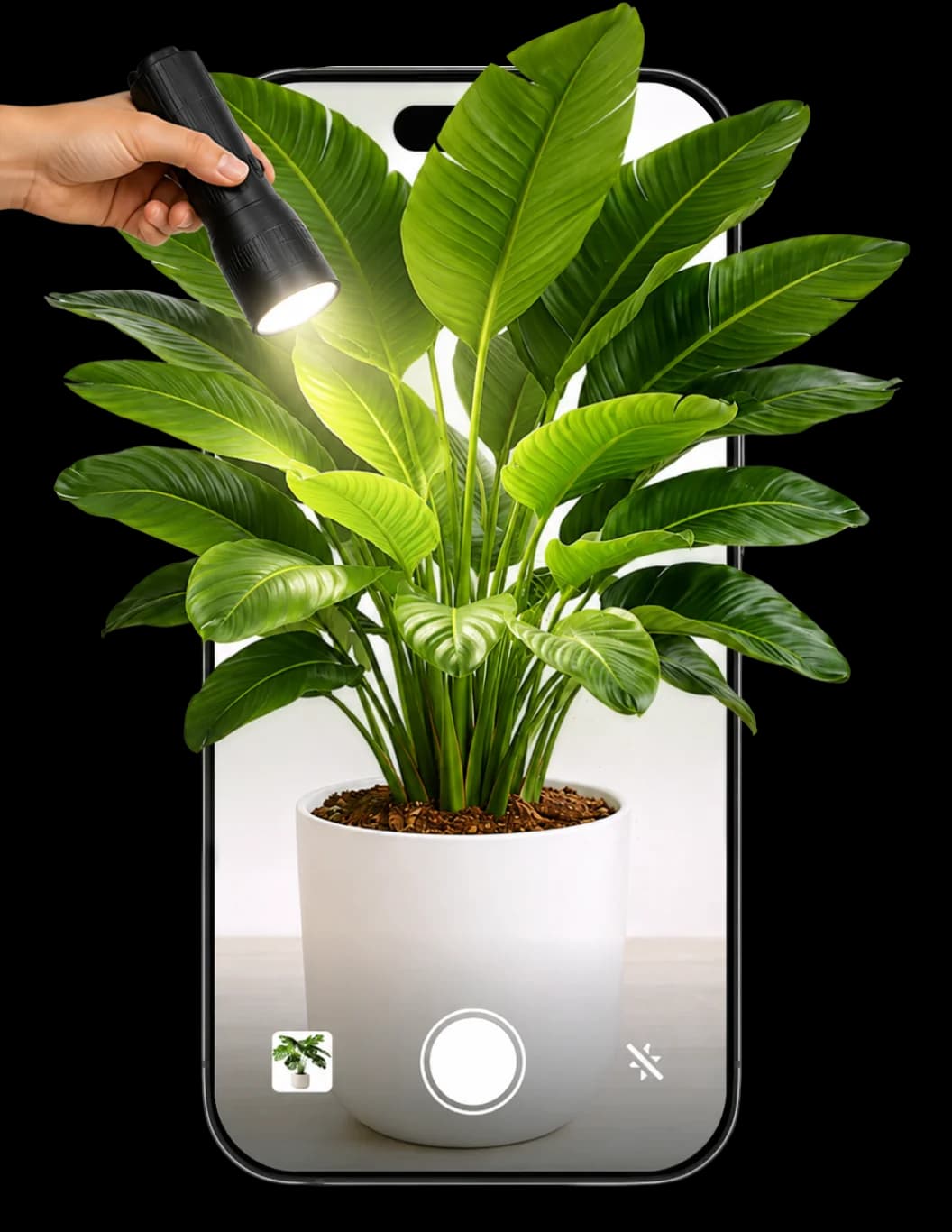
Get Personalized Care Plan

Scan your plant to receive care tips personalized for your specific plant

FAQ

The best light for Asian Taro Plant is bright, indirect or filtered light for most of the day. A little gentle morning sun is usually fine, but harsh afternoon sun can scorch leaves.

More Plant Light Guides

Get the Botan App

Discover how to care for your plants with Botan.

Botan app identifying a plant with a phone camera
10 Easy Garden Flowers to Grow

8 min read · 10 Sept 2026

10 Easy Garden Flowers to Grow

Discover 10 garden flowers that require minimal care. Learn which characteristics make plants easy to grow and follow tips on how to create a beautiful corner from beginner-friendly blooms on your property.

Beginner Guides
10 Easy Garden Flowers to Grow
Top 5 Best Indoor Plants for Air Quality

5 min read · 11 Sept 2026

Top 5 Best Indoor Plants for Air Quality

Indoor plants can make a room feel fresher thanks to their air-purifying qualities. Here are 5 of the most suitable choices for your routine and living space.

Plant Recommendations
Top 5 Best Indoor Plants for Air Quality
How to Bottom Water Plants: Complete Guide

6 min read · 13 Jul 2026

How to Bottom Water Plants: Complete Guide

Bottom watering helps soil absorb moisture evenly and keeps foliage dry, reducing the risk of missed dry spots or root problems. Place the pot in a tray of water for a short time, then let it drain well.

Plant Care
How to Bottom Water Plants: Complete Guide