arborescent angel's-tears Care (Brugmansia versicolor)

Also known as: apricot angel's trumpet
arborescent angel's-tears

About arborescent angel's-tears

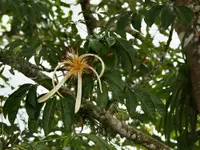
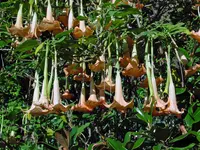
Arborescent angel's-tears, Brugmansia versicolor, is a woody, fast-growing shrub or small tree known for its large, hanging trumpet-shaped flowers. The blossoms are usually white to apricot and release a strong fragrance in the evening.

In the wild it occurs in tropical regions of South America, where it grows in mild, frost-free conditions. In gardens it is often grown as a patio specimen or in large containers that can be moved under protection.

This plant is showy but not low maintenance. It needs consistent moisture, fertile well-drained soil, and protection from frost, which affects how to care for arborescent angel's-tears.

Main Plant Requirements

Care Difficulty

Moderate Care

Light Preference

Full Sun

Water Requirements

Regular Water

Temperature Preference

Tropical / Frost Sensitive

Hardiness Zone

9–11

Soil Texture

Loamy, Silty, Organic-rich

Soil pH

Slightly acidic (6.5–7.0), Neutral (7.0)

Soil Drainage

Moist but well-drained

Fertilization

Heavy (weekly, diluted)

Get Personalized Care Plan

Scan your plant to receive care tips personalized for your specific plant

Available on iOS and Android

How to Care for the arborescent angel's-tears

Brugmansia versicolor thrives in bright, generous light but benefits from some protection from intense midday sun.

  • Provide 4–6 hours of direct morning sun with light afternoon shade; in hotter regions, give dappled or filtered light after 12 p.m. to prevent leaf scorch.
  • In cooler coastal or northern areas, full sun for 6–8 hours is usually tolerated, but monitor for wilted, pale, or crisping leaves as signs of excess exposure.
  • If stems elongate, leaves darken dull green, and flowering declines, the plant is too shaded; arborescent angel's-tears needs more direct light, especially in summer.

This species prefers evenly moist but not waterlogged soil, with careful adjustment to weather and season.

  • Water when the top 3–5 cm of soil feels dry, then soak the root zone thoroughly so moisture reaches 20–25 cm deep, especially during active growth and flowering.
  • Use well-drained soil and avoid standing water; yellowing, limp leaves and a sour soil smell suggest overwatering or poor drainage that can lead to root rot.
  • Increase watering frequency during hot, dry spells; reduce in cool or cloudy periods, watching for drooping, thin leaves and dry soil as signs the plant needs water sooner.

This tropical shrub grows best in warm, stable temperatures with strict protection from frost.

  • Aim for 65–80°F (18–27°C) for active growth; flowering is strongest with warm days and slightly cooler nights that do not drop abruptly.
  • Protect the plant whenever temperatures approach 32°F (0°C); light frost can damage foliage and buds, and hard frost can kill stems and roots.
  • During heat above 90°F (32°C), expect temporary flower drop and leaf wilt; provide afternoon shade and extra soil moisture, and avoid moving or pruning in extreme heat.

This species prefers moderate humidity but adapts to many home and patio conditions.

  • Target 40–60% humidity; arborescent angel's-tears tolerates brief dips lower if soil moisture is steady.
  • Watch for humidity stress such as dry, curling leaf edges and premature bud drop, especially during hot, windy weather.
  • Increase humidity by grouping plants, placing trays with water and stones nearby, or sheltering from drying winds while keeping air movement.

This shrub thrives in deep, moisture-retentive but free-draining soil.

  • Use a loamy mix rich in organic matter, such as 2 parts compost, 1 part garden loam, and 1 part perlite or coarse sand for drainage.
  • Aim for slightly acidic to neutral pH around 6.0–7.0 to support nutrient uptake and reduce deficiency risk.
  • Improve aeration by incorporating chunky materials like pine bark fines so roots receive oxygen even after heavy watering.
  • Avoid heavy, compacted clay, waterlogged spots, or pure sand that dries out too fast and restricts root development in Brugmansia versicolor.

This species is well suited to container growing in temperate and cooler climates.

  • Choose a large, deep, weighted container to counteract the plant’s top-heavy canopy and reduce tipping in wind.
  • Select thicker-walled terracotta or glazed pots if extra moisture retention or root insulation is needed in hot or exposed sites.
  • Ensure multiple wide drainage holes and elevate the pot on feet so excess water clears quickly and roots do not sit in a sump.

Brugmansia versicolor is a heavy feeder that responds strongly to consistent, balanced nutrition during its active growing season.

  • Use a balanced liquid fertilizer (for example 10-10-10 or 20-20-20) at 1/2 strength every 1–2 weeks from spring to early fall for arborescent angel's-tears.
  • Supplement with slow-release granules or compost in early spring to support sustained flowering and leafy growth.
  • Apply to moist soil and rinse any fertilizer off leaves to avoid scorch or salt buildup around the roots.
  • Reduce feeding to once every 4–6 weeks, or stop entirely, during winter dormancy when growth slows.

Pruning Brugmansia versicolor maintains a strong framework, encourages branching, and supports abundant flowering.

  • Prune in late winter or very early spring before strong new growth starts, avoiding heavy cuts during peak flowering.
  • Remove dead, damaged, crossing, or inward-growing branches first to improve airflow and light penetration.
  • Use clean, sharp bypass pruners or loppers, disinfecting blades between plants to limit disease spread.
  • Shorten overly long shoots to shape the canopy, but retain Y-shaped flowering wood where buds will form.

Container-grown Brugmansia versicolor benefits from periodic repotting or transplanting to prevent root binding and maintain strong growth.

  • Check for roots circling the pot, poking from drainage holes, or slowed growth as signs repotting is needed, typically every 1–2 years.
  • Plan major repotting or transplanting for early spring, just as new growth begins and heat stress is low.
  • Move into a pot 2–5 cm wider with free-draining, rich mix, gently loosening circling roots without tearing large sections.
  • Water thoroughly after moving, shade for several days, and keep soil evenly moist to reduce transplant shock and support recovery.

Brugmansia versicolor is commonly propagated from cuttings, which root more reliably and faster than seeds for home growers.

  • Take semi-ripe or softwood stem cuttings in late spring to summer, 10–15 cm long with several leaf nodes.
  • Remove lower leaves, dip the cut end in rooting hormone, and insert into moist, sterile, free-draining medium.
  • Maintain bright, indirect light, high humidity, and temperatures around 70–75°F until strong roots form in several weeks.
  • Seeds can be sown in warm, evenly moist mix, but resulting seedlings may vary from the parent plant.

This subtropical shrub is frost-sensitive and needs targeted winter care in regions with freezing temperatures.

  • In USDA zones 9–11, a thick 5–8 cm mulch layer around the root zone helps buffer short cold spells.
  • In cooler climates, grow in containers and move indoors before nights drop below 40°F, providing bright, cool conditions.
  • Reduce watering in winter so the soil stays lightly moist, never saturated, to prevent root rot in low light.
  • Where brief frosts occur, wrap stems with horticultural fleece or burlap and avoid pruning until after winter damage is visible.

Care Tips

Stake Young Stems

Install sturdy stakes and loosely tie main stems as they elongate to prevent wind damage and encourage a strong, upright framework for future heavy flowering.

Pinch For Branching

In the first growing season, pinch out soft stem tips above a node once plants are established to promote multiple branches, which later carry more flowering wood.

Use Large Containers

For container plants, move into progressively larger, heavy pots with wide bases to reduce tipping risk and allow sufficient root volume to support the plant’s rapid growth and heavy blooms.

Plan Winter Transition

In cooler climates, reduce watering and trim back lightly in late summer, then shift the plant to a frost-free, bright location before nights drop below about 45°F to make overwintering smoother and less stressful.

Routine Pest Scouting

Inspect leaf undersides and shoot tips at least weekly for whiteflies, spider mites, and caterpillars, and treat early with appropriate insecticidal soap or horticultural oil as part of caring for arborescent angel's-tears.

Common Pests and Diseases

Spider mites

This pest thrives on brugmansia foliage in hot, dry conditions, causing fine stippling, bronzing, and webbing on the undersides of leaves. Symptoms include rapid leaf yellowing and drop if infestations are heavy.

Solution

Rinse foliage thoroughly with a strong but controlled spray of water, focusing on leaf undersides, and repeat every few days; increase humidity and reduce heat stress where possible. For persistent infestations, use insecticidal soap or a neem-oil-based spray, applied in the evening and repeated according to label directions until new growth appears clean.

Whiteflies

These insects feed on the undersides of leaves and rise in a small cloud when the plant is disturbed. Symptoms include sticky honeydew, sooty mold on leaves, and gradual decline of vigor.

Solution

Remove heavily infested leaves if feasible and regularly hose down the plant to dislodge adults and nymphs. Combine yellow sticky traps with repeated applications of insecticidal soap or horticultural oil, making sure to wet the leaf undersides thoroughly and improving air movement around the plant to discourage reinfestation.

Caterpillars

This pest rapidly chews large, irregular holes in brugmansia leaves and may also feed on buds and flowers. Symptoms include sudden defoliation, frass (droppings) on leaves, and distorted new growth if the tips are eaten.

Solution

Inspect plants at dusk or early morning and remove caterpillars by hand, dropping them into soapy water. For ongoing problems, use a targeted biological control such as Bacillus thuringiensis (Bt), applied to foliage according to label directions so that feeding larvae ingest it.

Aphids

These insects cluster on tender shoots, buds, and leaf undersides, sucking sap and distorting new growth. Symptoms include curled leaves, sticky honeydew, sooty mold, and increased attraction of ants.

Solution

Prune off heavily infested shoot tips and wash remaining colonies from the plant with a firm stream of water. If needed, apply insecticidal soap or neem oil to all soft green tissue, repeating at 5–7 day intervals until new growth is clean and monitoring for natural predators such as lady beetles.

Botrytis blight

This disease affects brugmansia flowers and young shoots, especially in cool, damp conditions, causing soft brown spots that may develop a gray fuzzy mold. Symptoms include collapsing blooms, blighted tips, and a general decline in ornamental quality.

Solution

Promptly remove and dispose of all affected flowers and stems, and avoid wetting the blooms when watering. Improve air circulation, space plants so foliage can dry quickly, and if the problem persists, use a labeled fungicide for botrytis on ornamentals, applied preventively during cool, humid weather following all safety directions.

Interesting Facts

Color-changing trumpets

This species opens its large flowers in pale yellow or peach tones that often fade to creamy white as they age, creating a multicolored effect on a single plant at the same time.

Nocturnal fragrance release

Its flowers ramp up scent production after dusk to attract night-flying pollinators such as hawkmoths, an adaptation that aligns fragrance timing with pollinator activity.

Toxic but ornamental

All parts of this plant contain tropane alkaloids such as scopolamine and atropine, making it highly toxic if ingested, yet it is widely cultivated in warm climates for its abundant, showy blooms.

Botan icon

Did you know?

Wild Brugmansia versicolor is considered extinct in its native Ecuadorian habitats, so all plants in gardens and collections today are believed to persist only in cultivation.

FAQs about arborescent angel's-tears

This species performs best outdoors in mild, frost-free climates, where it can reach full size and flower heavily. Indoors it stays smaller, is more prone to pests, and often flowers less due to lower light and humidity.

Grow Healthy Plants with Botan Care

Keep your plants happy and healthy with plant identification, disease detection, and easy care guidance.

Botan plant care app — identify plants on mobile

Explore More Plants