woman's tobacco Care (Antennaria plantaginifolia)

Also known as: plantain-leaved pussytoes, plantainleaf pussytoes
woman's tobacco

About woman's tobacco

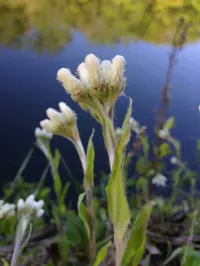
Woman's tobacco, Antennaria plantaginifolia, is a low-growing perennial wildflower in the aster family. It forms tight mats of gray-green, spoon-shaped leaves that stay close to the ground. In spring, it sends up short stems topped with small, white, woolly flower clusters that resemble tiny cat paws. This gives the broader Antennaria group its common name of pussytoes.

This species is native to dry, open habitats across eastern and central North America, such as prairies, rocky slopes, and open woodlands. It thrives in sun, lean or rocky soils, and good drainage, so care for woman's tobacco is generally straightforward in similar garden conditions.

Main Plant Requirements

Care Difficulty

Easy Care

Light Preference

Full Sun

Water Requirements

Low Water

Temperature Preference

Cold Hardy

Hardiness Zone

3–8

Soil Texture

Sandy, Loamy, Rocky

Soil pH

Acidic (5.5–6.5), Slightly acidic (6.5–7.0)

Soil Drainage

Well-drained

Fertilization

Minimal (feed rarely)

Get Personalized Care Plan

Scan your plant to receive care tips personalized for your specific plant

Available on iOS and Android

How to Care for the woman's tobacco

This sun-loving North American wildflower thrives in open, bright sites with lean, well-drained soil.

  • Provide 6–8 hours of direct sun daily; morning and midday sun suit woman's tobacco best, while light afternoon shade helps in hot summers.
  • In hotter regions, give it full sun in spring and fall, then shift or plant where it receives dappled or high filtered shade after 2–3 p.m. in midsummer.
  • Too little sun leads to weak, floppy growth and sparse flowers, while extreme all-day exposure on reflected heat sites can scorch foliage and dry roots quickly.

This species is drought-tolerant and prefers drier conditions once established.

  • Water only when the top 3–5 cm of soil are completely dry, using a deep soak rather than frequent light splashes to encourage deep roots in Antennaria plantaginifolia.
  • During the first growing season, monitor closely after planting, especially in hot, windy weather, then reduce watering in subsequent years as the plant naturalizes.
  • Ensure sharply drained, gritty or sandy soil; persistent soil dampness, yellowing foliage, and mushy crowns indicate overwatering, while limp, folding leaves and very loose, dusty soil suggest it is too dry.

This hardy perennial tolerates a wide temperature range but grows best in cool to moderately warm conditions.

  • Active growth occurs around 60–75°F (16–24°C), with compact foliage and best flowering in cool spring and mild early summer weather.
  • Mature plants tolerate winter cold down to about -20°F (-29°C) when soil drains well and crowns are not sitting in ice or standing water.
  • In summer, it copes with heat up to about 90°F (32°C) if soil stays slightly dry and there is some afternoon shade, but prolonged hotter spells can cause stress and reduced flowering.

Humidity is not a significant factor for Antennaria plantaginifolia, which is adapted to dry, open sites.

This species prefers lean, sharply drained soil that mimics dry meadows or rocky slopes.

  • Use sandy or gravelly loam with low to moderate organic matter, never a heavy peat-based mix.
  • Aim for slightly acidic to neutral pH, roughly 6.0–7.5, avoiding strongly acidic or alkaline extremes.
  • For garden beds, incorporate coarse sand or fine gravel to increase aeration and ensure rapid drainage.
  • Avoid compacted clay, waterlogged spots, or sites where winter moisture lingers, which quickly damage roots of Antennaria plantaginifolia.

This species can be grown in containers if drainage is very fast and the mix remains on the dry side.

  • Choose a wide, shallow pot to suit its mat-forming habit and prevent deep, wet zones around the roots.
  • Use a gritty mix, such as 50–60% mineral material (sand or fine gravel), so water passes through in seconds.
  • Place the pot in a position where rain cannot pool inside saucers, as lingering moisture encourages root decline when growing woman's tobacco.

This tough native groundcover, also called woman's tobacco, usually needs minimal fertilizer in average garden soil.

  • In poor or very sandy soil, apply a light top-dressing of compost in early spring to support steady growth.
  • If using fertilizer, choose a balanced slow-release product (around 10-10-10) at half label strength.
  • Feed once in early spring only; repeated applications encourage overly lush, floppy growth.
  • Do not fertilize in fall or winter, when the plant is dormant and nutrient demand is low.

Pruning for Antennaria plantaginifolia is simple and mainly focuses on cleanup and maintaining a tidy mat.

  • Cut back spent flower stems with clean scissors or hand pruners after blooming to keep the plant compact.
  • In late fall or very early spring, remove dead or winter-damaged foliage at the base.
  • Thin out any congested patches by lifting small clumps to improve airflow and reduce disease risk.
  • Avoid heavy shearing into old woody crowns, as this can slow recovery and reduce flowering.

This species is usually grown in the ground, so care focuses more on transplanting than frequent repotting.

  • Transplant in early spring or early fall when temperatures are mild and soil is workable.
  • Choose a sunny, well-drained site and amend heavy clay with grit or coarse sand to prevent root rot.
  • Lift and divide crowded clumps every 3–4 years, replanting divisions at the same depth to maintain vigor.
  • Water gently but thoroughly after transplanting, then keep soil just lightly moist until new growth establishes.

New plants are commonly produced by division or seed, with simple methods that suit most home gardeners.

  • Divide mature clumps in early spring, keeping several shoots and roots together in each division.
  • Replant divisions immediately into well-drained, gritty soil and water lightly to settle roots.
  • For seeds, sow in late fall or very early spring on the soil surface; light aids germination.
  • Maintain cool conditions and even, not soggy, moisture until seedlings establish sturdy root systems.

This North American native is cold hardy and generally needs little special winter care in most climates.

  • Plants tolerate freezing temperatures and snow, remaining dormant until spring.
  • In colder zones, add a thin layer of loose mulch around, not over, crowns to buffer freeze–thaw cycles.
  • Container-grown plants benefit from being moved to a sheltered, unheated area to prevent root freezing.

Care Tips

Encourage Dense Mats

Lightly pinch back the tips of new runners in late spring to stimulate branching, which helps the plant form a thicker, more weed-resistant mat over time.

Control Weed Pressure

Use a thin, sharp hand weeder to slice off invading grasses and broadleaf weeds at soil level every few weeks so the shallow, fibrous roots are not disturbed.

Improve Winter Survival

Leave spent foliage and flower stems in place over winter as a natural mulch, then gently remove loose dead material in early spring before new growth elongates.

Support Seed Propagation

If you want new colonies, allow some flower heads to dry fully on the plant, then collect and surface-sow the fluffy seeds in a gritty tray kept just barely moist until they sprout.

Plan for Division

Every 3–4 years, lift and divide older, woody mats in early spring, replanting only the freshest outer rosettes to maintain vigor when growing woman's tobacco in a long-term bed.

Common Pests and Diseases

Leaf spots

This disease causes small tan to brown spots on the basal leaves, which may merge and lead to early leaf dieback, especially in humid conditions.

Solution

Remove and discard heavily spotted leaves to reduce inoculum, keep the rosette area free of dense debris, and water at soil level so foliage dries quickly. Improve spacing and air movement; in persistent, wet climates, a labeled broad-spectrum fungicide for herbaceous perennials can be used as a last resort following local Antennaria plantaginifolia care instructions.

Powdery mildew

This disease shows up as a white, dusty coating on upper leaf surfaces and can make the foliage of this low mat-forming plant look dull and distorted.

Solution

Increase air circulation by thinning nearby plants and avoid overhead watering, especially late in the day. Remove the most affected leaves and, if needed, use a low-impact fungicide such as potassium bicarbonate or a horticultural oil labeled for powdery mildew on ornamentals, applying in cool, shaded conditions.

Aphids

These insects cluster on young stems and flower stalks, sucking sap and sometimes causing curled or stunted new growth on the compact rosettes.

Solution

Wash colonies off with a firm stream of water and pinch back heavily infested flower stems. Encourage or introduce natural predators such as lady beetles, and if populations remain high, apply an insecticidal soap or neem oil thoroughly to the undersides of leaves and stems, repeating as needed according to label directions.

Spider mites

This pest can appear during hot, dry weather, causing fine stippling on leaves, dull gray-green foliage, and occasional light webbing low in the plant clump.

Solution

Increase humidity around the planting by occasional overhead rinsing in the morning and reduce drought stress through consistent but not excessive watering. Rinse foliage to dislodge mites, then use insecticidal soap or a horticultural oil labeled for mites, making sure to cover both upper and lower leaf surfaces and repeating at intervals until new growth appears clean.

Interesting Facts

Evergreen leaf rosettes

This species forms low, evergreen rosettes of spoon-shaped leaves that stay green under snow cover in much of its range, allowing it to start photosynthesizing very early in spring.

Specialist butterfly host

The plant serves as a larval host for the American lady butterfly (Vanessa virginiensis), whose caterpillars feed on the foliage and often build silken shelters among the basal leaves.

Male and female colonies

Plants are dioecious, meaning male and female flowers occur on separate plants, and in the wild it often forms clonal patches that are entirely male or entirely female through spreading rhizomes.

Botan icon

Did you know?

This species is one of the primary hosts for the rust fungus Puccinia flavovirens, and botanists have used its distinctive rust infections to study complex life cycles in plant-pathogenic fungi that alternate between different host species.

FAQs about woman's tobacco

This species spreads slowly by short stolons and forms low, gradual clumps or patches. It does not usually become aggressive in typical garden conditions, but can slowly expand in open, dry, low-competition sites.

Grow Healthy Plants with Botan Care

Keep your plants happy and healthy with plant identification, disease detection, and easy care guidance.

Botan plant care app — identify plants on mobile

Explore More Plants