Encourage Low Mounding
Gently pinch back overly long, upright shoots early in the season to encourage a low, spreading mound that covers the soil surface more evenly and resists wind damage.

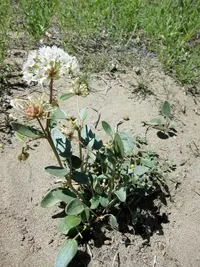
Fragrant white sand verbena (Abronia elliptica) is a low, spreading perennial native to dry sandy habitats in the southwestern United States. It often forms small, mat-like patches close to the ground.
Plants carry clusters of small, tubular white flowers that open in evening or cooler hours and release a noticeable sweet scent. Fleshy, gray-green leaves help the plant tolerate drought and poor, fast-draining soils.
This species suits dry gardens and naturalistic plantings where competition from taller plants is low. It can be moderately challenging outside its native range, mainly due to its need for sun, sharp drainage, and low to moderate moisture. Learning how to care for fragrant white sand verbena starts with matching those dry, sunny conditions as closely as possible.

Care Difficulty
Moderate Care

Light Preference
Full Sun

Water Requirements
Low Water

Temperature Preference
Warm Climate

Hardiness Zone
4–8

Soil Texture
Sandy, Rocky

Soil pH
Slightly acidic (6.5–7.0), Neutral (7.0)

Soil Drainage
Well-drained

Fertilization
Minimal (feed rarely)
Scan your plant to receive care tips personalized for your specific plant
Available on iOS and Android
Abronia elliptica prefers bright, open conditions similar to its native sandy habitats.
This species is adapted to dry, fast-draining sites and is sensitive to excess moisture.
This plant is adapted to warm, dry climates with cool to mild winters.
This species handles low humidity well and rarely needs special humidity management in typical indoor and outdoor conditions.
Abronia elliptica prefers very free-draining, sandy soils that mimic arid, desert-like habitats.
This species can be grown in containers if the pot and substrate are chosen to keep roots dry and well-aerated.
Abronia elliptica grows in nutrient-poor soils and only needs light feeding in cultivation.
Pruning Abronia elliptica is mainly about tidying and supporting flowering performance.
This species is usually grown in-ground, so focus on gentle transplanting rather than frequent repotting.
Abronia elliptica is usually propagated from seed, with some success from soft cuttings under controlled conditions.
This native wildflower is fairly cold tolerant in its range and usually needs minimal winter care in the ground.

Plant Health Check
Not sure what's wrong with your plant? Check your plant's health inside the app.
This species often opens its fragrant white flowers in late afternoon and evening, an adaptation that targets crepuscular and nocturnal pollinators such as moths in arid habitats.
It is naturally restricted to sandy soils of the inland West, where it grows in open, sparsely vegetated areas and helps stabilize loose sand with its spreading, mat-forming stems.
Leaves and stems have a slightly sticky, glandular surface that can trap wind-blown sand and small debris, which may help reduce water loss and deter small herbivores.

Abronia elliptica is considered locally uncommon in parts of its native range because it depends on intact sandy habitats, so habitat disturbance and dune stabilization projects can significantly reduce its natural populations.
This species forms low, spreading mats but is not usually aggressive. It expands slowly through short stems and self-seeding in suitable sandy soils. Regular edging and removing unwanted seedlings keep it neatly contained in designed planting areas.
Keep your plants happy and healthy with plant identification, disease detection, and easy care guidance.