Havard's century plant Care (Agave havardiana)

Also known as: Harvard agave
Havard's century plant

About Havard's century plant

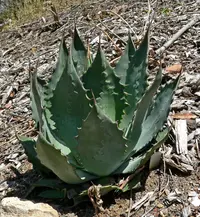
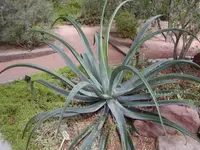
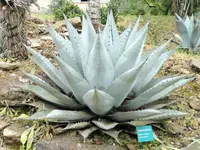
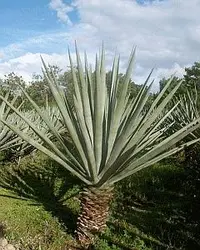
Havard's century plant, Agave havardiana, is a hardy desert succulent forming a dense rosette of thick, blue-gray leaves with sharp tips and edges. It grows slowly and eventually produces a tall flowering stalk once near the end of its life cycle.

This species is native to the Chihuahuan Desert region of northern Mexico and the southwestern United States, where it experiences strong sun, rocky soils, and low rainfall. Its drought tolerance and toughness make it relatively easy to care for Havard's century plant in dry, sunny gardens or containers.

It prefers bright light, very well-drained soil, and infrequent watering, which suits low-maintenance landscapes and xeriscapes.

Main Plant Requirements

Care Difficulty

Easy Care

Light Preference

Full Sun

Water Requirements

Low Water

Temperature Preference

Cold Hardy

Hardiness Zone

5–10

Soil Texture

Sandy, Loamy, Rocky

Soil pH

Slightly acidic (6.5–7.0), Slightly alkaline (7.0–7.5)

Soil Drainage

Well-drained

Fertilization

Minimal (feed rarely)

Get Personalized Care Plan

Scan your plant to receive care tips personalized for your specific plant

Available on iOS and Android

How to Care for the Havard's century plant

This high-desert agave thrives in strong, direct light with long daily sun exposure.

  • Provide 6–10 hours of full sun daily; in very hot regions, give Havard's century plant light afternoon shade to reduce leaf scorch risk.
  • Site on a south- or west-facing slope or open bed where buildings or trees do not block mid-day sun.
  • In cooler or cloudy climates, prioritize maximum unshaded exposure; plants grown in too much shade stretch, lean, and develop weaker, less compact rosettes.

This desert species prefers deep, infrequent watering and very fast-draining soil.

  • Water only when the top 5–8 cm of soil are completely dry; in hot, dry weather this may mean roughly every 2–4 weeks in the ground.
  • Use gritty, sharply draining soil or a rocky slope so excess water runs off quickly and roots never sit in puddled or compacted areas.
  • Reduce watering in cool seasons; overwatered Agave havardiana shows yellowing, mushy leaves, while underwatering shows shriveled, inward-curving leaves that regain firmness after a thorough soak.

This hardy agave tolerates a wide temperature range but performs best in moderate warmth.

  • Optimal growth occurs around 70–85°F (21–29°C) during the growing season, with cooler nights improving stress tolerance.
  • Established plants can survive brief drops near 0°F (−18°C) if soil drains well, but young plants are safer above 15–20°F (−9–−7°C).
  • Tolerates dry heat up to 100–105°F (38–41°C) if soil is not waterlogged; extended wet cold and repeated freeze–thaw cycles increase rot and leaf damage risk.

This agave thrives in dry air and usually does not need humidity adjustment indoors or outdoors.

  • Ideal humidity is 20–40%, similar to arid or climate-controlled home conditions.
  • Havard's century plant tolerates very dry air; issues are more often from excess moisture than low humidity.
  • If leaves show soft, water-soaked spots or fungal blotches, reduce ambient humidity and improve air circulation rather than trying to increase humidity.

Agave havardiana needs a very fast-draining, mineral-based substrate to prevent root rot.

  • Use a gritty, sandy mix such as 60–70% mineral material (coarse sand, pumice, or small gravel) with 30–40% cactus/succulent mix.
  • Aim for slightly acidic to neutral pH, around 6.0–7.2, avoiding highly acidic or strongly alkaline substrates.
  • Improve aeration by incorporating coarse particles at least 2–5 mm in size and keeping fine peat to a minimum.
  • Avoid compacted, clay-rich, or moisture-retentive garden soil that stays wet longer than 24 hours after watering.

This species is suitable for container growing when the pot is chosen to manage weight, stability, and rapid drainage.

  • Select a wide, heavy container to counterbalance the rosette’s leverage and prevent tipping in strong wind.
  • Choose a pot only 3–5 cm wider than the root mass so the mix dries quickly between waterings.
  • Use unglazed clay if faster moisture loss is needed in cooler or wetter climates, and plastic in very hot, dry regions to slow extreme drying.

This desert succulent needs only light feeding in lean soils to maintain healthy growth.

  • Use a low-dose, balanced NPK or cactus-formula fertilizer, or a thin top-dressing of compost in spring.
  • Feed once at the start of the warm growing season; skip mid-summer if soil is not very poor.
  • Apply at 1/2–1/4 label strength to avoid salt buildup around the roots.
  • Stop feeding in fall and winter when Havard's century plant is largely dormant.

Agave havardiana needs minimal pruning focused on health and safety rather than shaping.

  • Best time is late spring to early summer, once frost risk has passed.
  • Remove dead, dry, or pest-damaged leaves at the base using clean, sharp pruners or a pruning saw.
  • Cut close to the stem without injuring healthy tissue, keeping the rosette form intact.
  • Discard sharp leaves carefully to prevent injuries and reduce habitat for pests around the plant.

Container-grown plants and young Agave havardiana in beds need infrequent but careful transplanting.

  • Look for roots circling the pot, pushing through drainage holes, or a plant that dries out very fast as signs to move it.
  • Plan repotting or garden transplanting in late spring, after consistent warmth and minimal frost risk.
  • Shift to a pot or planting hole only 1–2 in wider, using very free-draining, gritty soil to limit rot risk.
  • Handle the root ball gently, keep it at the same depth, and water lightly once to settle soil, then allow drying between waterings.

Agave havardiana is most commonly propagated from offsets rather than from seed in home gardens.

  • Separate offsets in late spring or early summer when soil is warm and parent plants are actively growing.
  • Use thick gloves and a clean knife to detach pups with some attached roots.
  • Allow cut surfaces to callus for 3–7 days in a dry, shaded place before planting.
  • Plant in a gritty, fast-draining mix, keep barely moist, and provide bright light to encourage rooting.

This species is relatively cold hardy but still benefits from some winter management, especially in wet climates.

  • Mature plants typically tolerate short drops near 0°F if soils are very well-drained.
  • In colder or wetter regions, mound gravel or coarse sand around the base to keep the crown drier.
  • For container plants, move pots under a dry shelter or indoors to an unheated, bright space above 25°F.

Care Tips

Root-zone protection

In cold-winter climates, place a wide ring of coarse gravel or small rocks around the crown to keep the root zone drier and better insulated from freeze–thaw cycles.

Winter rain shielding

In regions with wet winters, set up a simple clear plastic or polycarbonate cover that sheds rain but stays open at the sides so the rosette remains dry while still receiving full airflow and light.

Pup management

Once offsets are fist-sized and have several roots, detach them with a clean, angled cut, let the cut surfaces callus for 5–7 days, then plant in individual pots or a new spot to control clump size and propagate new plants.

Safe access planning

When planting near walkways or patios, leave at least 3–4 ft of clearance and orient the rosette so the longest leaves point away from paths to reduce accidental contact with the sharp leaf tips.

Rock mulch optimization

Use a 5–8 cm layer of mineral mulch such as crushed rock or decomposed granite around the plant instead of organic mulch to reflect heat, improve drainage at the base, and reduce rot risk when caring for Havard's century plant.

Common Pests and Diseases

Agave snout weevil

This pest bores into the base of the rosette, causing internal damage that leads to sudden collapse and foul-smelling rot. Symptoms include yellowing outer leaves, wobbling at the base, and soft, blackened tissue near the crown.

Solution

Remove and destroy any affected plants, including as much root material as possible, to prevent spread. For nearby healthy plants, avoid wounding the base, keep the soil well-drained, and in high-risk areas use a systemic insecticide labeled for weevils in early spring as a preventative treatment, following label directions carefully.

Agave soft scale

These insects attach to leaves and appear as small, flat, tan or brown bumps, often along the midrib or leaf bases. Symptoms include sticky honeydew, sooty mold, and gradual yellowing or weakening of the plant.

Solution

Physically remove scales on small plants by gently scrubbing leaves with a soft brush and mild soapy water, then rinse thoroughly. For heavier infestations outdoors, apply a horticultural oil or systemic insecticide labeled for scale at the recommended time, and reduce plant stress by ensuring full sun, lean soil, and no excess watering or fertilizer.

Phytophthora crown rot

This disease attacks the crown and lower leaves when soils stay wet and drainage is poor. Symptoms include water-soaked spots at the leaf base, a soft, collapsing crown, and gray-brown rotted tissue with a sour odor.

Solution

Promptly discard severely affected plants and any surrounding wet soil, and do not replant agaves in the same saturated spot. For prevention, grow Agave havardiana in sharply drained, gritty soil on a slope or raised bed, avoid overhead watering, and in high-risk, wet climates consider a fungicide labeled for Phytophthora as a preventative soil drench around valuable specimens.

Anthracnose leaf spot

This disease causes tan to dark brown, sunken spots on leaves that may merge into larger blotches, often starting on older foliage in humid or rainy conditions. Symptoms include cosmetic scarring and, in severe cases, dieback of leaf tips or margins.

Solution

Cut off and discard heavily spotted leaves to reduce spore spread, and keep the rosette as dry as possible by watering at the soil level in the morning. Improve air circulation, avoid overhead irrigation, and in persistent wet climates use a copper-based or other labeled fungicide at the first sign of spotting, following label intervals and rates.

Agave mite

These microscopic eriophyid mites hide in tight leaf bases and growing points, causing distorted new leaves, scarring, and corky or streaked tissue that often appears on one side of the rosette. Symptoms include stunted growth and rough, irregular patches that do not rub off.

Solution

Remove and destroy severely distorted or suspicious plants, since mites are difficult to eradicate once established in the crown. For valuable specimens with early symptoms, isolate the plant, remove affected outer leaves, and use a miticide specifically labeled for eriophyid mites, while also avoiding overcrowding and keeping tools clean to limit spread when caring for Havard's century plant.

Interesting Facts

Cold-hardiest century plant

This species is one of the cold-hardiest agaves, naturally tolerating winter lows well below freezing in its native ranges of west Texas and northern Mexico, unlike many other desert agaves that require mild winters.

Compact armored rosettes

It forms tight, hemispherical rosettes with thick, bluish-gray leaves that have strong marginal teeth and a stout terminal spine, an adaptation that reduces water loss and deters herbivores in exposed mountain habitats.

Slow mountain specialist

In the wild it grows slowly on rocky limestone slopes and high-elevation grasslands, where its deep and extensive root system allows it to exploit brief rainfall events in otherwise harsh, drought-prone conditions.

Botan icon

Did you know?

Havard's century plant can take several decades to flower, then sends up a towering flower stalk that may reach 3–5 m tall, after which the original rosette dies but often leaves behind offsets that continue the colony.

FAQs about Havard's century plant

This species is monocarpic, so it flowers only once at the end of its life, often after several decades. Blooming is triggered mainly by age and overall vigor, not fertilizer or pruning practices.

Grow Healthy Plants with Botan Care

Keep your plants happy and healthy with plant identification, disease detection, and easy care guidance.

Botan plant care app — identify plants on mobile

Explore More Plants