


Provide climbing support
Install a sturdy moss pole, trellis, or fern totem and loosely tie the longest fronds with soft ties so the vine can climb, which encourages stronger growth and reduces breakage of the long rachis (central stem).

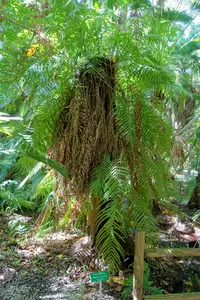
Giant vine fern, Stenochlaena tenuifolia, is a vigorous climbing fern with long, leathery fronds that can scramble over supports or trail from hanging containers. It forms a lush, green curtain of foliage rather than a compact clump.
In nature it grows in warm, humid forests of tropical Asia, often using trees or rocks for support. Its vining habit and steady growth make it showy but also mean it needs space and some structure to climb.
This species prefers evenly moist conditions, high humidity, and a loose, well-drained substrate, which can make indoor culture slightly demanding. Learning how to care for giant vine fern mainly involves providing stable warmth, moisture, and indirect light.

Care Difficulty
Moderate Care

Light Preference
Partial Shade

Water Requirements
Keep Soil Moist

Temperature Preference
Tropical / Frost Sensitive

Hardiness Zone
11–12

Soil Texture
Loamy, Silty, Organic-rich

Soil pH
Acidic (5.5–6.5), Slightly acidic (6.5–7.0)

Soil Drainage
Moist but well-drained

Fertilization
Light (every 4–6 weeks)
Scan your plant to receive care tips personalized for your specific plant
Available on iOS and Android
This climbing fern prefers bright, filtered light that mimics dappled forest shade.
This fern prefers evenly moist, never waterlogged soil that mimics a humid forest floor.
This species grows best in warm, frost-free conditions typical of tropical to subtropical climates.
This fern prefers steadily moist air and reacts quickly to dry conditions.
This species prefers loose, moist, organic-rich soil that drains freely yet does not dry out rapidly.
This species adapts well to container growing when the pot supports its spreading, vining habit.
Stenochlaena tenuifolia benefits from light, consistent feeding during active growth but reacts poorly to heavy fertilization.
Pruning Stenochlaena tenuifolia is mainly hygiene and size control rather than shaping.
This fern tolerates some root crowding but benefits from thoughtful repotting or transplanting when growth slows or roots circle the container.
Stenochlaena tenuifolia is usually propagated by division or stem cuttings under warm, humid conditions.
This tropical fern is frost-sensitive and needs protection in regions with cool or freezing winters.

Plant Health Check
Not sure what's wrong with your plant? Check your plant's health inside the app.
This species starts as a terrestrial fern but produces long climbing fronds that can scramble over shrubs and small trees, using other vegetation for support rather than having its own woody stems.
Its fertile fronds, which bear spores, are narrow, firm, and quite different in shape from the broader sterile fronds, making the reproductive structures easy to recognize compared with many other ferns.
In parts of tropical Asia, the tightly coiled young fronds are traditionally harvested and cooked as a leafy vegetable, valued for their crisp texture when lightly prepared.

Molecular and morphological studies place this species within a small Old World genus that is closely associated with wet lowland forests, and it often acts as an early colonizer of disturbed, open, humid sites where its climbing habit lets it quickly exploit new light gaps.
Growth is moderate under warm, humid, shaded conditions. New fronds typically extend several cm per month during the growing season, then slow in cooler months. Good moisture, organic-rich substrate, and consistent conditions support growing giant vine fern effectively.
Keep your plants happy and healthy with plant identification, disease detection, and easy care guidance.

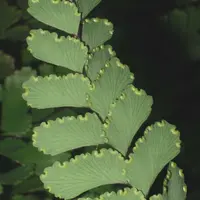
Cunningham’s maidenhair
Adiantum cunninghamii
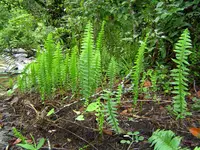
annual swordfern
Nephrolepis undulata
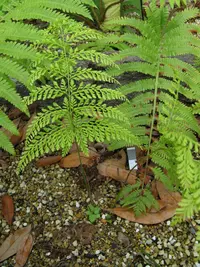
Upside-down Fern
Arachniodes standishii
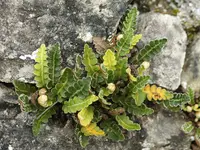
Rustyback
Asplenium ceterach
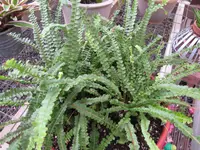
Lemon Button Fern
Nephrolepis cordifolia 'Duffii'
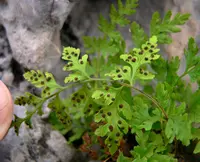
brittle bladderfern
Cystopteris fragilis

Angiopteris lygodiifolia
Angiopteris lygodiifolia
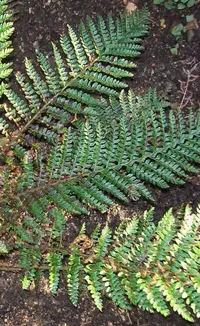
mother shield-fern
Polystichum proliferum