Mounting on slabs
Grow this epiphytic fern on cork bark or hardwood slabs with a thin layer of long-fiber sphagnum around the roots to improve airflow, reduce rot risk, and display its creeping rhizomes naturally.

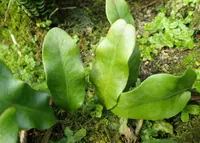
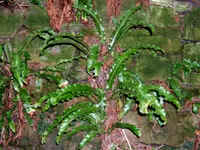
Microgramma nitida is a small tropical fern with thin, creeping rhizomes that often form a mat over tree bark, rocks, or well-drained substrate. Its narrow, glossy green fronds give it a delicate, refined look.
This species is native to humid forests in parts of Central and South America, where it typically grows as an epiphyte, meaning it anchors on other plants without taking their nutrients. It stays relatively compact, which makes it suitable for terrariums, smaller indoor displays, or mounted on cork.
Stable warmth, moderate light, and consistent moisture make it easier to care for Microgramma nitida, though it dislikes very dry air and prolonged drought.

Care Difficulty
Moderate Care

Light Preference
Partial Shade

Water Requirements
Keep Soil Moist

Temperature Preference
Tropical / Frost Sensitive

Hardiness Zone
10–11

Soil Texture
Loamy, Peaty, Organic-rich

Soil pH
Acidic (5.5–6.5)

Soil Drainage
Moist but well-drained

Fertilization
Light (every 4–6 weeks)
Scan your plant to receive care tips personalized for your specific plant
Available on iOS and Android
This epiphytic fern prefers bright, filtered conditions that mimic dappled forest light.
This fern needs steady moisture around its roots or mounting surface without staying waterlogged.
This species prefers consistently warm, frost-free conditions similar to a humid subtropical forest.
This epiphytic fern prefers moderately humid air to keep fronds and rhizomes healthy.
Microgramma nitida prefers a loose, airy medium similar to an epiphytic fern mix rather than dense potting soil.
This species adapts well to container growing, especially in shallow, wide pots or mounted planters.
This epiphytic fern grows modestly and benefits from light, regular feeding during active growth.
This fern needs only light pruning to maintain a tidy, healthy clump.
This species prefers snug conditions and only occasional repotting or division.
This fern is most reliably propagated by dividing rhizomes rather than by spores.
This tropical fern is frost tender and requires mild, protected conditions in winter.

Plant Health Check
Not sure what's wrong with your plant? Check your plant's health inside the app.
This species naturally grows as an epiphyte, rooting along tree trunks and branches with creeping rhizomes rather than in deep soil, which allows it to exploit light and moisture in the canopy layer of tropical forests.
The fronds are typically narrow, leathery, and glossy, and the fertile fronds that bear spores are often slightly different in shape and texture from the sterile fronds, a condition called frond dimorphism.
Its reproductive structures, called sori, are small, round, and evenly scattered on the underside of fertile fronds, a pattern that helps distinguish it from related ferns with banded or clustered sori arrangements.
This fern spreads through thin, creeping rhizomes that root as they move across bark, rock, or soil. It forms low, trailing mats rather than climbing vertically, making it suitable for mounting or cascading displays.
Keep your plants happy and healthy with plant identification, disease detection, and easy care guidance.