Chilean jasmine Care (Mandevilla laxa)

Chilean jasmine

About Chilean jasmine

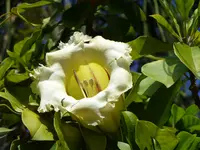
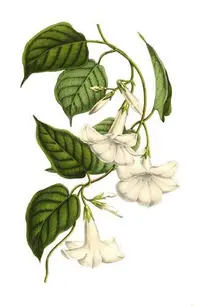
Chilean jasmine, Mandevilla laxa, is a twining, deciduous climber grown mainly for its strongly scented white flowers. It produces clusters of trumpet-shaped blooms that open in summer and stand out against soft green, slightly downy leaves.

In the wild it occurs in temperate regions of South America, especially Argentina and Bolivia, where it scrambles over shrubs and rocks. In gardens it is usually trained on trellises, fences, or pergolas.

This species is relatively fast-growing but needs support, consistent warmth, and protection from hard frost, so it is often kept in containers in cooler climates. Light, free-draining soil and regular moisture make it easier to care for Chilean jasmine.

Main Plant Requirements

Care Difficulty

Moderate Care

Light Preference

Full Sun

Water Requirements

Regular Water

Temperature Preference

Tropical / Frost Sensitive

Hardiness Zone

9–11

Soil Texture

Sandy, Loamy, Organic-rich

Soil pH

Acidic (5.5–6.5), Slightly acidic (6.5–7.0)

Soil Drainage

Moist but well-drained

Fertilization

Moderate (every 2–4 weeks)

Get Personalized Care Plan

Scan your plant to receive care tips personalized for your specific plant

Available on iOS and Android

How to Care for the Chilean jasmine

Mandevilla laxa needs bright conditions to flower heavily without leaf scorch.

  • Provide 4–6 hours of direct morning sun with light or dappled shade in the hot afternoon, especially in summer.
  • Tolerates light partial shade, but flowering declines if it receives less than about 3–4 hours of direct sun per day.
  • In very strong summer sun, especially in hot climates, protect Chilean jasmine with filtered light to prevent leaf burn and stressed, pale growth.

This vine prefers evenly moist but not waterlogged soil during active growth.

  • Water when the top 3–5 cm of soil feel dry, soaking the root zone thoroughly and letting excess drain away.
  • Use well-drained soil; persistent wetness, yellowing leaves, and soft stems signal overwatering, while limp, curling leaves and very dry soil indicate underwatering.
  • In cooler months or when growth slows, reduce frequency so soil dries slightly deeper between waterings, but do not allow prolonged drought for Mandevilla laxa.

This species grows best in warm, stable conditions with protection from frost and extremes.

  • Aim for 65–80°F (18–27°C) during the growing season for strong growth and flowering.
  • It is frost-tender; growth stops below about 50°F (10°C) and tissue can be damaged near 32°F (0°C), so provide shelter or bring plants under cover before frost.
  • Tolerates short heat spells up to about 90°F (32°C) if soil moisture is maintained and the root zone is mulched to limit temperature swings.

This vine prefers moderate to high humidity and reacts if air stays very dry.

  • Aim for 50–70% humidity to keep foliage lush and reduce leaf edge browning.
  • It tolerates short spells of 35–40% air moisture, but chronic dryness causes curled, brittle leaves and slowed growth.
  • Increase humidity for Chilean jasmine by grouping plants, placing pots on pebble trays, or running a nearby humidifier.

Mandevilla laxa grows best in loose, sharply drained, organic-rich soil.

  • Use a mix of roughly 40% peat or coco coir, 40% compost, and 20% perlite or fine bark for structure and aeration.
  • Aim for slightly acidic to neutral pH, around 6.0–7.0, to support nutrient uptake and steady flowering.
  • Ensure water drains freely; avoid heavy clay or compacted garden soil that stays wet and excludes air from roots.
  • Blend in extra perlite or coarse sand if the mix feels dense or water lingers on the surface after watering.

This species is very suitable for container growing on patios, balconies, or near supports.

  • Choose a tall, heavy pot so the root system and climbing top growth do not tip the container in wind.
  • Select slightly porous materials like terra cotta if the site is rainy, to help moisture escape more quickly.
  • Use a pot just 5–8 cm wider than the root ball to balance root space with faster drying of the mix between waterings.

Mandevilla laxa responds well to moderate, consistent feeding during its active growing season.

  • Use a balanced liquid fertilizer (for example 10-10-10) at 1/2 strength every 2–3 weeks from late spring to early fall.
  • Alternatively, apply a slow-release granular fertilizer at label rate at the start of the growing season.
  • Skip feeding in winter dormancy and resume only when new growth appears.
  • For container plants, supplement with a thin layer of compost on the soil surface in spring.

Mandevilla laxa benefits from thoughtful pruning to maintain size and encourage abundant flowering.

  • Carry out main pruning in late winter or very early spring before strong new growth begins.
  • Remove dead, weak, or damaged stems first, then thin crowded shoots to improve airflow and light penetration.
  • Shorten long, straggly vines to shape the plant and stimulate new flowering shoots.
  • Use clean, sharp bypass pruners and make cuts just above a leaf node or side shoot.

Container-grown plants appreciate periodic repotting to maintain healthy root growth and vigor.

  • Check for roots circling the pot, pushing through drainage holes, or slow growth as signs it needs new space.
  • Plan to repot every 2–3 years in spring, stepping up only 1–2 in pot size with a free-draining mix.
  • Water well the day before, gently loosen the root ball, and trim only heavily circling or dead roots.
  • After repotting, water thoroughly, keep in bright but indirect light for 3–5 days, and avoid fertilizing for 2 weeks.

New plants are most commonly raised from semi-ripe stem cuttings taken in the warm season.

  • Take 8–10 cm semi-ripe cuttings from non-flowering shoots in late spring or summer.
  • Remove lower leaves, dip the cut end in rooting hormone, and insert into a sterile, moist, free-draining medium.
  • Maintain 70–75°F, high humidity, and bright, indirect light until roots form in 3–6 weeks.
  • Seeds can also be sown in warm conditions, though this method is slower and less predictable.

In cooler climates, this frost-tender vine needs thoughtful winter management to survive and regrow well.

  • Mandevilla laxa is damaged by frost and should be kept above 40–45°F where possible.
  • Move container plants indoors to a bright, cool room before the first hard frost.
  • In mild regions, apply a 5–8 cm mulch layer around the root zone to buffer temperature swings.
  • Reduce watering in winter so the soil stays just barely moist, especially for Chilean jasmine grown indoors.

Care Tips

Provide sturdy support

Install a strong trellis, wire frame, or obelisk at planting time and gently tie new shoots with soft ties so the vine can climb vertically without stems snapping in wind or under its own weight.

Pinch for branching

In early spring, pinch or lightly tip-prune soft new shoots above a leaf node to encourage multiple side branches and create a fuller flowering framework instead of a few long, bare stems.

Use large containers

For containers, choose a pot at least 30–40 cm wide with good weight and drainage so the vigorous root system has room to expand and the plant does not topple as it gains height and mass.

Seasonal root insulation

In colder regions, mulch the root zone with 5–8 cm of bark or compost and, for container plants, move pots against a sheltered wall to buffer temperature swings and protect roots from cold damage.

Plan pest monitoring

Inspect the undersides of leaves and young shoot tips every 1–2 weeks for aphids, spider mites, and whiteflies, and if found, treat promptly with a strong water spray or a labeled insecticidal soap to keep populations from building up while growing Chilean jasmine.

Common Pests and Diseases

Spider mites

This pest thrives on Mandevilla laxa in warm, dry conditions and sucks sap from leaves, causing stippling, bronzing, and fine webbing on stems and undersides of foliage.

Solution

Shower the plant thoroughly, focusing on leaf undersides, then repeat every few days and maintain higher humidity; for heavier infestations use a horticultural oil or insecticidal soap, applied in the evening and repeated according to label directions until new growth is clean.

Oleander scale

This pest often colonizes woody vines like Chilean jasmine and forms small, flat, brown or gray bumps on stems and leaf midribs, leading to yellowing and general decline.

Solution

Prune out and discard heavily encrusted stems, then wipe remaining colonies with a cotton pad dipped in isopropyl alcohol and follow with 2–3 applications of horticultural oil at 7–10 day intervals to suffocate remaining scale crawlers.

Mealybugs

These insects gather in leaf axils, on tender shoots, and around roots, appearing as white cottony clusters that excrete sticky honeydew, which can lead to sooty mold growth.

Solution

Isolate the plant, manually remove visible clusters with alcohol-dampened cotton swabs, then treat all aboveground parts with insecticidal soap or a light horticultural oil, repeating weekly until no new mealybugs appear and monitoring any recently purchased plants before placing them nearby.

Botrytis blight

This disease affects dense, poorly ventilated vines, causing soft brown spots on leaves, spotting on flowers, and gray fuzzy mold on affected tissue, especially in cool, humid weather.

Solution

Remove all infected flowers and leaves, improve air circulation around the vine, avoid overhead watering, and if conditions stay cool and damp apply a labeled fungicide preventively to young growth while keeping spent blooms promptly deadheaded.

Cercospora leaf spot

Symptoms include small, dark leaf spots with pale centers that expand and merge, leading to premature leaf drop on stressed or overcrowded plants.

Solution

Collect and discard fallen leaves, thin or prune to open the plant for better airflow, water at the base rather than on foliage, and if spotting continues use a copper-based or other labeled foliar fungicide, applied to both upper and lower leaf surfaces according to the product directions.

Interesting Facts

Fragrant night bloomer

This species releases its strongest jasmine-like fragrance in the evening and at night, when its white flowers fully open and attract nocturnal pollinators in its native range in South America.

Cold-tolerant mandevilla

Unlike many tropical relatives, this vine can tolerate brief light frosts and cooler winters, and in mild climates it may behave as a semi-deciduous or deciduous climber, dropping leaves and resprouting from woody stems in spring.

Twining woody climber

The plant climbs by twining its flexible stems around supports, gradually maturing into a woody framework that can reach several meters in height when grown in the ground or in large outdoor containers.

Botan icon

Did you know?

In some South American regions, this species has naturalized along fences, hedges, and woodland edges, where its night-scented white flowers can form conspicuous, glowing patches that are easily visible even at low light levels.

FAQs about Chilean jasmine

Poor flowering usually comes from low light, excessive nitrogen fertilizer, or pruning at the wrong time, which removes flower buds. Focus on balanced fertilizer, strong light, and light post-bloom pruning for reliable flowering and overall Mandevilla laxa care.

Grow Healthy Plants with Botan Care

Keep your plants happy and healthy with plant identification, disease detection, and easy care guidance.

Botan plant care app — identify plants on mobile

Explore More Plants